
Golden Week 2026 in numbers — and what it changes about your China trip
China counted 826 million domestic trips over the seven days of National Day 2026, 2.98 million inbound visitors and 107 million night-time visits. The crowd figures are the least useful part. Here is what the rest of it changes about your plans.
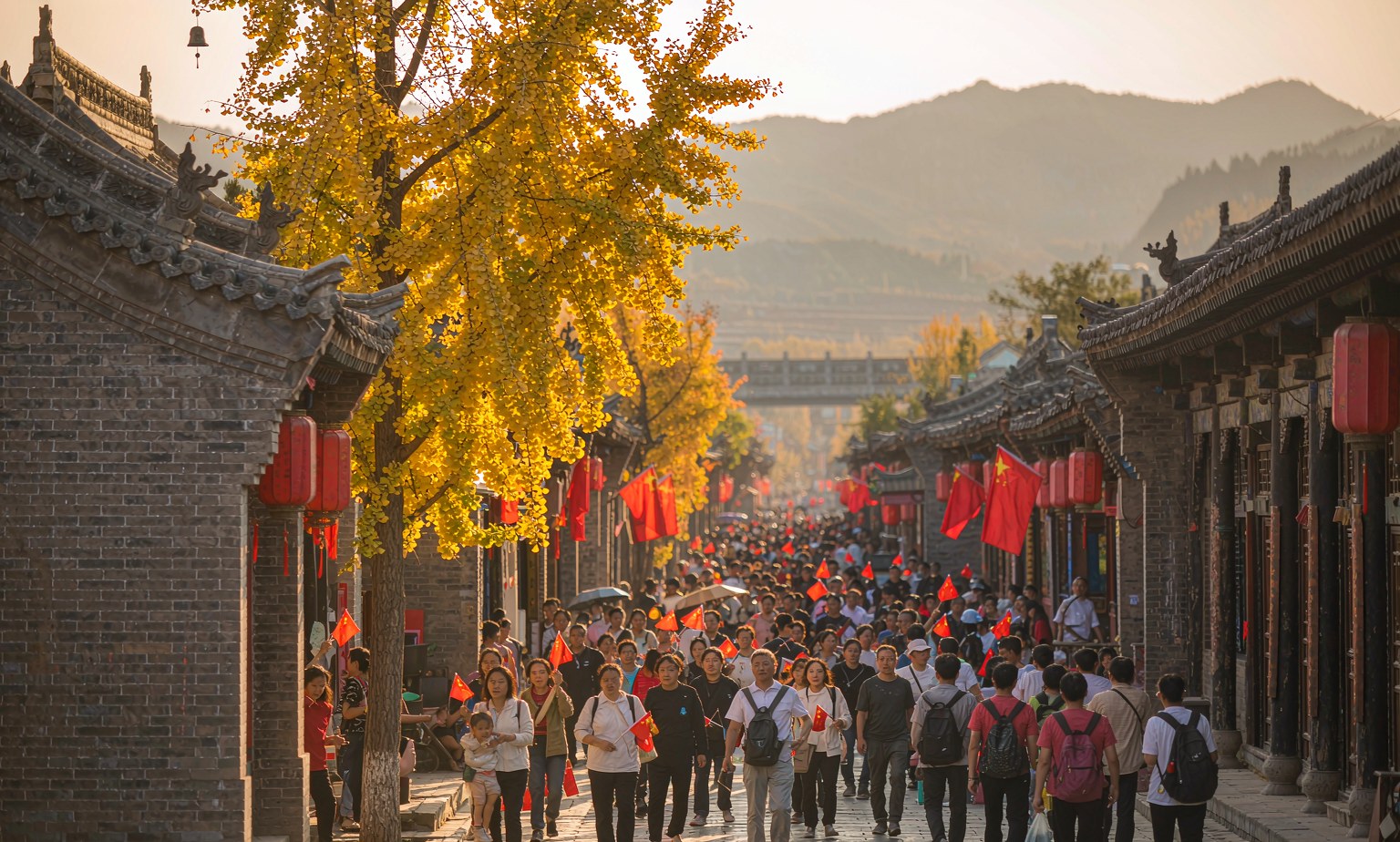
China's October National Day holiday — the week everyone calls Golden Week — is the busiest travel window on the Chinese calendar. According to the Ministry of Culture and Tourism's data centre, the seven days of 2026 produced 826 million domestic trips and 738.375 billion yuan in domestic tourism spending, up 6.3% and 4.3% on 2025 once you convert both to a daily average.
Three figures from the same release matter more if you are arriving from outside China. National-level night culture-and-tourism districts logged 107 million night-time visits, up 5.6%. China received 2.98 million inbound visitors, up 19.0% on 2024 and 6.5% on 2025 on the same daily-average basis. And 180 large-scale performances went on inside seven days — 125 concerts and 55 music festivals.
Domestic crowd numbers are the least useful part of that if you are a foreign visitor. What is useful is three things: how crowded Golden Week actually gets, where China has been spending money on things you can do at night, and how the visa-free route in has quietly widened.
| Metric | 2026 National Day holiday (7 days) | Change |
|---|---|---|
| Domestic trips | 826 million | +6.3% vs 2025 (daily average) |
| Domestic tourism spending | ¥738.375 billion | +4.3% vs 2025 (daily average) |
| Night-time visits to national-level night districts | 107 million | +5.6% |
| Inbound visitors | 2.98 million | +19.0% vs 2024, +6.5% vs 2025 (daily average) |
| Large-scale performances | 180 | 125 concerts, 55 music festivals |
| Consumer subsidies, National Day culture-and-tourism month | over ¥310 million | — |
Why every comparison says "per day"
The 2025 edition of this holiday ran eight days, because Mid-Autumn Festival fell inside it. 2026's ran seven. Raw totals from two different-length holidays cannot be compared, so the ministry converts both to a daily average before working out the change. That is what "comparable basis" means in the release, and it is worth knowing because the same number quoted without it would look like a decline.
It also gives you a figure you can actually picture. Spread 826 million trips across seven days and you get roughly 118 million trips a day — a country where, on a typical day of the holiday, something close to one person in twelve was travelling.
What 826 million trips means when you are the one booking
Golden Week is not evenly busy. The heaviest pressure lands on the first and last days, when everyone leaves and everyone comes back at once, and on the trunk rail corridors between big cities. If your trip overlaps the holiday at all, three of the mechanics are worth knowing in advance.
Trains sell like concert tickets. China Railway's official 12306 platform sells on a rolling 15-day window that includes the travel day, and release times differ from station to station, so the seat you want may appear at an hour you did not expect. When a route is gone, the official waitlist is the real fallback rather than a third-party reseller. Our guide to booking 12306 on a foreign passport walks through the passport-specific parts, which is where most visitors lose an evening.
Headline attractions run timed, real-name booking. This was already true before 2026 and the holiday only sharpens it: the most famous sights release slots in advance, in your own name, against an identity document, and the slots for holiday dates can be gone weeks out. The Forbidden City is the classic case — see how the passport booking path works.
Prices move before you do. Hotel rates in the popular cities climb for holiday dates and flights fill on the shoulder days. Booking rail and accommodation together, as soon as your dates are firm, is the single cheapest habit to adopt.
Nights are where the money went
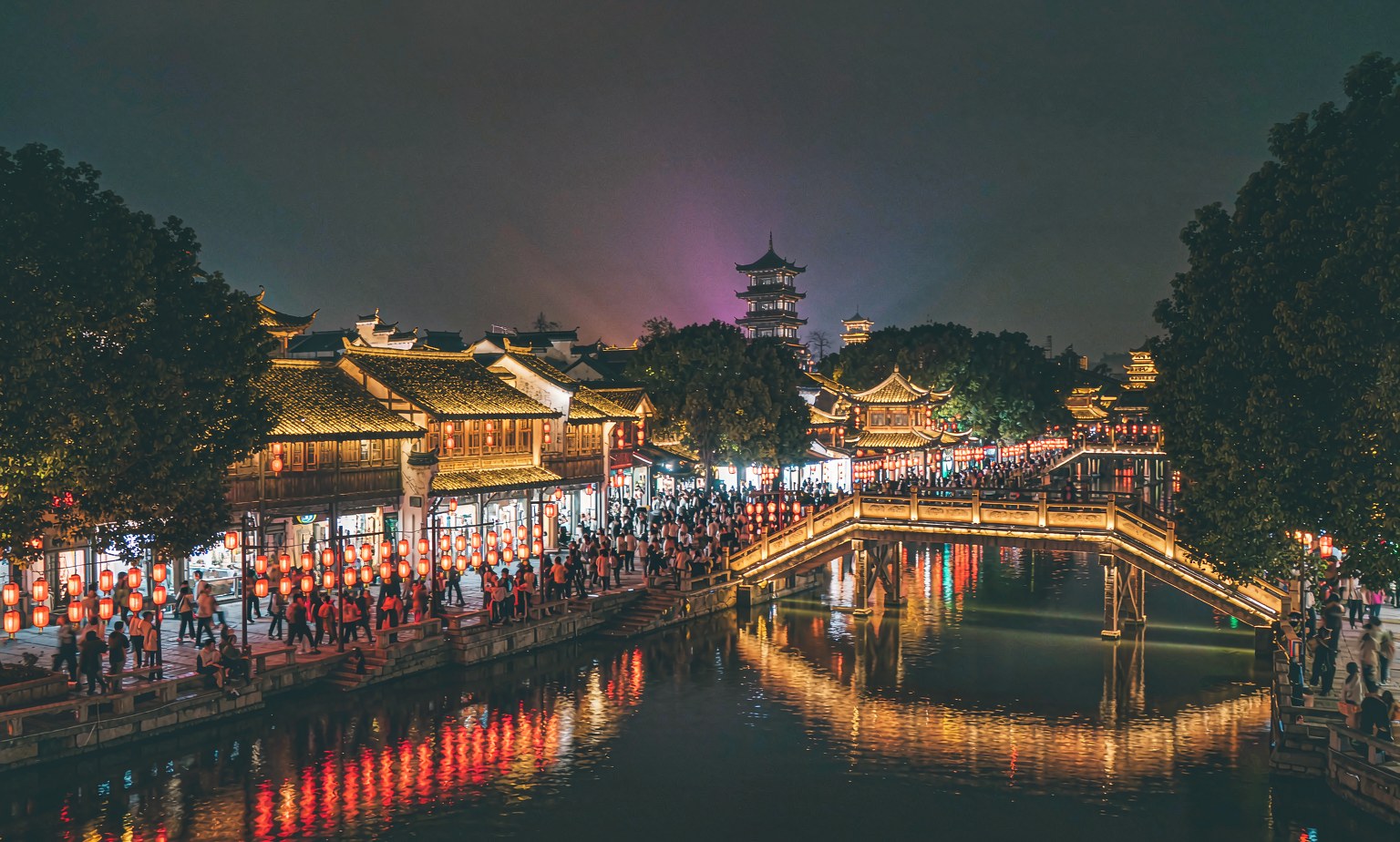
The 107 million night-time visits to national-level night culture-and-tourism districts is the number to pay attention to, because it is a policy target with a budget behind it rather than a happy accident. These districts are designated areas — usually a riverside old town, a night market street or a redeveloped lakeside — and local governments compete to have them recognised. Over the holiday they concentrated night performances, lantern-lit old-town routes and building-scale light shows in them, aiming at what the ministry calls all-day, all-territory spending.
For a visitor with limited evenings, that competition is straightforwardly good news: the highest-investment experiences of the day happen after dark, and they are the ones worth pre-booking. Expect the crush between roughly 19:30 and 21:00, and check last-entry times for anything ticketed.
Inbound travel is up 19% — and the way in keeps widening
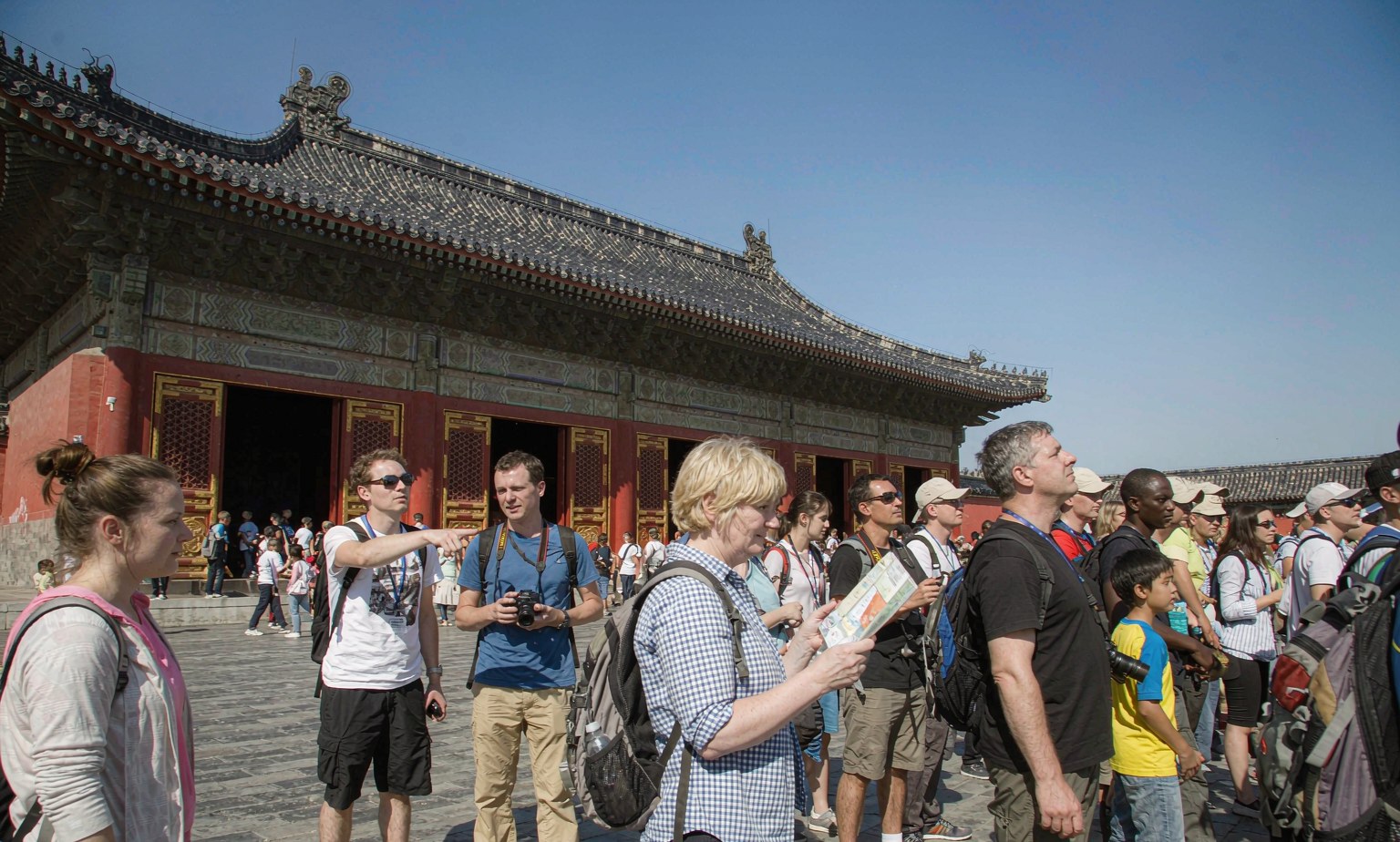
China received 2.98 million inbound visitors over the holiday, up 19.0% on 2024 and 6.5% on 2025 on a daily-average basis. Two consecutive year-on-year steps up suggests this is a trend rather than a reopening spike, and the machinery behind it is easy to point at.
Under current National Immigration Administration rules, 57 countries are covered by 240-hour (10-day) visa-free transit. Holders of an ordinary passport in those countries can enter through any of 65 open ports across 24 provinces without a visa, on the strength of a confirmed ticket onwards to a third country or region, and stay up to 10 days. Kyrgyzstan and Vietnam were added on 20 August 2026.
The limit that catches people out is the word transit. A simple return trip that starts and ends in China does not qualify; the journey has to continue somewhere else, and you need the onward booking to prove it. Tourism, business, visits and family trips are all allowed inside the window, but work, study and journalism still need a proper visa. Our explainer on the 240-hour transit scheme covers the rules in full, and the site's visa-free eligibility check lets you test your own passport against the list.
The practical upside of 2.98 million inbound visitors is not abstract: more foreign arrivals is what justifies the airport desks, the English-language booking paths and the card-and-QR payment options that used to be the hard part of a China trip.
180 large shows: the gig as a reason to fly
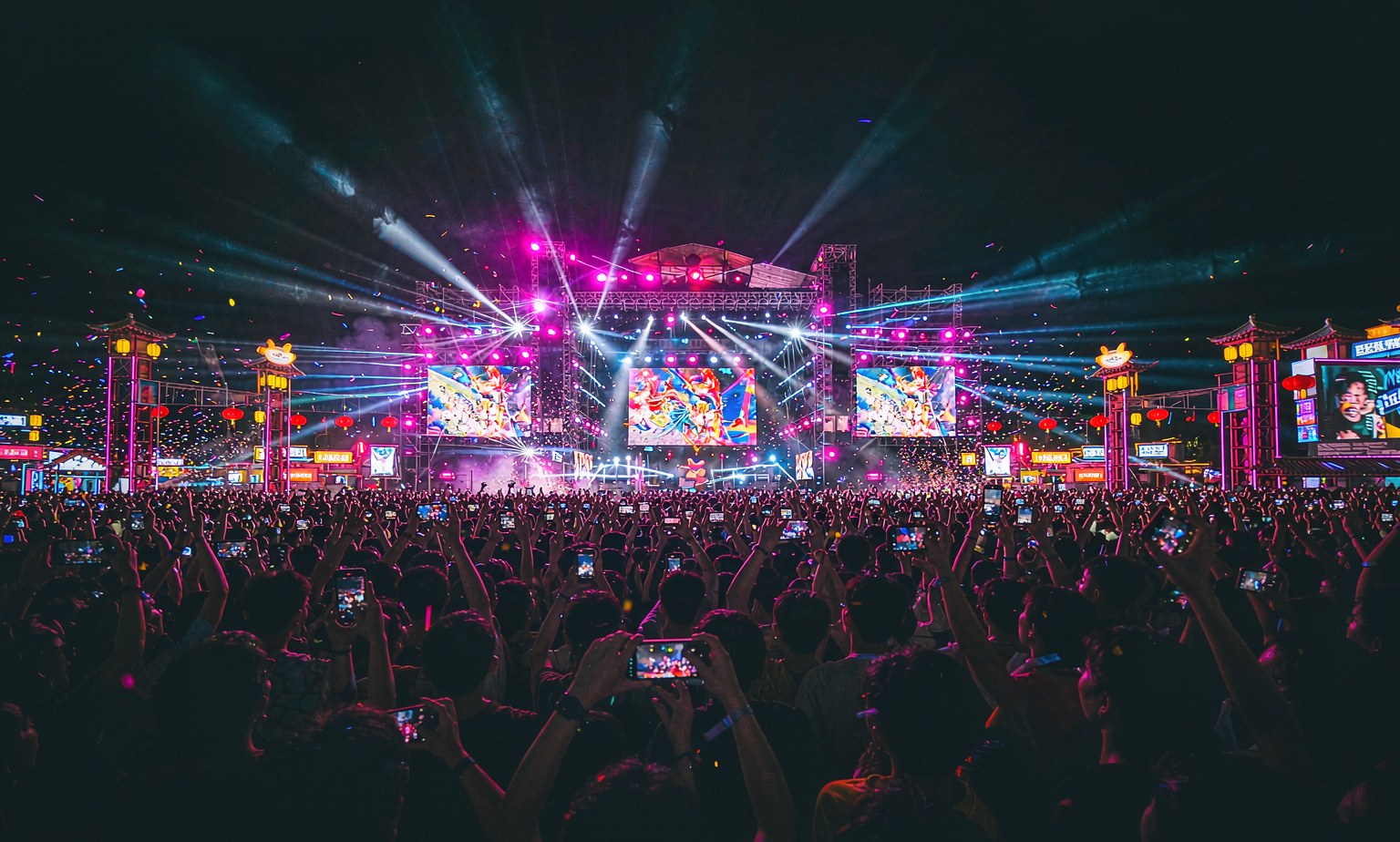
China staged 180 large-scale performances in seven days — 125 concerts and 55 music festivals. Concerts were nearly seventy per cent of that, which is worth noting if you think of live music in China as a niche: it is now a mass-market reason to travel, and tourism boards treat it that way. The same logic runs through the ministry's note that culture, commerce, tourism and sport are being deliberately fused, with events such as the "Village BA" basketball tournaments and the Jiangsu city football league used to pull intercity crowds into transport, restaurants and hotels.
If catching a show is part of your plan, the constraint is not supply, it is ticketing. Large events sell through mainland platforms with real-name registration, so set up the apps and payment method before you fly; our arrival toolkit for apps and facilities covers that ground. For a running list of what is on by season, the site's events and festivals calendar is the place to start.
"Red tourism" and the autumn countryside, explained
Two of the holiday's most Chinese categories deserve a translation. The first is red tourism: the ministry reports that 40% of visitors went to revolutionary memorial sites, flag-raising ceremonies or patriotic performances. These are historical sites of the revolution and the early People's Republic, and they combine museums, monuments and organised group visiting. They are open to anyone and some are genuinely strong museums; if you go during a holiday, expect school and tour groups and a strongly ceremonial register.
The second is the countryside. Autumn viewing, intangible-heritage workshops, farm picking, village night tours, bonfire markets and concerts staged in rice fields were all called out as popular. Xinhua's reporting adds that the north-to-south autumn colour season had arrived, that scenic areas were dressed in red for the holiday, and that travel to county-level towns — not the big cities — was one of the period's notable movers. That last point is the useful one for a foreign visitor: the small-town inbound boom is real, and these destinations are where you go to be in China without being in a queue of 118 million people.

The 310-million-yuan subsidy question
During the National Day culture-and-tourism consumption month, local authorities handed out more than 310 million yuan in consumer subsidies. It would be easy to write that up as free money for visitors. In practice these schemes are run city by city, are usually distributed through mainland apps, and often require a mainland payment account, so treat any subsidy as a bonus rather than something to plan around — and if your dates and city are fixed, it is worth checking the local culture-and-tourism bureau account before you arrive.
The technology push in the same release is more reliably useful. Digital exhibitions, VR and AR experiences and AI-guided tours were expanded, and big-data monitoring with AI dispatch was used to manage crowd flow. In plain terms: app-based guides and timed entry slots are spreading, and on a busy holiday they are your best tool for turning up to something that is not full.
So: should you go to China during Golden Week?
If your priority is the emptiest possible version of China, go the week before or the week after. Rail seats, hotel rates and attraction slots are all easier, and the sites you came for are the same sites. Our month-by-month timing guide sets out where the quiet windows fall.
If you want the maximum-atmosphere version — flags on the streets, night markets at full volume, festivals and shows happening everywhere — Golden Week delivers that, and the numbers above say so. Just treat it as a peak-season trip: lock your rail and rooms early, book timed-entry sights the moment your dates are firm, and put your breathing room in the evenings and in county-level towns rather than in the marquee sights at midday.
Frequently asked questions
What were the Golden Week 2026 dates?
The National Day holiday ran for seven days in 2026. The 2025 edition ran eight, because Mid-Autumn Festival fell inside it — which is why every official comparison for 2026 is expressed as a daily average.
How many trips were made during Golden Week 2026?
826 million domestic trips and 738.375 billion yuan of domestic tourism spending, up 6.3% and 4.3% respectively on 2025 on a comparable daily-average basis, according to the Ministry of Culture and Tourism's data centre.
How busy does it actually get for foreign visitors?
It is the busiest travel week of the Chinese year. Expect timed-entry attractions to sell out for holiday dates, trunk rail routes to go quickly, and hotel rates to peak. None of that makes the trip impossible — it makes early booking the deciding factor.
Can I use the 240-hour visa-free transit for a Golden Week trip?
Only if your journey genuinely transits China on the way to a third country or region, on a confirmed onward ticket. Fifty-seven countries and 65 ports are covered, with a stay of up to 10 days. A return trip that starts and ends in China does not qualify.
Is anything cheaper or easier during the holiday?
Nights and county-level destinations. The 107 million night-time visits show where the investment went, and smaller autumn destinations absorbed demand without the crush of the marquee sights.