
01The metro is almost always the answer
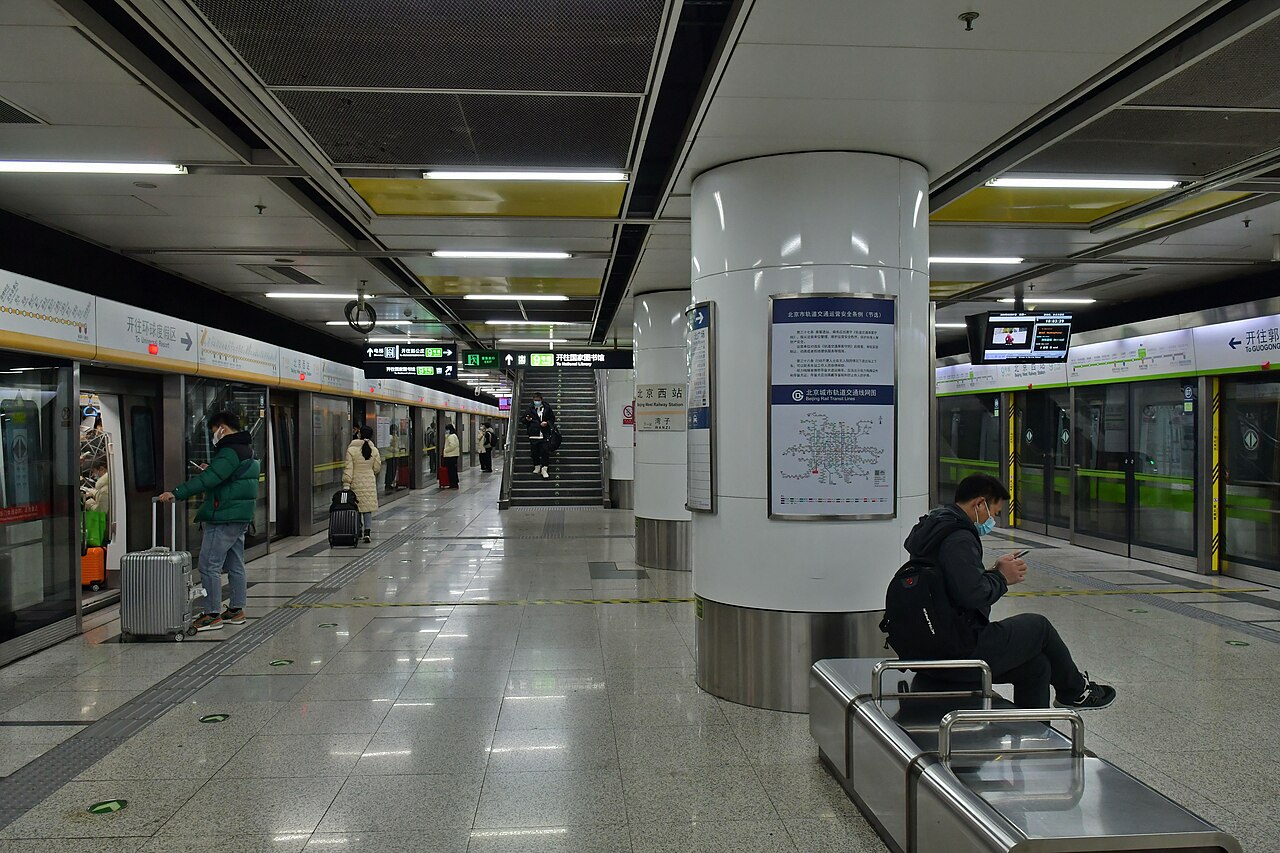
Chinese city metros are new, fast, air-conditioned, signposted in English, and cheap enough that the fare is rarely part of the decision. Beijing, Shanghai, Guangzhou, Chengdu and a dozen others have networks that go everywhere a visitor wants to go. If you are choosing between transport modes and one of them is the metro, take the metro.
Paying has three routes, and the third is the one most visitors never hear about: tap a foreign bank card straight on the gate reader. Mastercard, Visa, JCB and American Express are accepted at every gate across the whole network in Beijing, with Shanghai, Guangzhou and Chengdu running their own versions — no ticket, no app, no registration. The route locals use is a transit QR code inside Alipay or WeChat: open the transit mini-program, choose the city once, and from then on you hold your phone against the reader at the gate. Both apps take foreign cards, but the code is not instant — you verify your identity with your passport, add a phone number and bind a card first, and you enable it city by city. The ticket machines need no phone at all: they have an English button and sell a single-journey ticket for cash or card.
- Security first. Every station has a security check — bags go through a scanner, and you may be asked to take a sip from a drink you are carrying. Under a minute, except at rush hour.
- Scan in at the gate, and keep the ticket or the phone — you scan out at the other end too, because the fare depends on distance. If you forget to scan out, report it in the app within a few days: an unreported trip can be charged at the highest fare on the network, and repeated misses can stop your code working.
- Follow the exit letters or numbers. Big stations have a dozen, they can be several hundred metres apart, and picking the right one is the difference between arriving beside your destination and crossing an eight-lane road.
- Last trains are earlier than you think, and they run in both directions with different times. On an ordinary weekday the last train out of a terminus is usually between 22:30 and 23:00, outer branches stop earlier still, and several cities run past midnight on Friday, Saturday and public holidays. The last train you can change onto is always earlier than the last train at your own station, so check your line's timetable rather than a round number, or plan on a DiDi home.
02DiDi: ride-hailing that speaks English
DiDi is what China uses instead of the taxi rank, and for a visitor it solves the hardest problem in Chinese transport: you never have to say an address out loud. Set both ends on the map, and the driver gets the destination in Chinese while you read it in English.
- The app has an English interface and takes international cards. There is also a DiDi mini-program inside Alipay, which is the lighter-weight option if you would rather not install anything.
- DiDi is not the only door in. WeChat carries the same ride-hailing service under Me → Services → Travel, and the English edition of Amap books cars from several platforms with one tap. If neither will take your card, a hotel-arranged or pre-booked airport transfer is the fallback.
- Watch for the assigned pickup point. At stations and airports the app sends you to a specific numbered bay rather than to where you are standing, and drivers will not deviate from it.
- Your driver may call you. If you cannot talk to them, the in-app message with automatic translation works, and standing where the app told you to stand usually removes the need.
- The fare is quoted before you book, and paid in-app; nothing changes hands in the car. Treat the quote as an estimate: the ordinary service runs on time and distance, tolls are added, and only the fixed-price options lock the number in.
03Taxis, the old-fashioned way
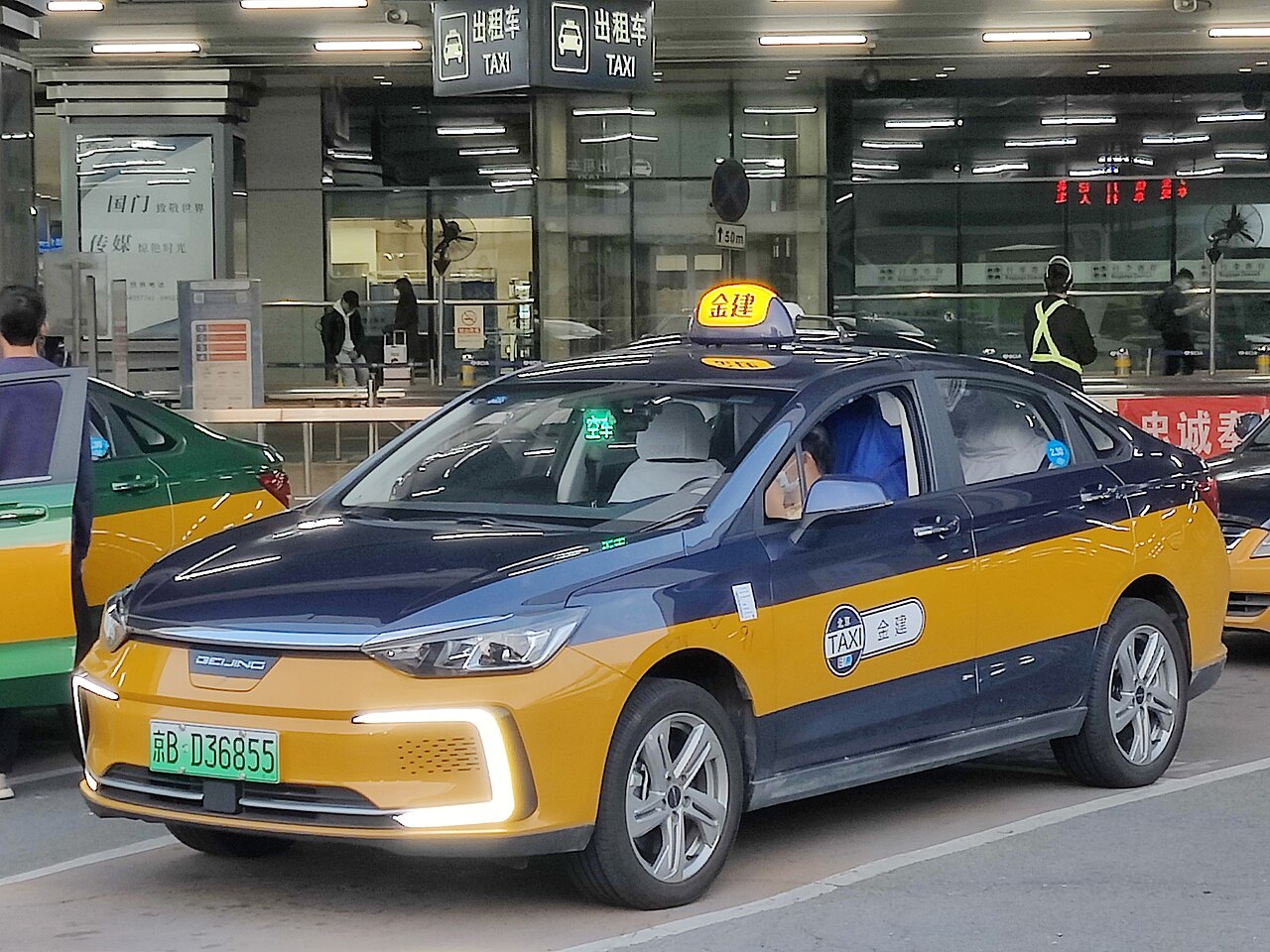
Street taxis are everywhere and metered, and are a good answer when your phone is dead or the app cannot find a car. The only real friction is language: assume no English.
The fix is to never rely on speech. Show the address in Chinese characters — a screenshot, the hotel's business card, the confirmation page with both names on it. Have your hotel's card in your wallet from the first day; it is the single most useful piece of paper you will carry.
Pay by QR code or cash. In the big cities the meter is normally used without argument — if a driver refuses to run it, get out and take the next one. The airport is where to be careful: take the official queue rather than anyone who approaches you inside the terminal. A driver who offers you a ride before you reach the rank is not a taxi driver.
04Buses: cheap, and the last thing to learn
City buses cost a fraction of the metro and go where it does not. They are also the hardest mode for a visitor: routes are posted in Chinese, and in most cities the announcements are too — the biggest cities have added English, but do not count on it — so you need to know your stop by sight. The same transit QR code that works on the metro usually works on the bus, or you drop exact coins in the box — drivers give no change.
Worth it when the metro does not go there, in a small city that has no metro, or when a mapping app has told you exactly which stop to get off at and how many stops away it is. Otherwise, spend the extra and take the metro or a DiDi.
05Shared bikes, the best-value thing in the country
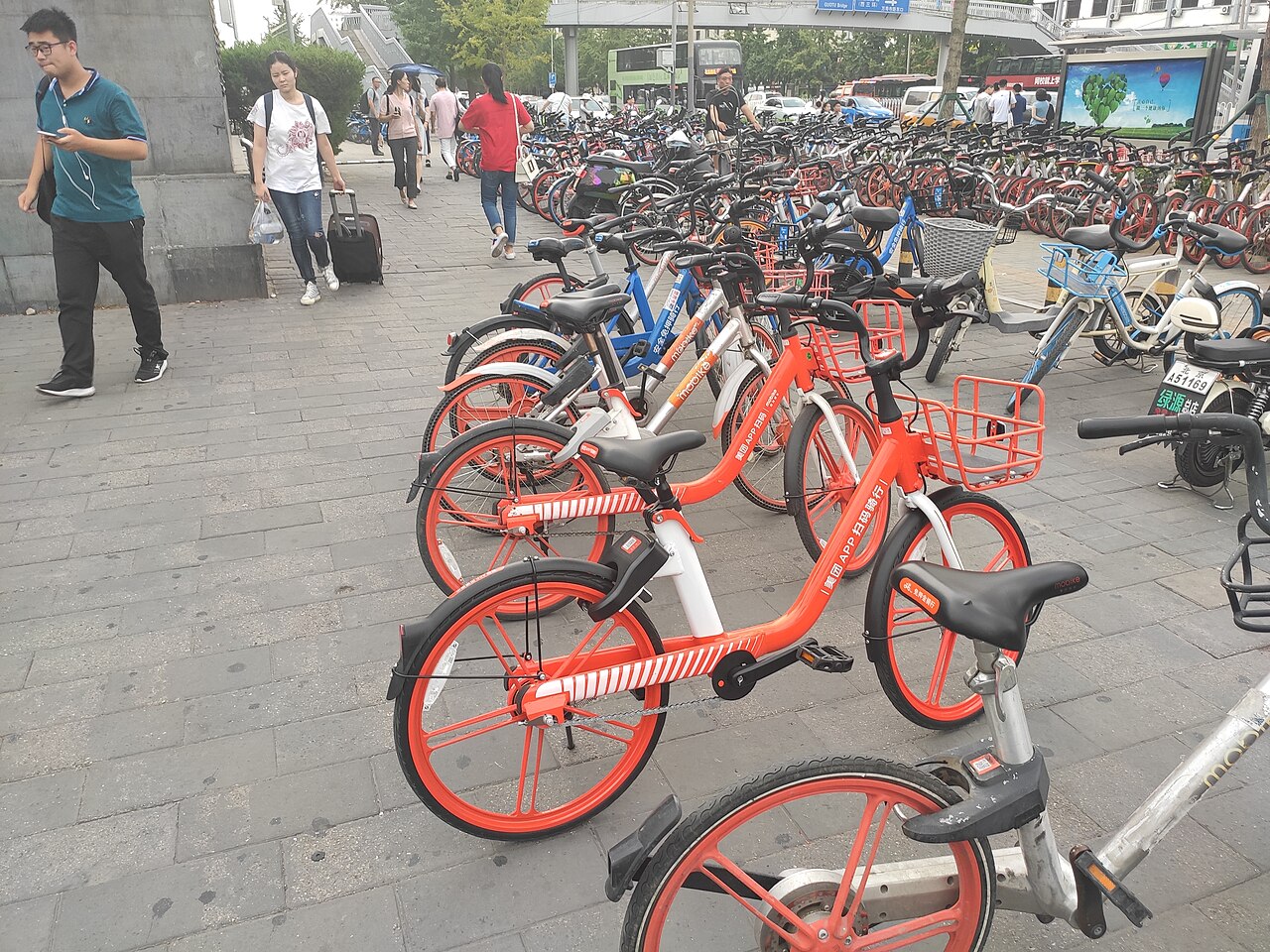
Most Chinese cities are carpeted in shared bikes — Meituan's yellow, Hellobike's blue, DiDi's Qingju green — though a few smaller towns have none at all. Scan the QR code on the bike inside the matching app, the lock pops open, and you ride. They are cheap, but the block you pay for varies by city — fifteen minutes in most, ten or sixty in some — and weekends and holidays cost more. Nothing else solves the last kilometre as well.
- Each brand has its own door. Hellobike (blue) unlocks in the Hellobike app or in Alipay, Meituan (yellow) in the Meituan app or its WeChat mini-program, and Qingju (green) in the Qingju or DiDi app. Deposits are largely a thing of the past.
- Register before you ride. All three require a verified identity, and a passport normally works — but some entry points only accept a Chinese ID card, and an overseas number may not receive the code. Going in through the Alipay or WeChat account you have already verified is the easy path.
- Park inside the marked bays. White-outlined rectangles on the pavement, and increasingly the app will not end the ride until you are in one. Leave it outside the box, in a no-parking zone or beyond the operating area and it can add a fee as well as keep the ride running.
- Where there is a bike lane it is usually wide and separated, but it is also routinely full of parked cars and of silent electric bikes moving considerably faster than you, and some cities have no proper lane at all. Look before you swing out.
- Shared pushbikes come with no helmet and hardly anyone wears one; the electric ones in some cities carry a smart helmet and will not start until you put it on. Ride accordingly.
06Airports and stations
Most big airports have a rail link into the city — an express line, a metro branch, or both — and at busy hours it is usually both quicker and far cheaper than the road. Signage to it is in English from the moment you clear customs. Which line it is, what it costs and when the last train leaves differ by city, so look up the airport you are actually landing at rather than planning from a general figure: Beijing Capital and Daxing, Shanghai Pudong and Hongqiao, Guangzhou Baiyun and Chengdu Tianfu each run their own, and they are not interchangeable.
If you take a car instead, the two options are the official taxi queue and ride-hailing from the designated pickup level, which is generally a floor above or below arrivals and clearly signed. Both are fine; neither involves talking to anyone who approaches you in the terminal.
Railway stations are the same in reverse, with three additions: big-city stations are enormous and have airport-style security at the entrance; the gate closes to passengers a few minutes before departure, so a train you can still see has already left you behind; and a passport will not work the automated gates, so you queue at the manual verification channel instead. That is why you allow half an hour more than feels necessary. Departures are covered in booking 12306 as a foreigner.
07Maps that actually work
- Amap and Baidu Maps are what the country runs on: accurate, live, and they know which metro exit you want. Both are Chinese-language by default, but Amap now publishes an official English edition as a separate overseas app, with English search and English ride-hailing — install that one before you fly rather than fighting the Chinese interface.
- Apple Maps works on a normal Chinese connection and is decent for getting oriented.
- Google Maps is not reachable without extra setup and its China data is poor even then. Do not plan around it.
- The metro's own city app — or the wall map on the platform — beats all of them for underground navigation, and several cities now fold metro, buses and the airport link into one account. Generate your transit code before you go down: a code you already hold keeps working with no signal, but the app needs a connection to produce or refresh one.
Getting any of these working depends on having a connection in the first place, which is its own guide: getting online in China.
Source box
- Beijing rail network — operator timetables and first/last trainsOFFICIAL
- Shanghai Metro — official first and last train timesOFFICIAL
- Beijing municipal government — foreign bank cards at every metro gateOFFICIAL
- Shanghai municipal government (EN) — how to use shared bikesOFFICIAL
- China Railway 12306 — arrival and departure guideOFFICIAL
- Trains in China: booking 12306 as a foreignerGUIDE
- Getting online in ChinaGUIDE