
01In an emergency, the number is 120
120 is the medical emergency number across the country. The others worth knowing are 110 for police, 119 for fire, and 122 for the traffic police at a road accident. They are free to dial from any phone.
What you should not assume is English. Beijing is the one city with a published arrangement — a municipal regulation in force since January 2022 says emergency hotlines shall provide foreign-language interpretation to those who need it, and the city's foreign affairs office describes free telephone interpretation in eight languages bridged onto the call. That is an interpreter joined to the line, not an English-speaking dispatcher, and no equivalent published guarantee was found for Shanghai, Shenzhen, Guangzhou or Chengdu. Plan as though the call will be in Chinese: ask a hotel receptionist, a colleague or a passer-by to make it, or have your address in Chinese characters ready on screen.
- Give the address first, in Chinese if you possibly can. Everything else can be worked out on arrival; the address cannot.
- The ambulance is billed, and separately from the hospital. Beijing's operator publishes 80 yuan for the call-out plus 70 yuan for the first three kilometres and 7 yuan per kilometre after that, with a further charge if you have to be carried down a building with no lift. Tariffs are set locally, but that is the order of magnitude.
- In Beijing, 999 is no longer a second ambulance number. Since 1 January 2022 the city's pre-hospital emergency line is 120 alone; 999 now runs non-emergency transport such as discharge rides and inter-provincial transfers. Older guidebooks still offer it as an alternative — it is not one. Outside Beijing, 120 is the emergency line everywhere; Shanghai additionally runs 962120 for non-emergency medical transport.
- A taxi is often faster than waiting for anything that is not life-threatening, and every hospital has an 急诊 (emergency) entrance that is open around the clock.
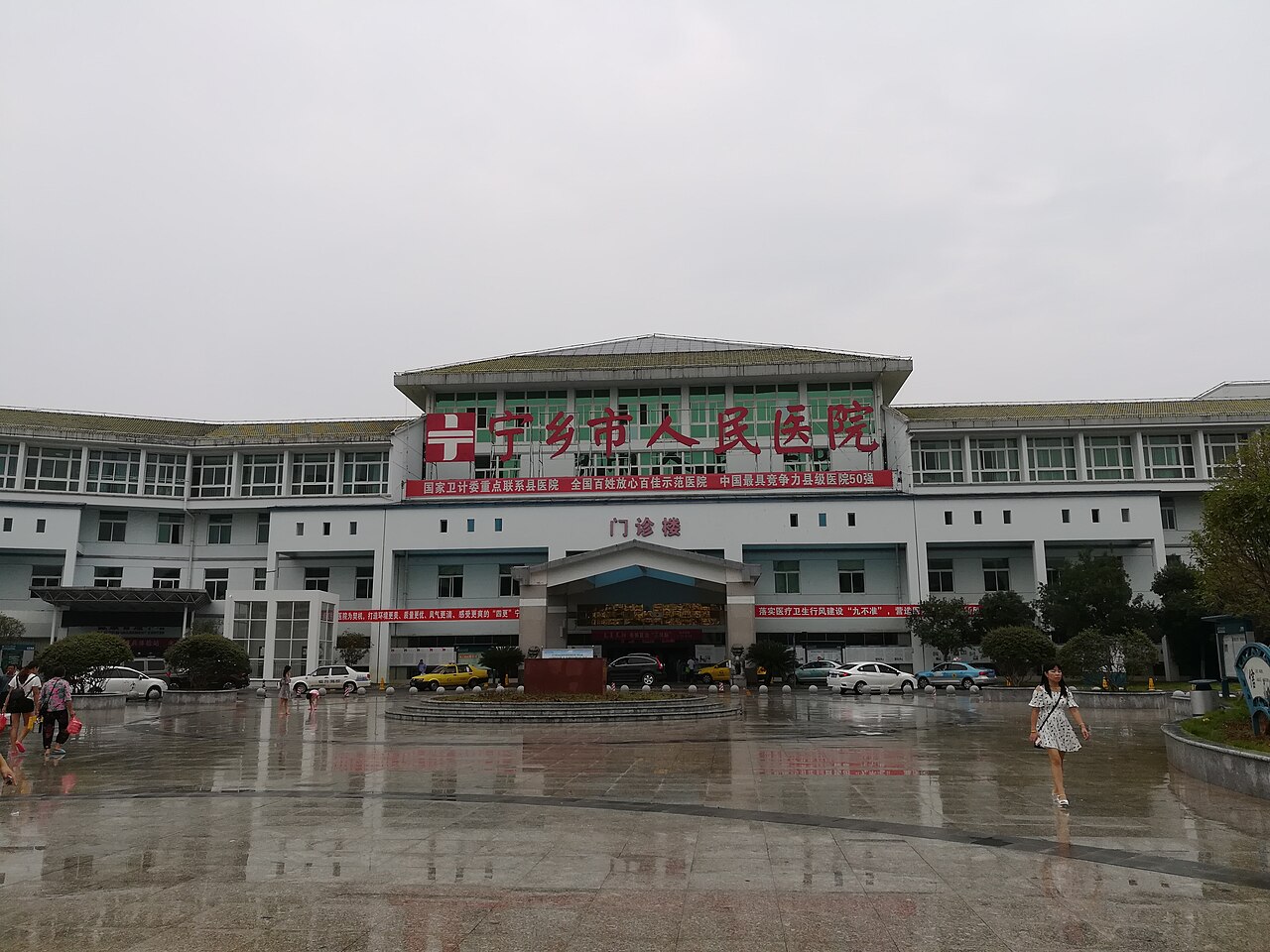
02Three doors, an order of magnitude apart
Chinese cities give a foreign patient three realistic choices, and they differ in cost far more than in quality of medicine.
- An ordinary public hospital outpatient department (门诊). Cheapest by a wide margin, and the medicine is good — big-city tertiary hospitals are as well equipped as anywhere. The friction is language, queueing and a booking system built for people with a Chinese ID.
- A public hospital's international department (国际部) or special-service clinic (特需). The same doctors and the same building, with English-speaking staff, a calmer floor and a much higher fee. This is the middle option and, for most travellers with insurance, the sensible one.
- A private international hospital or clinic. English throughout, appointment times that mean something, and the only place where direct billing with a foreign insurer is common. Beijing United Family's own Beijing list puts a general outpatient consultation at 500–1,800 yuan and a CT scan at 1,760–7,960 yuan, before any treatment. That is the price of the frictionless route — and note it is a per-city list: the same chain quotes different figures in other cities, so read the one for the branch you are actually walking into.
To find the English-speaking option in a city you do not know, use a consular list rather than a search engine. The UK Foreign Office publishes a list of medical facilities in China organised by province and city, flagging for each whether it is public or private and whether English-speaking staff are available. It carries the usual no-endorsement disclaimer, and it is far more reliable than a review site. Most embassies publish their own equivalent.
03Getting seen: 挂号, and your passport
Chinese hospitals run on 挂号 (guàhào) — registration. You register for a department, you are given a slot, you see a doctor, and the prescription is dispensed by the hospital pharmacy on the way out. Registration is real-name, and a passport is a valid identity document for it: Beijing's rules on outpatient booking name 护照 explicitly alongside the resident ID card. Carry the physical passport.
The part that catches people out is that walking in is no longer the norm. Big hospitals have moved most slots to advance booking, released on a rolling window and time-banded to within half an hour, with only a proportion held back for on-site release. Turning up at nine in the morning at a famous tertiary hospital can mean no slot at all that day.
- Book ahead where you can. Each hospital has its own WeChat mini-program or app; some cities also have a municipal booking platform. If the interface defeats you, the hotel desk or a colleague can do it in a minute.
- Or use the international department, which generally takes bookings by telephone and holds same-day capacity. This is what the higher fee actually buys.
- Self-service machines in the lobby sell whatever slots are left for today, and usually have an English option.
- Emergency (急诊) needs no booking, ever. If it cannot wait, go there instead and do not try to work the outpatient system.
On money at the door: public hospitals stopped taking outpatient deposits nationwide on 31 March 2025, under a joint notice led by the National Health Commission, with balances refunded by the end of that year. Read the exceptions, because they are the traveller's situations exactly — emergency care, emergency observation, outpatient surgery and emergency surgery may still ask for a deposit, with the patient's consent. Non-public institutions were invited to follow the rule rather than bound by it.
04Pharmacies: a green cross, never a red one
Pharmacies are everywhere, often open late, and staffed by people who will try hard to help across a language gap. Look for the characters 药店 and a green cross.
Do not look for a red cross. A 1996 State Council order bans the red cross emblem on pharmacies by name, with a fine of up to 10,000 yuan, so in China that symbol marks almost anything except a place that will sell you paracetamol. The green cross is trade convention rather than a national legal requirement — Beijing issued guidance in late 2024 that encourages a standard illuminated green-cross sign rather than mandating one — but in practice it is the signal you are looking for.
What a pharmacy may sell you is set nationally. Medicines are split into prescription drugs, which need a prescription from a licensed physician, and non-prescription (OTC) drugs, which you may choose yourself. OTC is split again, and the colour of the OTC badge on the box tells you which: orange-red is Class A and dark green is Class B, the safer class. A small and growing number of supermarkets and convenience stores hold a separate provincial licence to sell Class B, but that approval is granted store by store and most never had it — assume you need an actual pharmacy.
Two practical consequences. Antibiotics are prescription-only and a pharmacy should not sell them over the counter, so bring what you have been prescribed at home. And a pharmacist cannot write you a prescription: if you need one, that is a hospital visit.
05The names to point at
Brand names do not travel. Generic names do, and Chinese boxes print them. These are the ones worth having on your phone:
- 对乙酰氨基酚 — paracetamol / acetaminophen. Fever and pain.
- 布洛芬 — ibuprofen.
- 口服补液盐 — oral rehydration salts. The thing to actively ask for with any stomach upset, and the one most travellers forget.
- 蒙脱石散 — smectite. What you will almost certainly be handed if you say you have diarrhoea. The drug regulator files it as an anti-diarrhoeal over-the-counter medicine, but Chinese clinicians and state media are blunter about what it does: it is an adjunct that does not stop diarrhoea on its own, and rehydration is the part that matters. Ask for the oral rehydration salts alongside it.
- 氯雷他定 / 西替利嗪 — loratadine / cetirizine. Antihistamines.
One genuine hazard. Chinese cold remedies are usually compound products, and 对乙酰氨基酚 (paracetamol) is inside a great many of them, alongside 伪麻黄碱 (pseudoephedrine), 右美沙芬 (dextromethorphan) and 氯苯那敏 (chlorphenamine). Take a Chinese 感冒药 and then your own paracetamol on top and you are double-dosing the one drug in the box with the narrowest margin before liver damage. Read the ingredient list, not the brand.
If a symptom is more than a nuisance — a fever that will not come down, a stomach upset with blood in it, chest pain, an injury, anything neurological — this section stops being useful. Go to a hospital.
06Paying, and getting it back
Healthcare in China is not free and the bill is yours. The UK government's own travel advice puts it plainly — care "is not free in China and can be very expensive" — and tells travellers to hold insurance covering treatment, medical evacuation and repatriation. Evacuation cover is the part people skip and the part that costs six figures when it is needed.
There are two ways your policy pays.
- Direct billing, where the hospital invoices your insurer and you pay nothing up front. This is negotiated per insurer and per hospital — it is not a property of your policy. It lives at private international hospitals and at some public hospitals' international departments. Expect to show the insurance card and the passport at the first visit and to sign a claim form at the cashier.
- Pay and claim, which is everything else, including any ordinary public hospital outpatient department.
If you are paying and claiming, collect the paperwork before you leave the building. A payment screenshot is not a claim. Allianz Global Assistance, to take one insurer's published requirements, asks for original itemised medical bills plus a copy of the treating physician's report, and an accident report where one applies; most policies want something similar, and yours will list its own. In China the receipt is issued as a 医疗收费电子票据, a national electronic invoice — ask for it and for the itemised breakdown, and keep the prescription and any test results too. Check your own policy's document list rather than assuming.
07The part that happens before you fly
- Bring your own prescription medicines in their original packaging, with the prescription or a doctor's letter. Some medicines that are routine at home are controlled or unavailable in China, and the reverse is also true — check with the Chinese embassy if anything you take is unusual.
- Insure for evacuation and repatriation, not just treatment.
- Save your embassy's medical facility list for the cities you are visiting, offline, before you need it.
- Put 120 in your phone, and your hotel address in Chinese characters somewhere you can show it without a connection.
Getting a translation app working, and knowing what to do when it does not, is its own problem: see getting online in China. Paying at a hospital cashier uses the same apps as everywhere else — how foreigners pay in China.
Source box
- National Health Commission and five other departments — abolition of outpatient deposits at public hospitals (国卫办财务发〔2025〕5号) ↗OFFICIAL · 25 MAR 2025
- State Drug Administration Order No. 10 — classification of prescription and non-prescription drugs (trial), 1999 ↗OFFICIAL · LAW
- State Council Order No. 194 — use of the red cross emblem, Art. 18 ↗OFFICIAL · LAW
- Beijing Health Commission — outpatient booking rules, naming the passport as valid ID ↗OFFICIAL · BEIJING
- Beijing Municipal Government — Medical Guide for Foreigners ↗OFFICIAL · BEIJING
- GOV.UK — list of medical facilities in China, by city ↗OFFICIAL · 28 MAY 2025
- GOV.UK — China travel advice: health ↗OFFICIAL
- How foreigners pay in ChinaGUIDE