
01Ordering without a word of Chinese
The thing most first-time visitors brace for has quietly stopped being a problem. In the last few years ordering moved onto the phone: a sticker on the table carries a QR code, you scan it with WeChat or Alipay, and a menu opens with a photograph beside every dish. You tap what you want, it goes to the kitchen, and you pay in the same screen. Many of these menus have an English toggle in the corner; where they do not, your browser's translate button does the job, because the menu is a web page.
Below that tier — the noodle shop with six tables, the breakfast stall — there is no code and no English, and it is still easy. There is almost always a photo menu, a picture board above the counter, or a glass case of what is available. Point, and say zhè ge (这个, "this one"). Hold up fingers for how many. This is not a workaround; it is how a lot of people order.
Camera translation is the single most useful thing on your phone at a table. Point it at a menu and the dish names come back readable — imperfect, occasionally comic, always enough to tell chicken from tripe.
02Chilli: how to ask, and what the answer means
Two phrases cover most of it. Bú yào là (不要辣) is "no chilli". Wēi là (微辣) is "mild". Write them down or show them on your phone; both are understood everywhere.
What to expect from the answer depends on where you are. In Guangdong or Jiangsu, a dish is not hot unless it says so. In Sichuan, Chongqing and Hunan, "mild" is calibrated against a local baseline, and mild there can still be the hottest thing you have eaten. Ask anyway — it genuinely moves the dial — but order one dish first and find out where the dial is.
The other half of Sichuan heat is not heat at all. Málà (麻辣) pairs chilli with Sichuan pepper, which is not spicy but numbing: a buzzing, slightly electric feeling on the lips. People who dislike chilli sometimes love it, and people who love chilli are sometimes startled by it. Asking for less chilli does not remove it — the phrase for that is bú yào huājiāo (不要花椒).
One more that saves a lot of disappointment: bú yào xiāngcài (不要香菜), no coriander.
03The regional map, in one page
"Chinese food" is roughly as useful a category as "European food". What you will actually meet, by where you are going — this is a traveller's map of destinations, not the classical list of the Eight Great Cuisines:
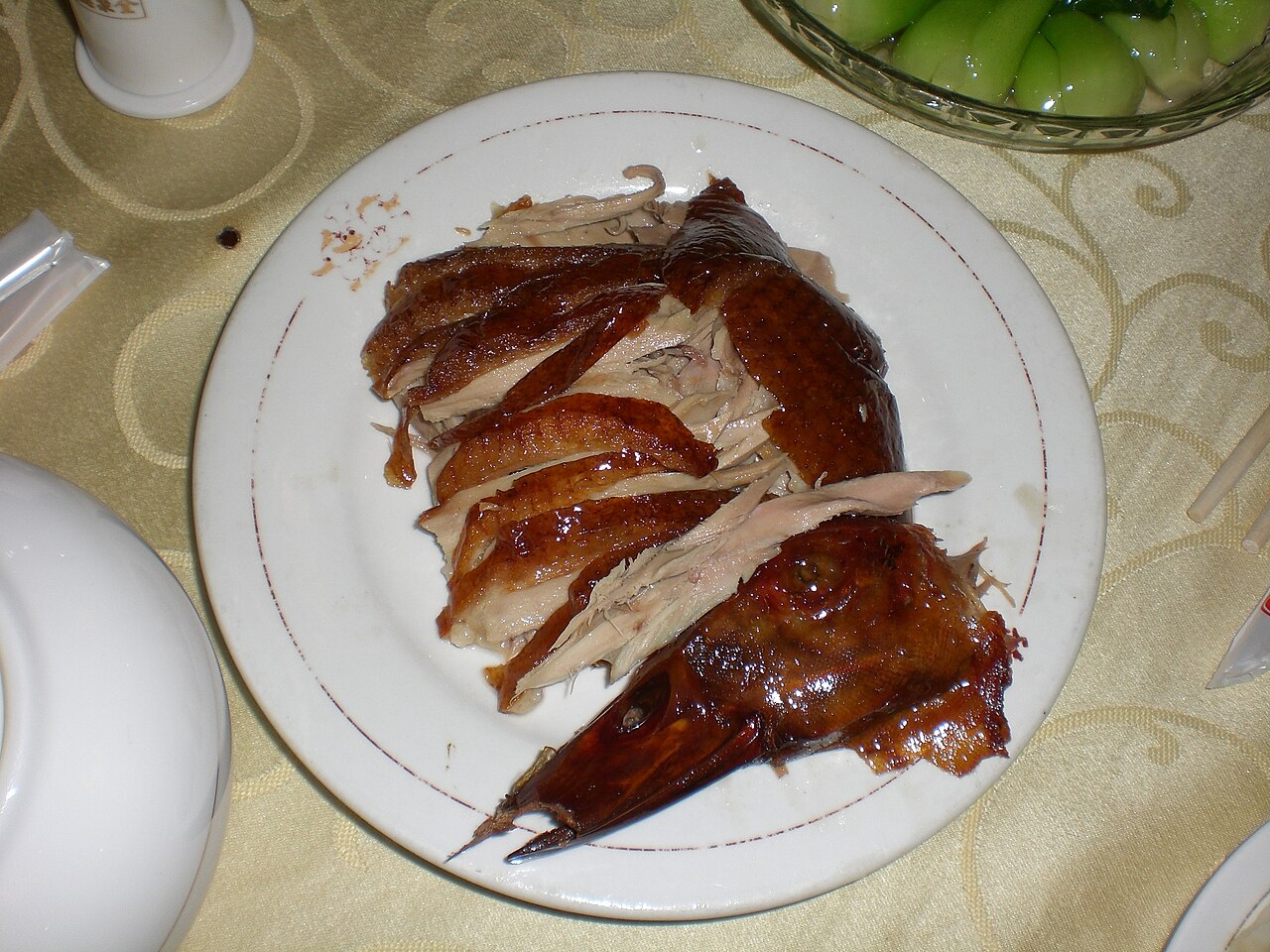
- Beijing and the north. Wheat country: dumplings, hand-pulled noodles, sesame flatbread, and roast duck carved at the table. Flavours are savoury and garlicky rather than hot.
- Sichuan and Chongqing. Chilli and Sichuan pepper, hotpot, mapo tofu, cold noodles. The food most people mean when they say Chinese food is spicy.
- Hunan. Hotter than Sichuan by some measures, but a dry, direct heat without the numbing. Smoked and cured meats, fermented chillies.
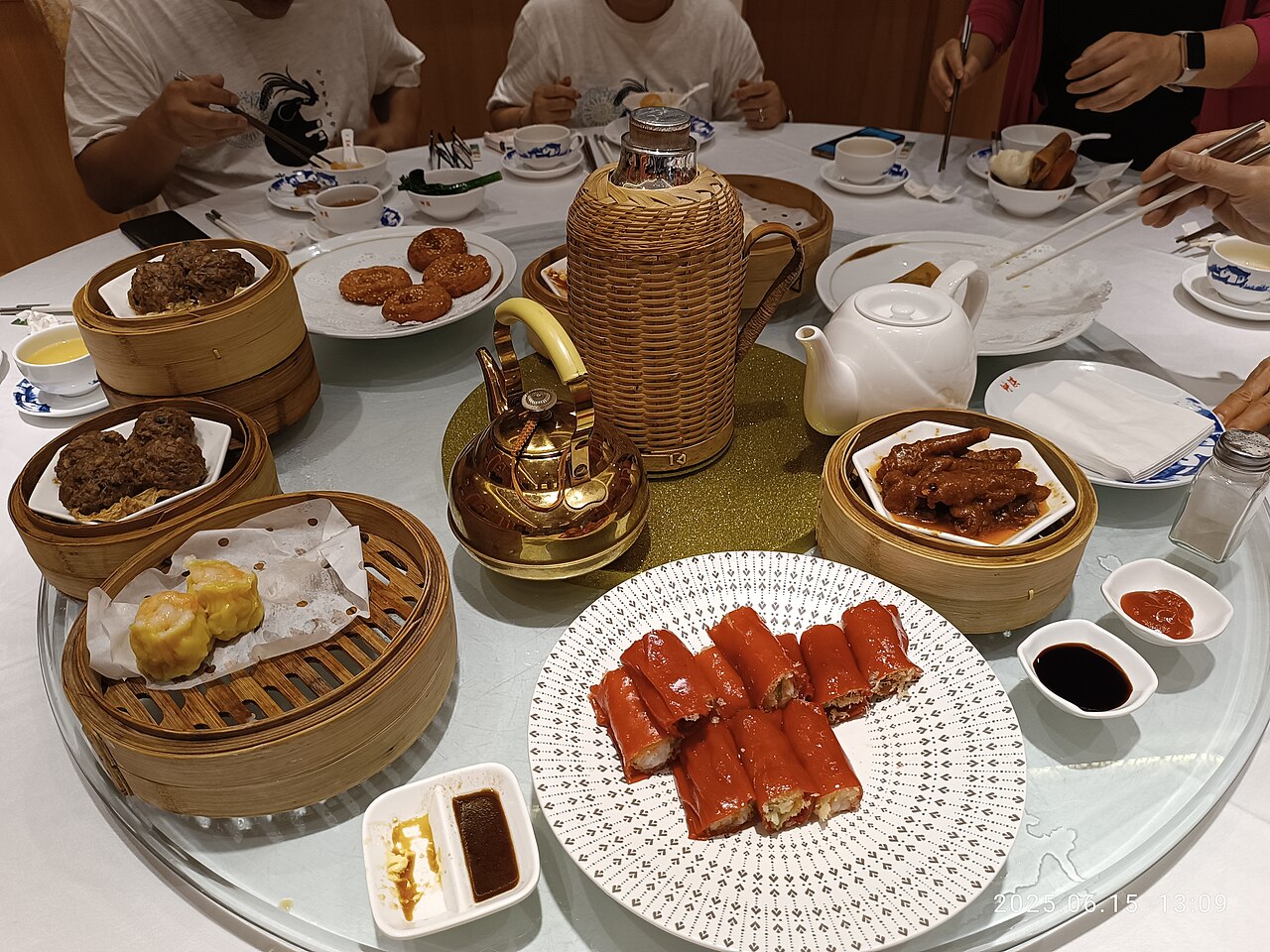
- Guangdong and Hong Kong. Cantonese: dim sum in the morning, steamed fish, roast meats, clear soups. Mild, ingredient-led, the least intimidating place to start.
- Shanghai and the Jiangnan towns. Sweeter and gentler — soup dumplings, braises glossy with soy and sugar, freshwater fish and river shrimp.
- Xian and Shaanxi. Lamb, cumin, wide hand-torn noodles, bread soaked in mutton soup. A Silk Road pantry rather than a Chinese one.
- Yunnan. Rice noodles in a hundred forms, wild mushrooms in season, herbs and sourness, and the mildest borrowing from Southeast Asia.
- Xinjiang. Cumin lamb skewers, hand-pulled noodles, pilaf and naan. Halal by default, and found in every big city, not only in the northwest.
04Hotpot, decoded
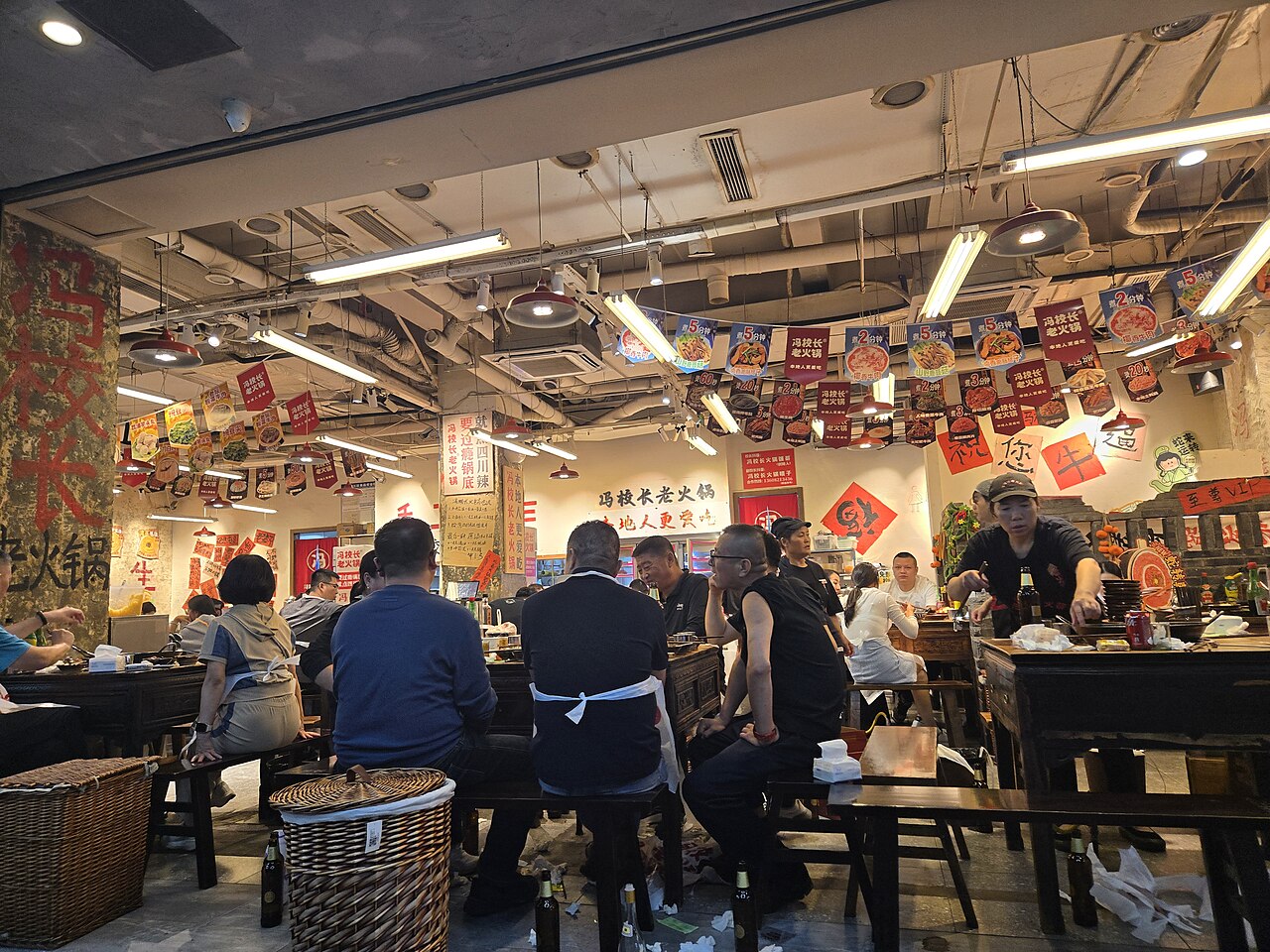
A pot of stock simmers in the middle of the table and you cook your own food in it. It is the most social meal in the country and the one people are most nervous about ordering, so here is the whole sequence.
- Choose the broth. If there is a split pot — the yuānyāng (鸳鸯), a yin-yang divider — take it: one side spicy, one side clear. It is the single best decision available to a first-timer, and nobody thinks less of you for it.
- Build a dipping sauce. There is a sauce bar, and it is self-service. In the north, sesame paste is the base. In Sichuan, it is sesame oil with garlic, which cools the chilli rather than adding to it. Spring onion, coriander, vinegar, chilli oil and crushed peanut are the usual additions.
- Order in rounds. Meat is sliced paper-thin and cooks in ten to twenty seconds — swish it, do not abandon it. Leaf vegetables take a minute, potato and lotus root three or four, and anything with a shell or a bone longer.
- Cook it through. Thin lamb and beef are quick, but processed meatballs, offal and dumplings are not, and they are the ones worth watching. When in doubt, give it another minute.
Safe first order for two: thin-sliced beef or lamb, a green vegetable, potato slices, tofu skin, and a bowl of noodles at the end when the broth has become the best thing on the table.
05Vegetarian, halal and allergies
Vegetarian takes more care than the abundance of vegetables suggests. A plate of greens may be cooked in pork fat, finished with oyster sauce, or sitting in a chicken stock, and "no meat" is often heard as "no pieces of meat". Two reliable answers: eat at a dedicated vegetarian restaurant, which in many cities means the one attached to a Buddhist temple, and carry a written card. Wǒ chī sù (我吃素) means "I eat vegetarian" and is the phrase to lead with.
Halal food is easier than most visitors expect. Look for the word 清真 (qīngzhēn) on the sign — usually with Arabic script beside it. Xinjiang and Lanzhou (Lanzhou lamian) restaurants are usually halal and common in most Chinese cities — though small towns may have none, so check ahead if it matters to you. The steadier test is to search 清真 or "halal" on Amap or Dianping, or to look near a local mosque.
Have your allergy written in Chinese on a card and as a photo on your phone — peanut, shellfish, gluten, whatever it is. Kitchens take it seriously when they can read it, and no translation app should be the thing standing between you and an anaphylactic reaction. Peanut and sesame in particular turn up in sauces where nothing on the menu mentions them.
06The manners that actually matter
Most of what gets written about Chinese table etiquette is either wrong or does not matter. Four things do.
- Dishes are shared. They arrive as they are ready, in the middle of the table, and everyone eats from all of them. Ordering one dish each and guarding it is the visible foreigner move; order fewer dishes than there are people and add more if you are still hungry.
- Don't stand chopsticks upright in rice. It looks like incense at a funeral. Lay them across the bowl or on the rest.
- Tap two fingers when someone pours your tea. It means thank you without interrupting the conversation, and it is the one piece of etiquette that will make a table smile.
- Let the bill fight happen. Splitting is not the default in a social meal; someone will insist, and the polite move is to protest once and then thank them properly — and to get the next one.
And the thing not to do: do not tip. It is not customary in mainland China, and leaving money on the table will often get you chased down the street by someone returning it. A service charge sometimes appears on hotel and high-end restaurant bills; otherwise the price is the price.
Taking leftovers home is normal and not embarrassing — dǎbāo (打包) asks for a box.
07Street food, and the one rule
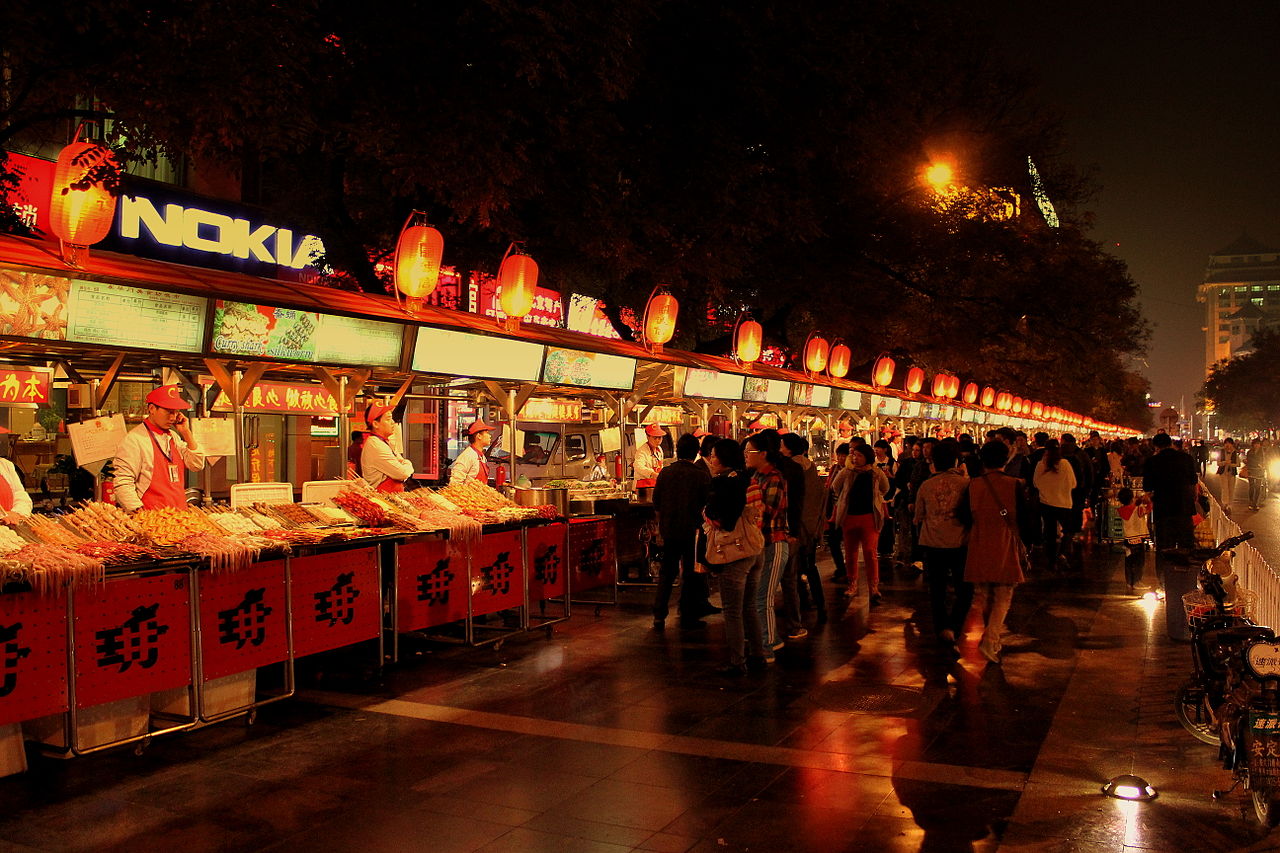
Eat where the queue is. A busy stall sells out and restocks; a quiet one has been holding the same tray since lunch. That single rule handles most of what people worry about, because the thing that makes food unsafe is usually time at room temperature rather than the setting.
- Cooked to order, in front of you, beats anything lukewarm on display.
- Drink bottled or boiled water. Tap water is not drinkable anywhere in mainland China; hotels and stations provide boiled water, and every shop sells bottles for small change.
- Ice is fine in chains and hotels and worth skipping at a roadside stall.
- Peel your own fruit, or eat it where it was cut in front of you.
- Give your stomach a few days before the chilli-oil deep end, especially if you are not used to it. It is adjustment, not illness.
08Paying
Almost everywhere, you pay by showing or scanning a QR code with Alipay or WeChat Pay, both of which now take foreign cards. Small restaurants may have no card terminal at all and no interest in cash for a large note. Set the apps up before you arrive and keep a few hundred yuan in small notes for the stall that has neither.
The full version of that, including which cards work and what to do when a payment is declined, is in how foreigners pay in China.