Xian ● CITY TOUR BOARD

Xian 西安

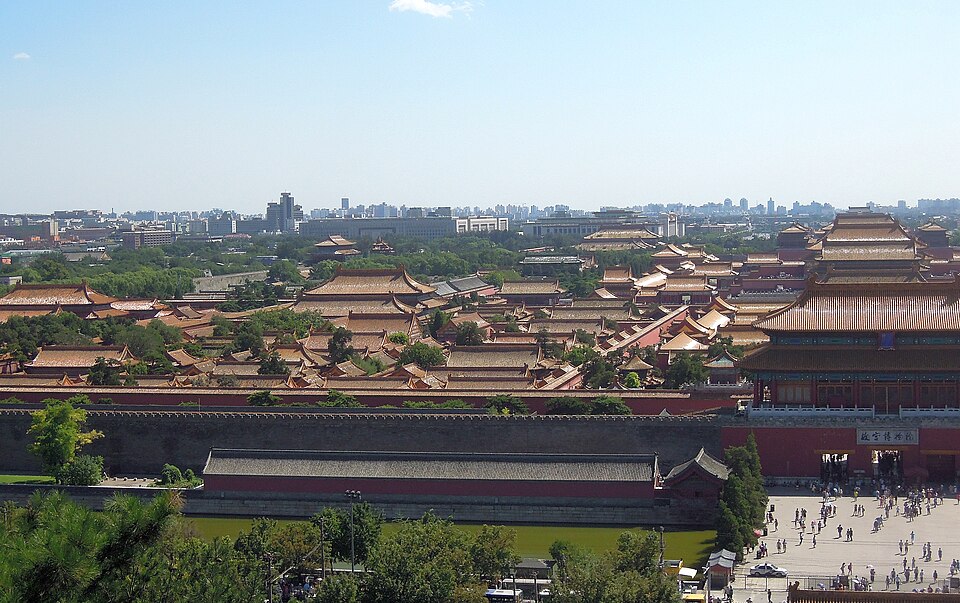
The Terracotta Army, a Ming-era city wall you can cycle, and the best street food in the country. The old Silk Road capital — compact, walkable, and easy on a first trip.

Introduction

Xi'an was Chang'an, the eastern end of the Silk Road, and what survives of it is unusually compact: a complete Ming city wall you can cycle in ninety minutes, with the old town walkable inside it. The exception is the Terracotta Army, which sits forty kilometres east and takes half a day on its own. Two full days covers the city and the warriors — which is why most people slot it between Beijing and Chengdu rather than flying in for it.

Travel highlights

Two bookings, made before you fly

The Terracotta Army releases tickets seven days ahead; the Shaanxi History Museum releases its free slots five days ahead at 17:00. Both are real-name — the passport you booked with is scanned at the gate.

The Army eats half a day

It is forty kilometres east of the wall, roughly an hour each way, and the site itself takes two to three hours. Plan it as a whole morning, not as a stop squeezed between two other things.

The wall bike is three hours

¥45 rents a single bike for up to three hours, not for one, with ¥5 for every extra ten minutes. The loop is nearly fourteen kilometres and takes about ninety minutes with stops.

Beiyuanmen is the tourist edge

Beiyuanmen, the lantern-hung street everyone photographs, is the outer layer of the Muslim Quarter. Xiyangshi and Dapiyuan run west off it and are cheaper; Sajinqiao is a few streets further out, by Qiaozikou station on line 6, and that is where the queues are local.

Travel alerts

Top attractions

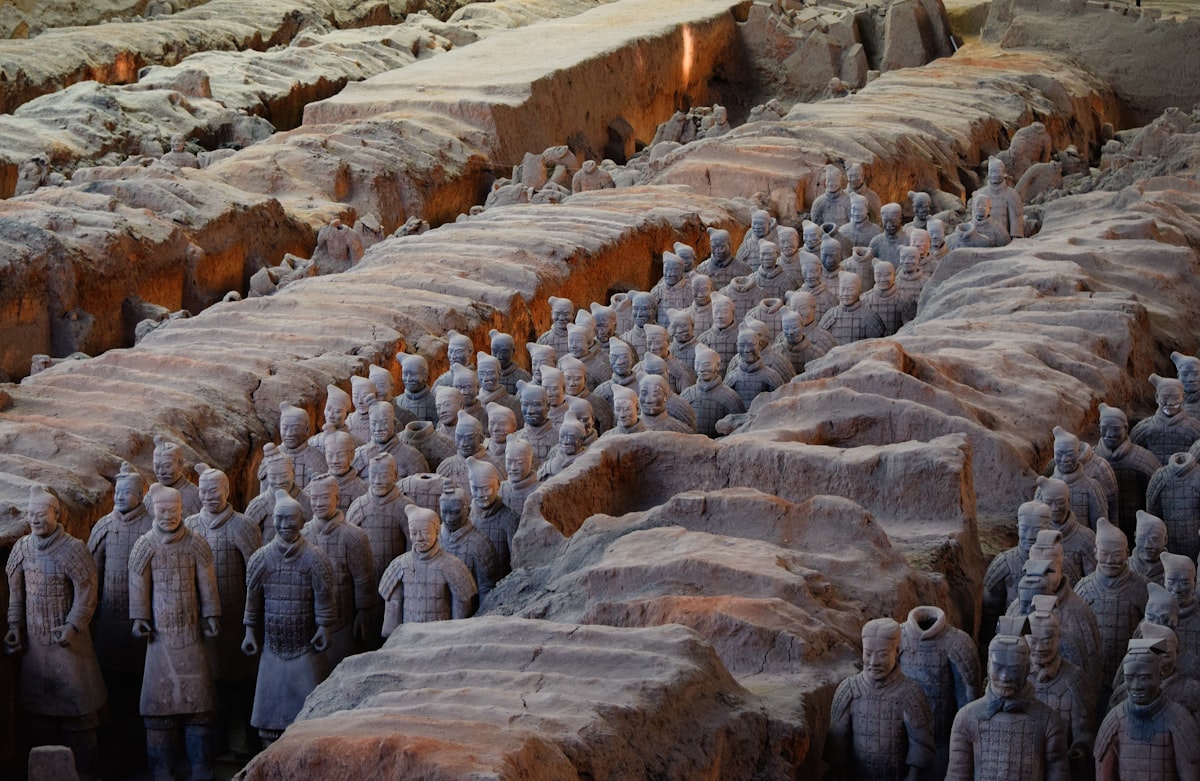
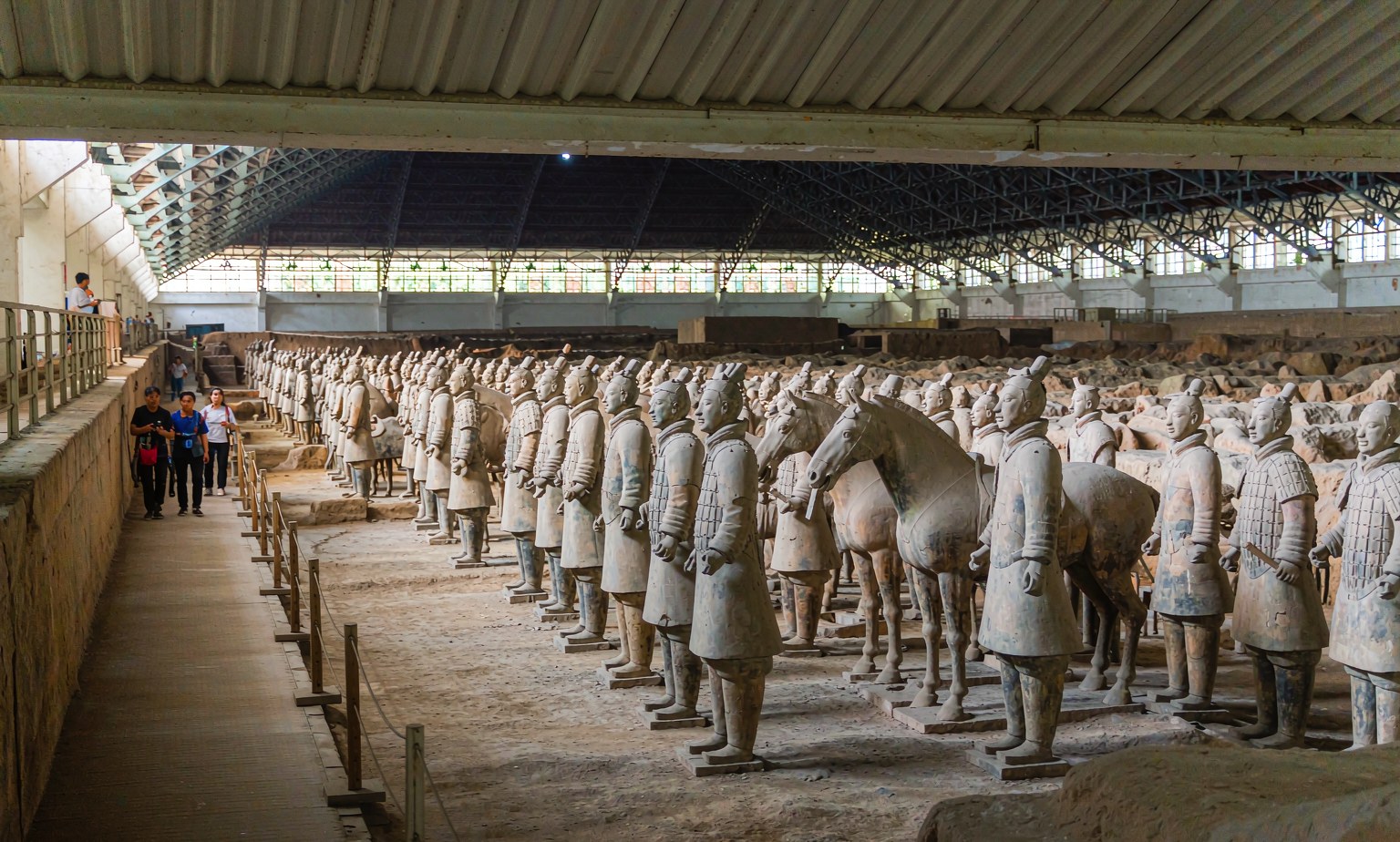
Rows of Terracotta Army warriors standing in the excavation pit near Xian

Terracotta Army

Three pits of life-size soldiers, found by farmers sinking a well in 1974 and still being excavated. Book seven days ahead — the passport you booked with is scanned at the gate. The same ticket covers the burial mound at Lishan Garden, a free shuttle away, and Huaqing Palace is a stop back down the same road.

Ming-era city wall and corner watchtower reflected in the moat at dusk, Xian

Xi'an City Wall

Nearly fourteen kilometres of Ming rampart, unbroken all the way round and wide enough to cycle two abreast. ¥54 to go up and ¥45 for a bike; rent at the South Gate, which sits directly above Yongningmen metro station. Go late afternoon, when the light is better and the day trips have left.

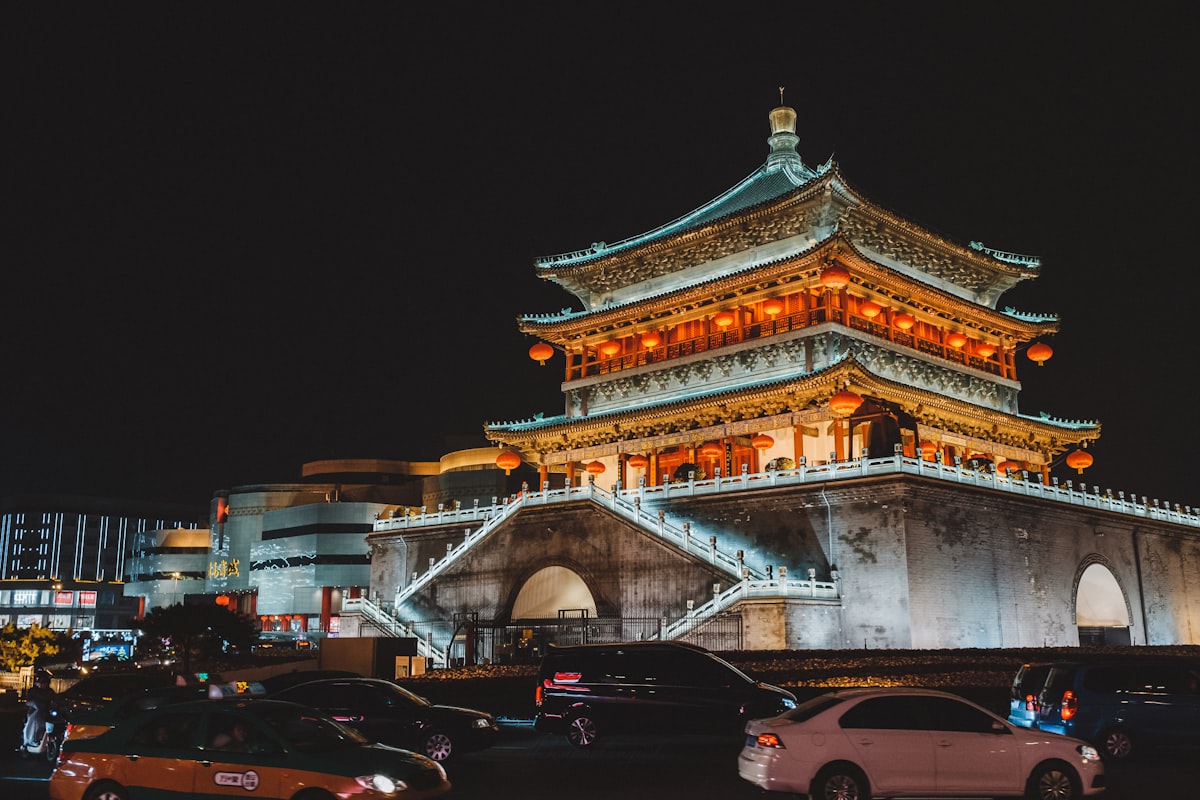
Xian Bell Tower illuminated at night above passing traffic

Bell & Drum Towers

Two Ming towers two hundred metres apart, marking the centre the whole grid was laid out from. You reach the Bell Tower through the underground passage from the metro — there is no crossing the traffic circle above — and a combined ticket for both is about ¥50. The Drum Tower's arch is the Muslim Quarter's front door.

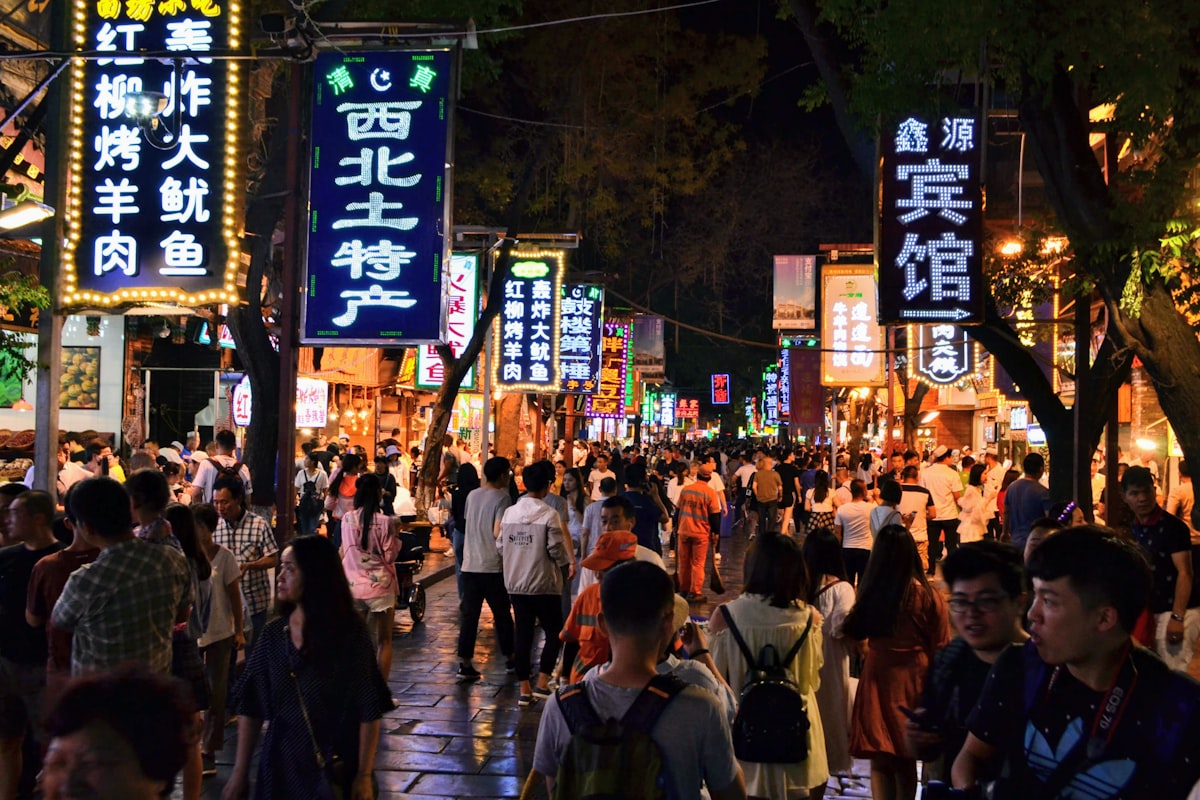
Evening crowds beneath neon signs in Xian's Muslim Quarter food street

Muslim Quarter

The Hui neighbourhood behind the Drum Tower, and the reason people eat well in this city. Beiyuanmen, the lantern-hung main street, is the tourist version of it; Xiyangshi and Dapiyuan run west off it and are cheaper and better, and Sajinqiao is a few streets further west again. It runs late, so put it after the wall rather than before.

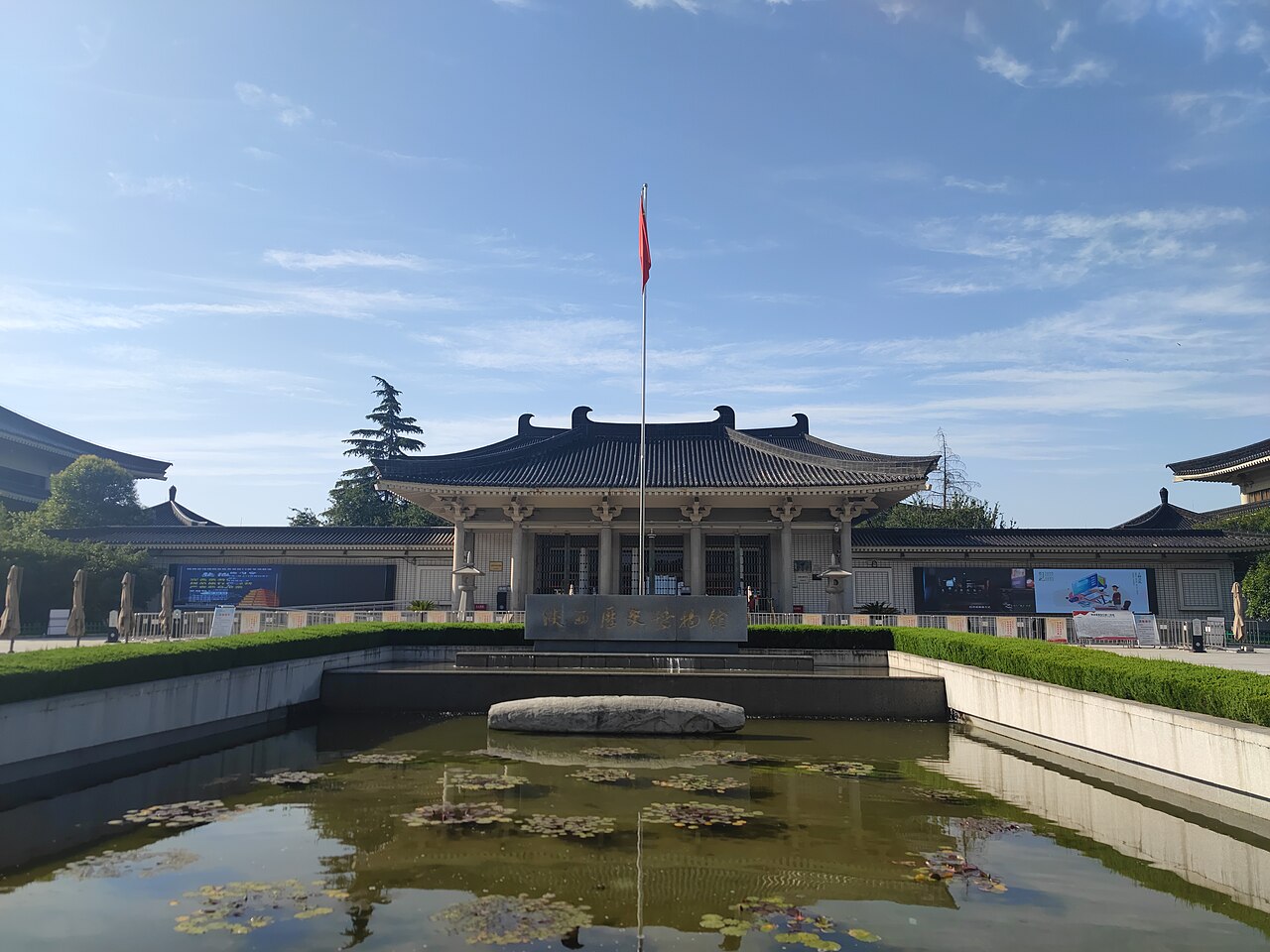
The Tang-style halls of the Shaanxi History Museum behind its forecourt pool

Shaanxi History Museum

The provincial collection, and the best two hours you can spend on the Tang dynasty. Free, but real-name booked and capped: slots release five days ahead at 17:00 Beijing time and go quickly. It has been opening seven days a week through the main season rather than closing Mondays, so check the date you want instead of assuming. The Hejiacun gold and silver in the Treasures of Great Tang hall costs ¥30 extra and is the part to pay for.

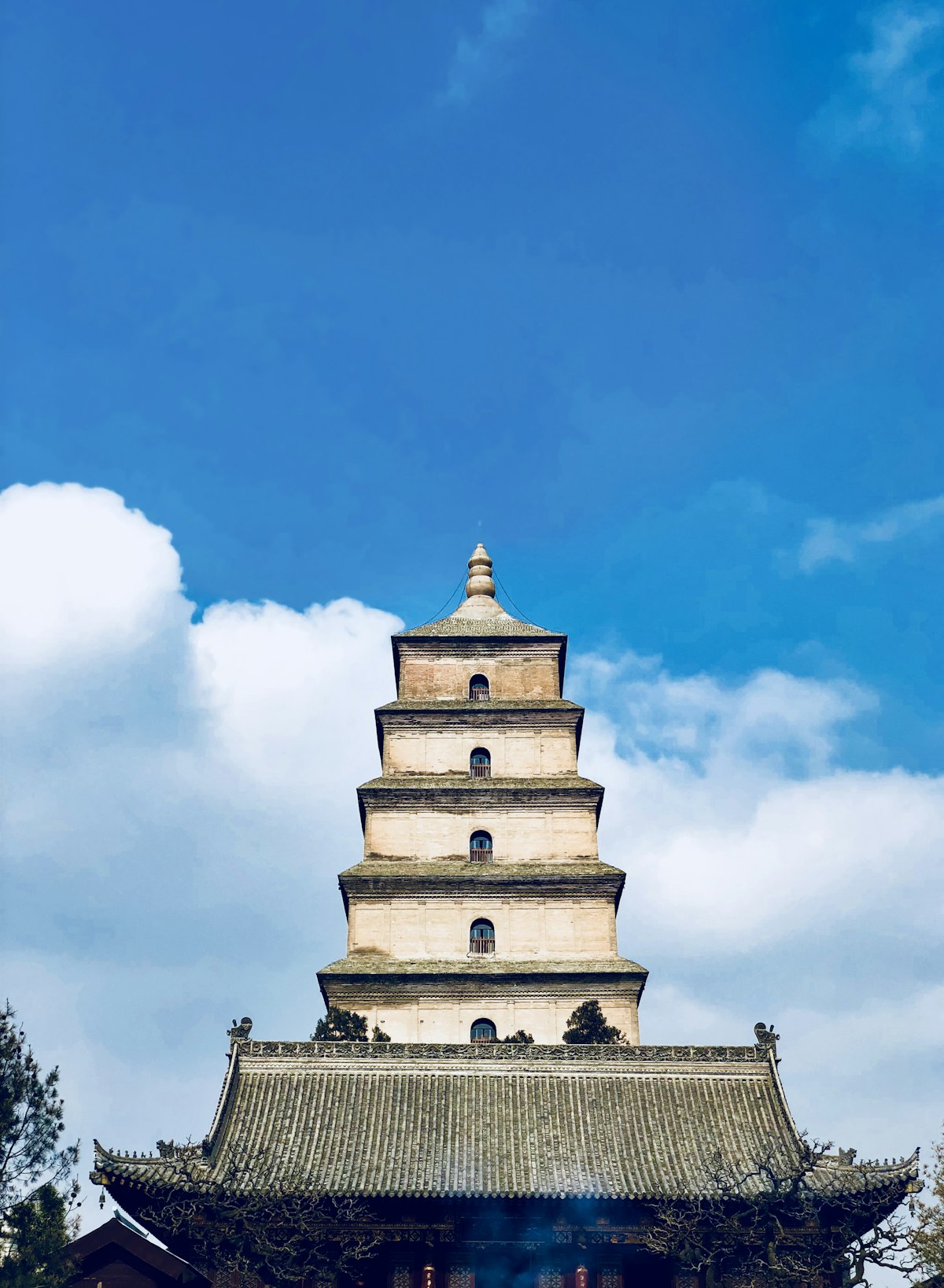
Giant Wild Goose Pagoda rising against a blue sky in Xian

Big Wild Goose Pagoda

A seventh-century brick pagoda raised to hold the sutras Xuanzang carried back from India, still standing in the Da Ci'en temple grounds. The grounds are about ¥40 in the main season and less in winter, and climbing the pagoda is ¥25 more, paid at the tower. The ticket window shuts about an hour before the grounds do, so make it an afternoon rather than an evening. Walk south afterwards into Tang Everbright City, which is free and only makes sense after dark.

Tang-style boulevard blazing with lights below a giant pagoda

Tang Dynasty Never Night City

China's most successful free night street: 2.1 km of Tang-style boulevard at the foot of the Big Wild Goose Pagoda, 5A-rated, open 24 hours, with 55 free performances a day — lights on at 19:30, half the crowd in rented hanfu. The downside is the crowd: weekend core sections hit crushing density between 19:00 and 21:00 — go after 21:00 on a weekday. Hanfu makeup and photo touts have drawn hidden-fee crackdowns, so agree the full price first.

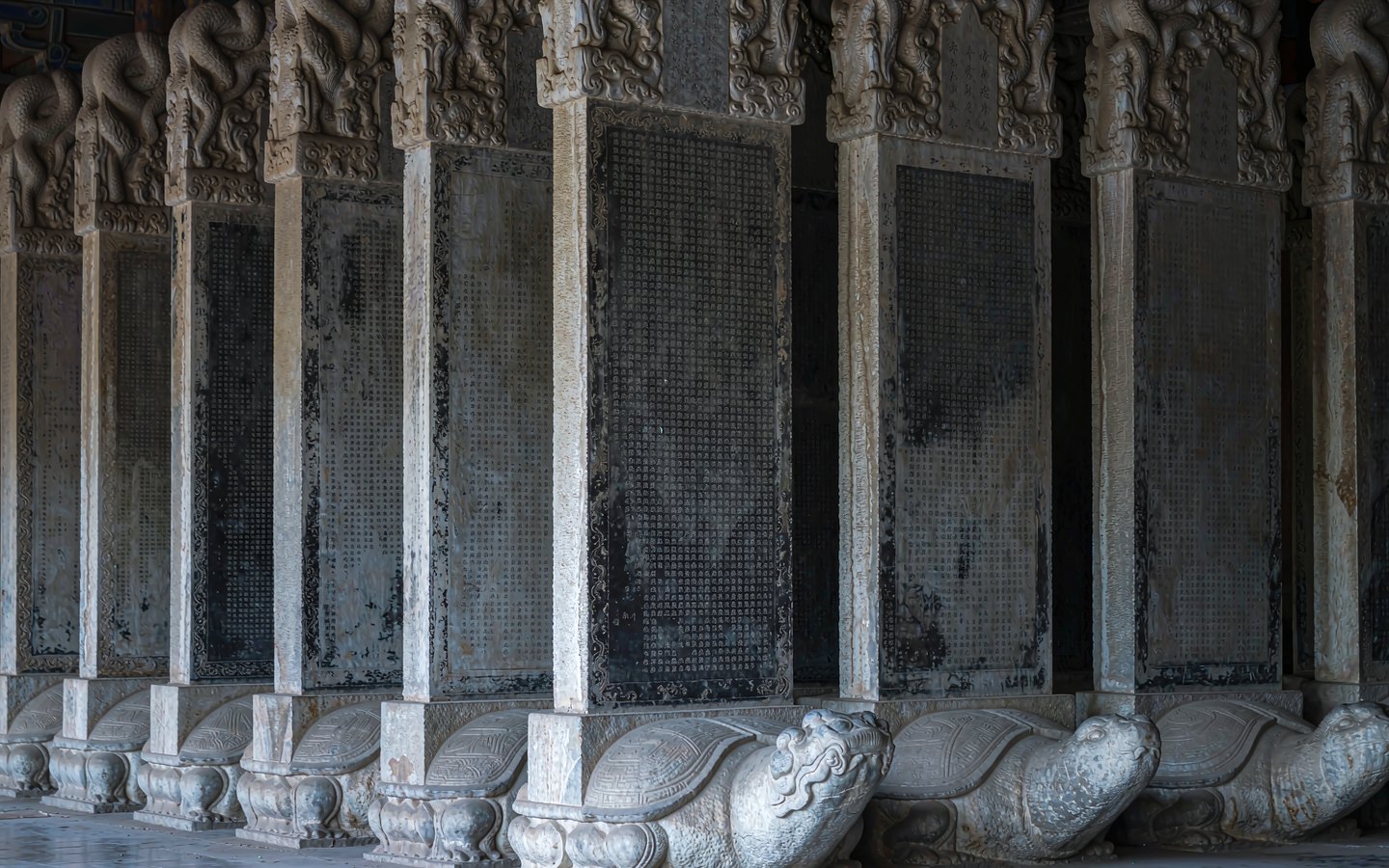
Ancient carved stone steles standing in rows in a quiet gallery

Xi'an Beilin Museum (Forest of Steles)

China's greatest stone library, freshly expanded in May 2025 from 800 to 2,000-plus exhibited pieces. For Western visitors the anchor is the Nestorian Stele — a bilingual Chinese-Syriac record of Christianity in Tang China, banned from leaving the country — plus the complete Confucian classics on 114 stones, the Six Steeds of Zhao Mausoleum and Yan Zhenqing's steles. ¥85 (half ¥42), real-name booking days ahead, 3–4 hours with a guide — expensive by Chinese museum standards and worth it.

2 more spots worth seeing
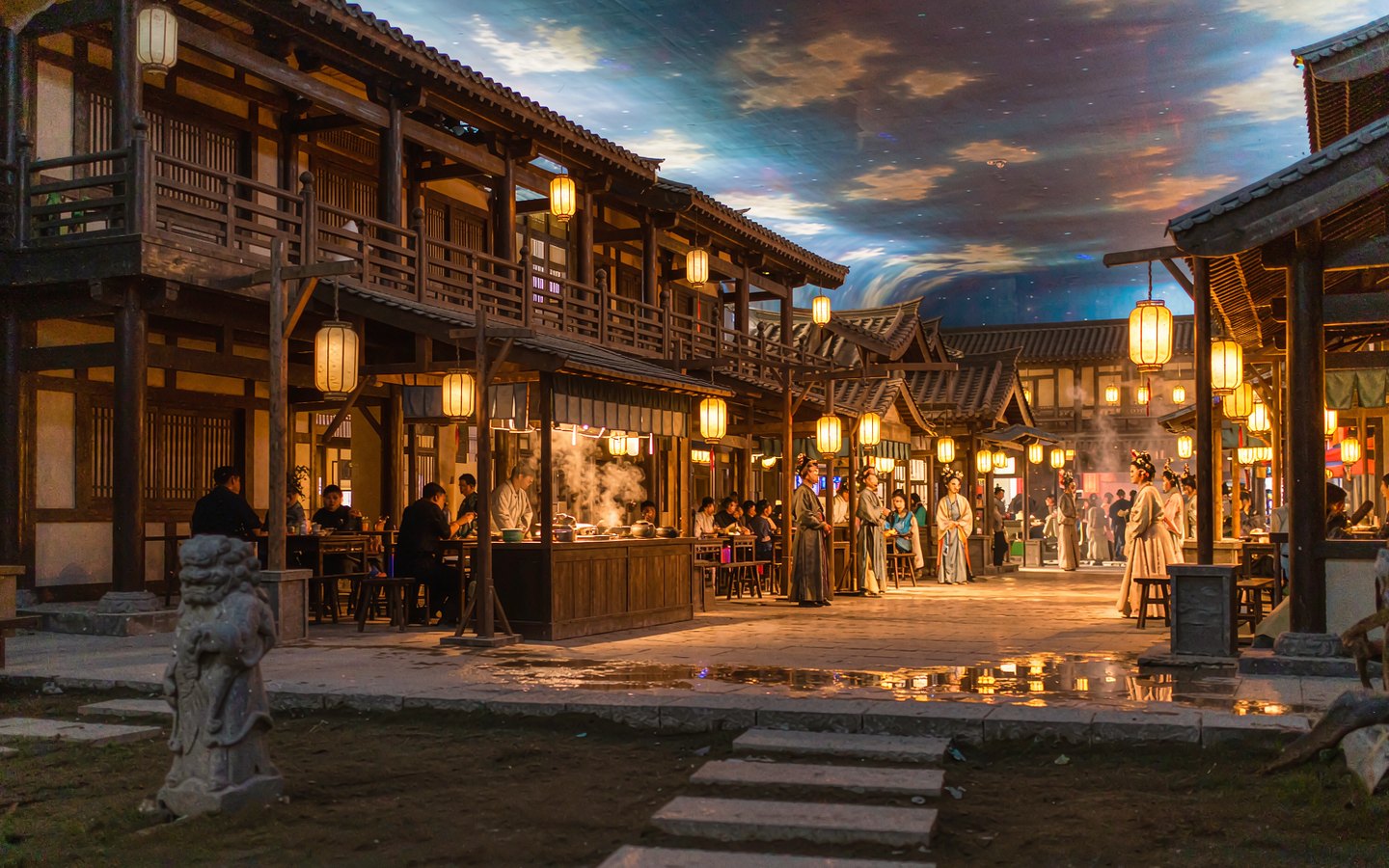
Costumed actors in an indoor Tang-styled street hung with lanterns

Chang'an Twelve Hours Themed Block

An indoor, weather-proof Tang dynasty: 30,000 m² of recreated Chang'an streets beside Never Night City, relaunched in March 2026 — NPC actors, digital humans, XR scenes, the 'Feast of Bliss' show, Tang snacks, costume entry optional. About ¥68 for adults, two to three hours, 500 metres from the outdoor boulevard — pair them as 'indoor by day, outdoor by night'. Reviews split with the day's cast energy; on a tight trip it ranks below the free boulevard and the stele museum.

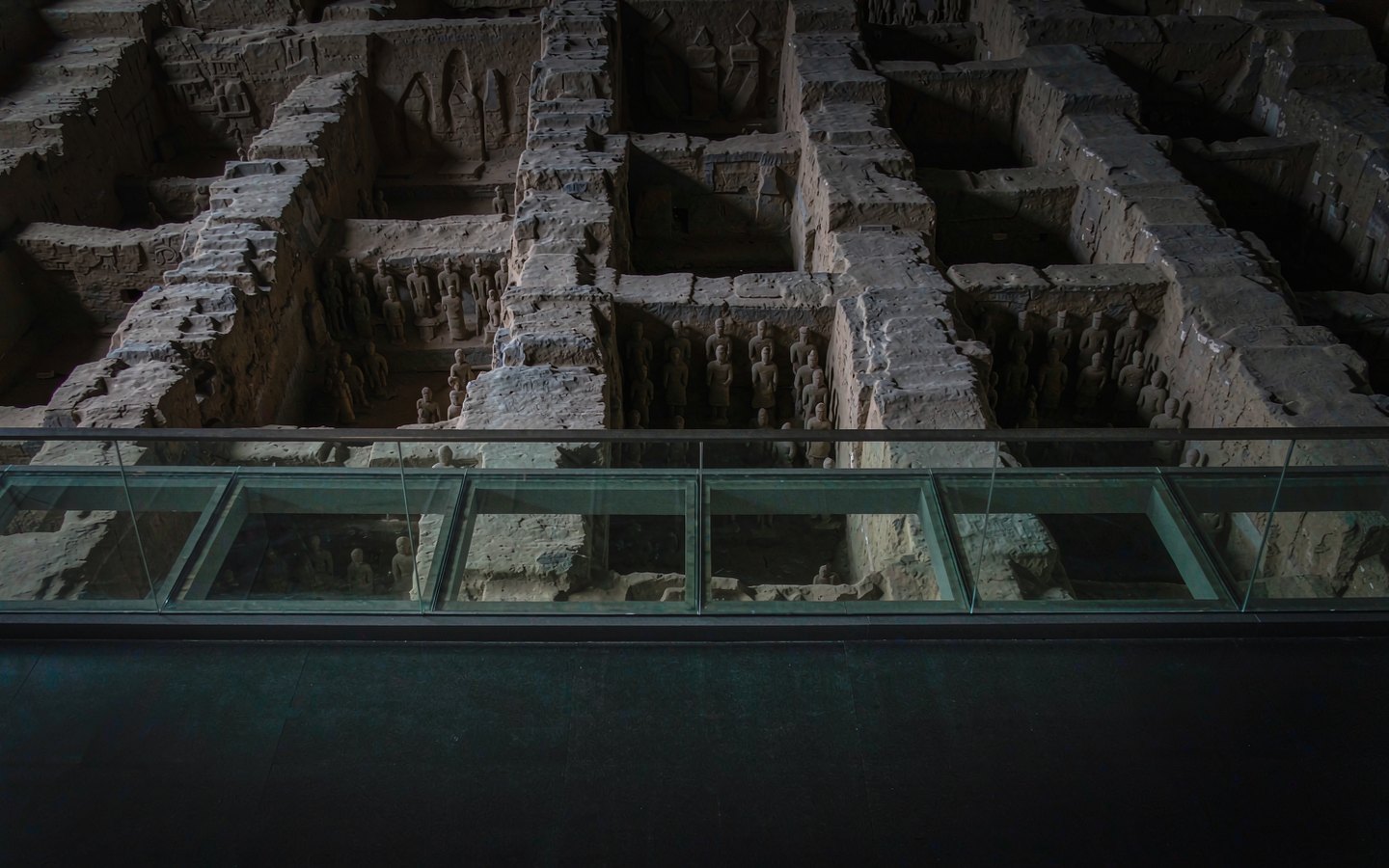
Glass walkway suspended over Han burial pits of small figurines

Han Yang Ling Mausoleum Museum

The second tomb visit for people who've done the Terracotta Army and don't want the crowds again: China's first fully underground site museum, where glass walkways suspend you over real Han burial pits of once-clothed, wooden-armed figurines — Han court life to Qin's war machine. The 16°C gallery needs a layer; no flash. The catch is transport: 40 minutes from town but awkward by public transit, so self-drive or charter. Two tomb museums in one trip is one too many — choose.

Local cuisine

Where to stay

Plenty of cheaper domestic hotels and hostels are not registered to take foreign guests and will turn you away at the desk, whatever the booking site said. Book somewhere that states it accepts foreign passports, and keep the confirmation on your phone.

Getting around

Getting here

  • XIY airport → city

    All international flights use T5, and it has its own line 14 station — the other one, Airport West, serves T1, T2 and T3. Line 14 to Xi'an North is about 35 min, then line 2 south · ¥8 to the Bell Tower, and nearer an hour and a half door to door than an hour

  • By high-speed rail

    Beijing 4–6 h · Chengdu 3–4.5 h · Luoyang about 1.5 h · Shanghai about 6 h — most into Xi'an North, some into Xi'an Station, so read which one is on your ticket

  • Xi'an North station

    Metro lines 2, 4 and 14 · roughly 30 min to the Bell Tower on line 2, ¥4

Xi'an has two mainline stations and they are not interchangeable. Xi'an North (Xi'anbei) takes most high-speed trains and sits well outside the wall, on metro lines 2, 4 and 14. Xi'an Station is the old one beside the north wall, rebuilt in 2021 and now taking fast trains too, with its own stop on line 4. Check which name is printed on your ticket before you get in a taxi.

Local transport

  • 🚇

    Metro

    ¥2–8 by distance, signed and announced in English. It reaches the wall, the museum, the pagoda and the airport.

  • 🚕

    Taxi & DiDi

    ¥8.5 covers the first 3 km, then roughly ¥2 a km. DiDi has an English app and avoids the address problem.

  • 🚌

    Out to the warriors

    Line 1 to Fangzhicheng, line 9 to Huaqing Pool, then Lintong bus 602 for about ¥2 — 90 min in all.

Set up Alipay or WeChat Pay before you land and add the transport mini-app — it generates the QR code the metro barriers read, and the same account buys your museum tickets. If you land without it, the machines still sell single-ride tickets for cash notes; that works, it just slows every journey down.

What's on

Recommended routes

All routes →

FAQs

How many days do you need in Xi’an?

For most travelers, 2 to 3 days hits the sweet spot — enough time to see the Terracotta Army, cycle or walk the ancient City Wall, wander the Muslim Quarter and Great Mosque, and take in the Shaanxi History Museum and Giant Wild Goose Pagoda. With 4 to 5 days you can go deeper, adding Mt. Huashan, the Beilin Museum (Forest of Steles), Qianling Mausoleum and Famen Temple; on a longer China itinerary, Xi’an slots neatly between Chengdu, Chongqing, Zhangjiajie, Guilin, Beijing or Shanghai.

When is the best time to visit Xi’an?

Xi’an is a year-round destination, but spring (March to May) and autumn (September to November) offer the most comfortable weather. January is the coldest month — pack a padded coat, thick trousers, a scarf and a hat — while July is the hottest, so bring light, breathable clothing and sunscreen. Avoid the May Day holiday (May 1–3) and the National Day Golden Week (October 1–7), when top sights are packed with domestic travelers, and expect larger crowds through the summer break in July and August.

Is the Terracotta Army Museum crowded? Should I book tickets in advance?

Yes — it is one of China’s busiest sights, drawing around 30,000 visitors a day in normal times and up to 70,000 on holidays, with long queues at the entrance and at Pit 1, so booking tickets or a guided tour in advance is strongly recommended. To dodge the crowds: visit on a weekday and steer clear of the National Day Golden Week (October 1–7), Chinese New Year (January/February) and the May Day holiday; arrive before the 8:30 am opening to get ahead of the tour groups, or come after 3:00 pm; and consider winter, when daily attendance from November to February often falls to just a few thousand for a far more relaxed visit.

Where should I stay in Xi’an?

First-time visitors and independent travelers are best based around the Bell Tower in the city center, which puts dining and the main sights within easy reach and offers everything from four- and five-star hotels to comfortable inns and budget hostels. The area south of downtown is another solid pick, as many highlights cluster there — the Giant Wild Goose Pagoda district is especially popular for its lively attractions and nightlife. Skip the western and northern suburbs, where transport links are poor for sightseeing.

What food should I try in Xi’an?

Start with the local classics: roujiamo (the Chinese hamburger), liangpi cold noodles and the belt-wide biangbiang noodles. For an authentic taste, try a branch of Ziwu Road Zhang’s, a time-honored roujiamo chain beloved by locals — a snack there runs about CNY 20–30 (USD 3–4) per person, while a proper sit-down meal at a good local restaurant costs roughly CNY 50–100 (USD 7–15). One insider tip: the famous Muslim Quarter tends to be crowded and geared toward tourists, so Sajinqiao Food Street nearby is often the better-value bet.

Can I visit Xi’an without a visa?

Often, yes. Xi’an is one of the Chinese cities covered by the 240-hour visa-free transit policy: if you hold a valid passport and a confirmed onward ticket to a third country, you can apply for visa-free entry on arrival at Xi’an Xianyang International Airport and stay for up to 10 days.

Can I do a day trip from Beijing to Xi’an?

It’s possible but not ideal. High-speed trains link the two cities in roughly 5 to 6 hours each way, which leaves barely enough time to see the Terracotta Army before heading back. To actually enjoy Xi’an — the City Wall, the Muslim Quarter and more — you’re better off taking an overnight sleeper train or setting aside 2 to 3 days for the city.

Can I visit Mt. Huashan in one day? When is the best season?

Yes — Mt. Huashan works well as a full-day trip from Xi’an. High-speed trains reach Huashan North station in about 30–40 minutes, with shuttle buses connecting to the mountain, and you should allow the whole day for the famously thrilling hike and the cable-car rides. The best seasons are April–May and September–October, when the weather is mild and the skies are clear; winter brings ice and some route closures. Avoid Chinese public holidays and summer weekends if you want quieter trails.

Is Xi’an safe for tourists?

Overall, yes. Well-lit central areas are fine to stroll even at night and serious crime is rare, but the usual big-city cautions apply: watch for pickpockets in crowded spots, and politely decline common scams such as strangers inviting you to a tea ceremony or offering free gifts in exchange for scanning a QR code. The bigger day-to-day risk is traffic — cars generally yield to pedestrians at crossings, but watch out for bikes and e-bikes, which often ignore red lights and share the pavement.