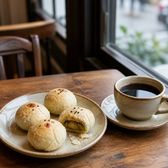
Xiamen ● CITY TOUR BOARD

Xiamen 厦门

China's most relaxed seaside city — palm-lined promenades, the car-free piano island of Gulangyu, a campus that opens onto the beach, and a café-and-pastry culture that rivals any in the country.

Introduction

Xiamen is a city on a small island, and people use it as a break from the big ones: seafront instead of monuments, a temple and a university sharing a wall, and cafés that take coffee seriously. Three things here need booking before you arrive. The boat to Gulangyu, the car-free island in the harbour, is sold online against a passport, and visitors sail from a pier out at Dongdu rather than the obvious one downtown. Nanputuo Temple gives out free timed slots. Xiamen University draws its daily visitors by lottery. Everything else is a walk or a short ride.

Travel highlights

The ferry pier is the catch

Day sailings for visitors leave from the Xiagu pier at Dongdu, not the terminal by Zhongshan Road — that one only takes tourists on the evening boats. Tickets are time-stamped and bought online against a passport.

Late summer is typhoon season

July to September is hot, wet and the stretch when storms come in, and a typhoon suspends the ferries for a day or two. October to December is the reliable window; March to May is the other one.

Check which airport your ticket names

Gaoqi (XMN) is ten kilometres from downtown, which is why the transfer here is short and cheap. It closes to civilian flights at the end of December 2026, when the new airport at Xiang'an — about 25 kilometres out on Dadeng Island — takes over and keeps the code.

Two days, and one is Gulangyu

The other day is a short walk end to end: Nanputuo Temple, the university next door, Shapowei for coffee, then the seafront road. They sit within a couple of kilometres of each other at the south of the island. Book the temple slot and enter the university lottery three days ahead, or you will be walking past two closed gates.

Travel alerts

Top attractions

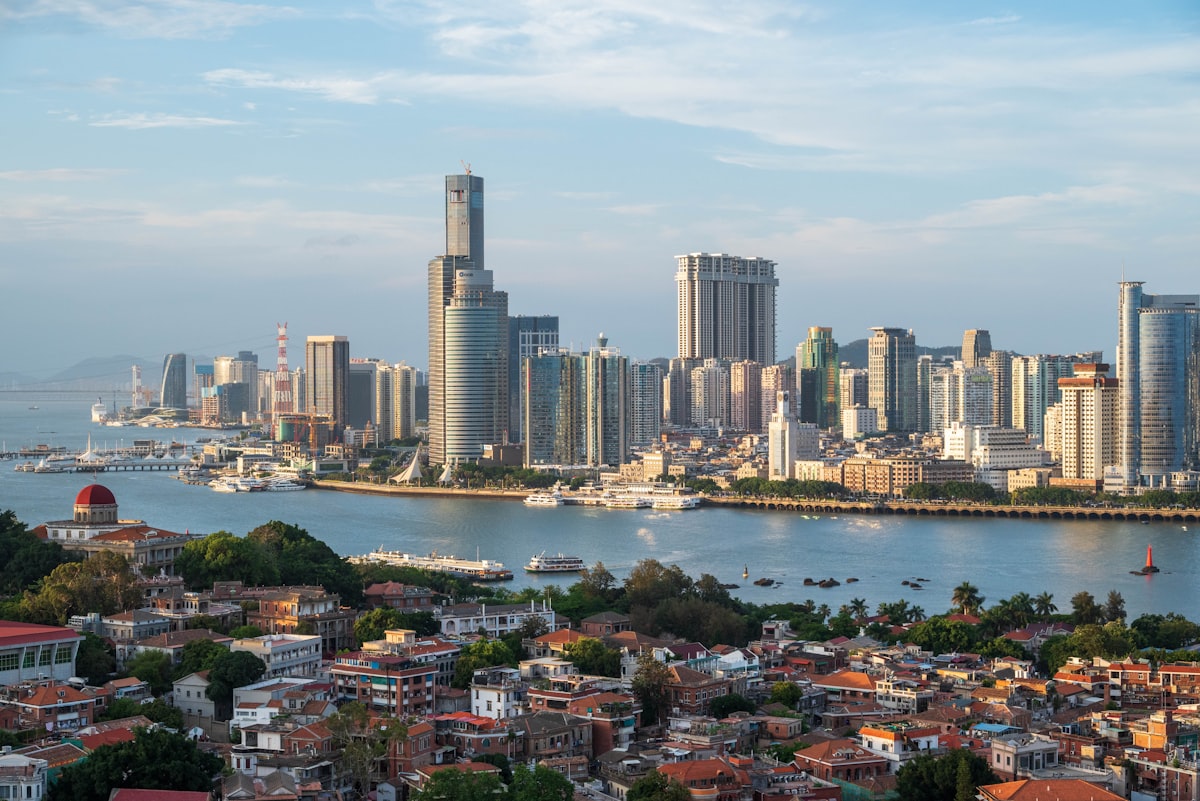
Xiamen skyline and harbor viewed from Sunlight Rock on Gulangyu Island

Gulangyu Island

Colonial villas, banyan trees and lanes with no cars on them; UNESCO listed it in 2017 and it is the reason most people come. Day visitors sail from the Xiagu pier at Dongdu, about ¥35 return, on a time-stamped ticket bought against a passport. Take the first boat: the lanes are free to walk, and the paid sights share one combined ticket.

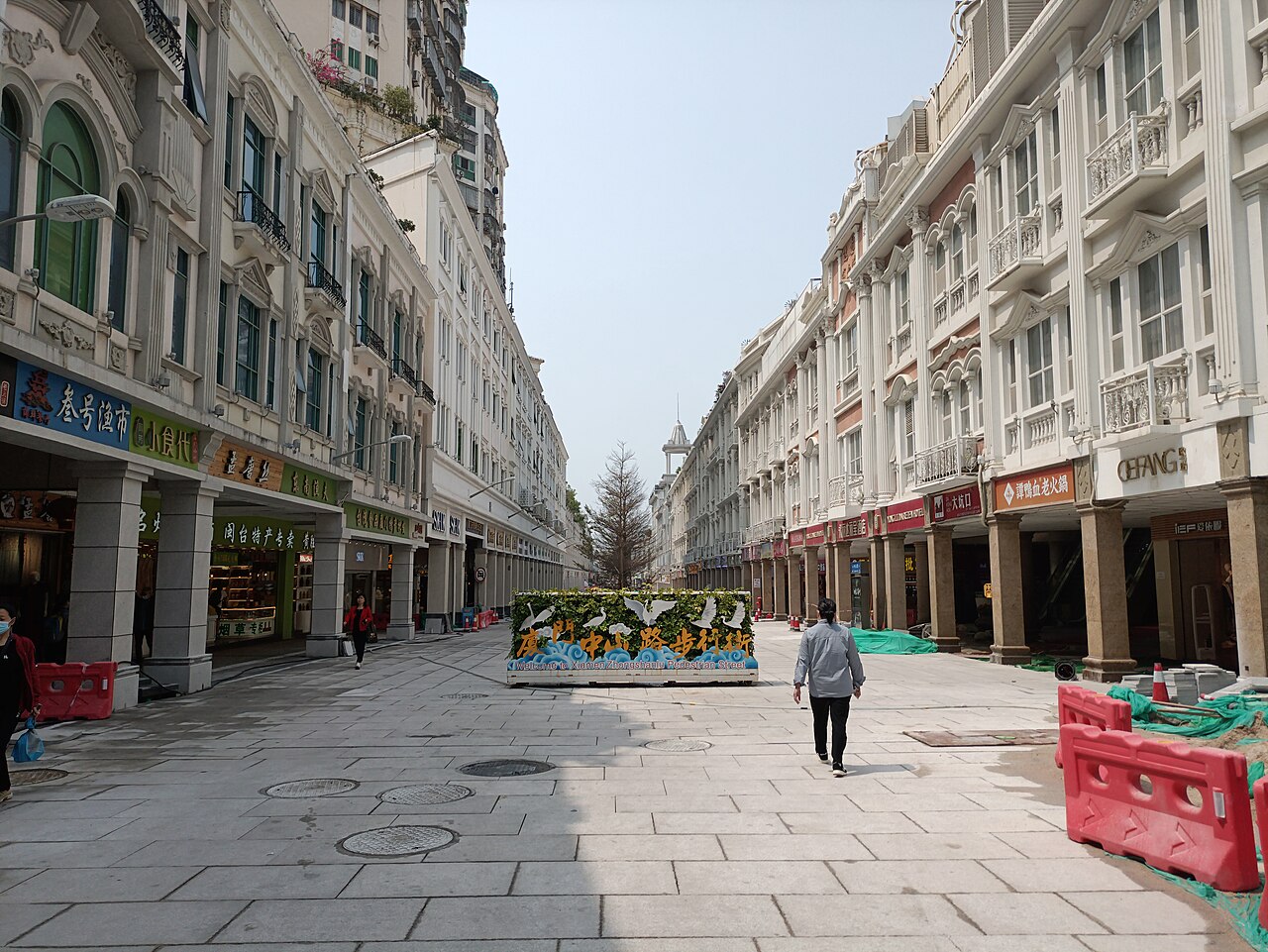
The arcaded pedestrian street of Zhongshan Road, Xiamen

Zhongshan Road

A pedestrian street running down to the water opposite Gulangyu, under qilou arcades built to keep a Fujian downpour off the pavement. The shops are ordinary; the food is not, and Bashi market a few streets north is where most of it is. The evening ferry to Gulangyu leaves from the pier at the bottom.

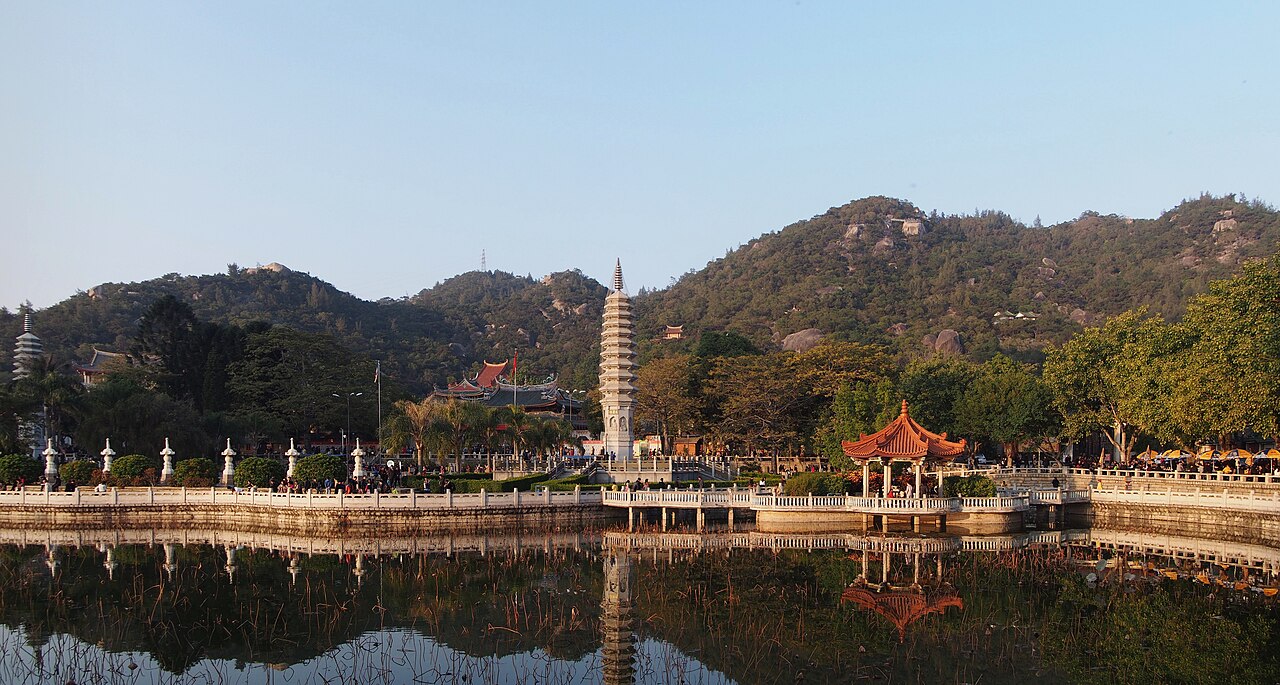
The lotus pond and pagoda in front of Nanputuo Temple, with the hills behind

Nanputuo Temple

A working Chan Buddhist temple under the Wulao hills, full of people praying rather than photographing. Entry is free, but you book a time slot first on the temple's WeChat mini-program, in hourly bands a few days ahead. The gates open at eight, and the hillside path behind the halls shuts two hours before the temple does. The vegetarian hall here is an institution, and the university gate is two minutes away.

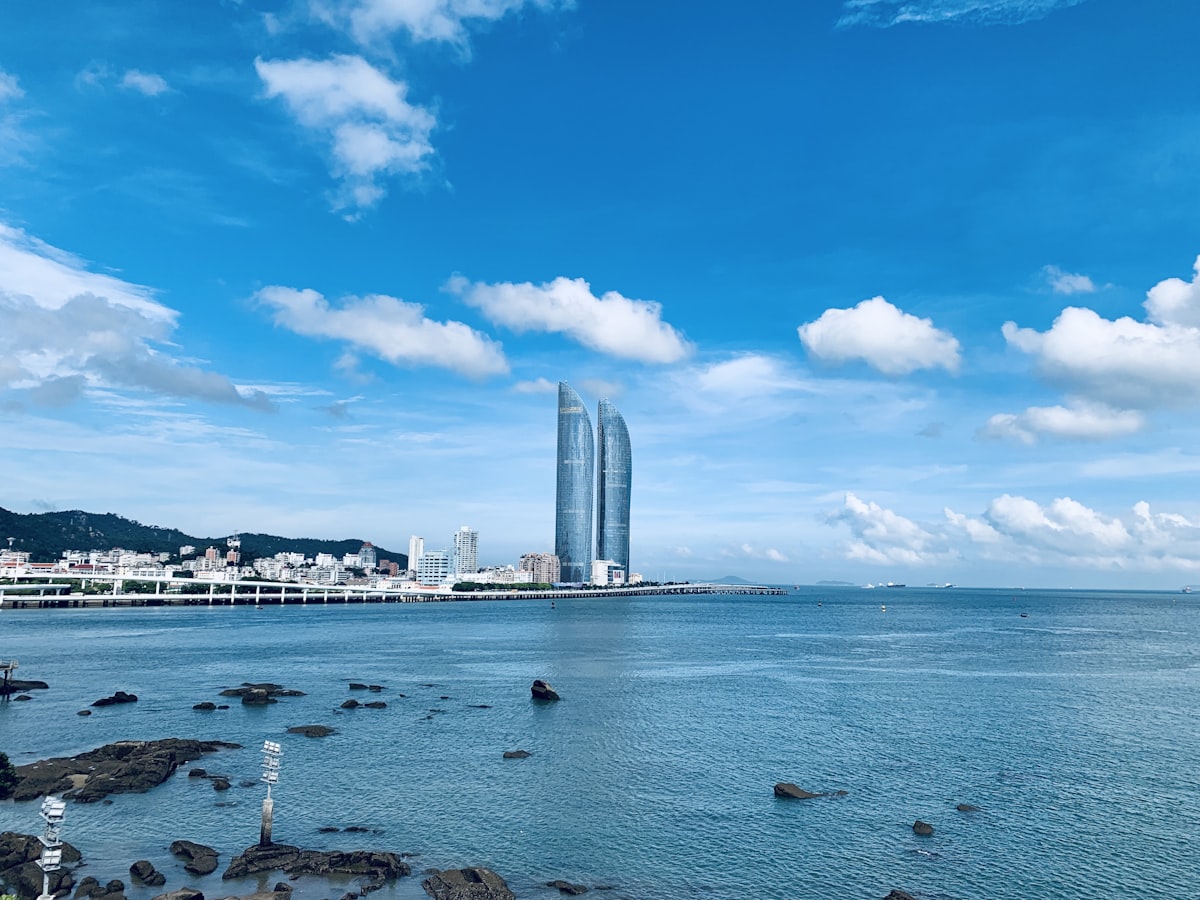
Twin Shimao Straits Towers rise over Xiamen's coastline, seen from a rocky beach

Xiamen University

Founded in 1921 by Tan Kah Kee, a Fujianese businessman from Singapore, and worth the walk for the buildings: Chinese roofs on Western walls, a lake, colonnades, a tunnel painted by students. Getting in takes planning. It is a working campus with a daily visitor limit, and places are released on a quota basis, first-come-first-served on the university's WeChat mini-program, three days ahead. You cannot book at the gate. Bring your passport: foreign documents are checked by hand at the visitor centre by the new south gate.

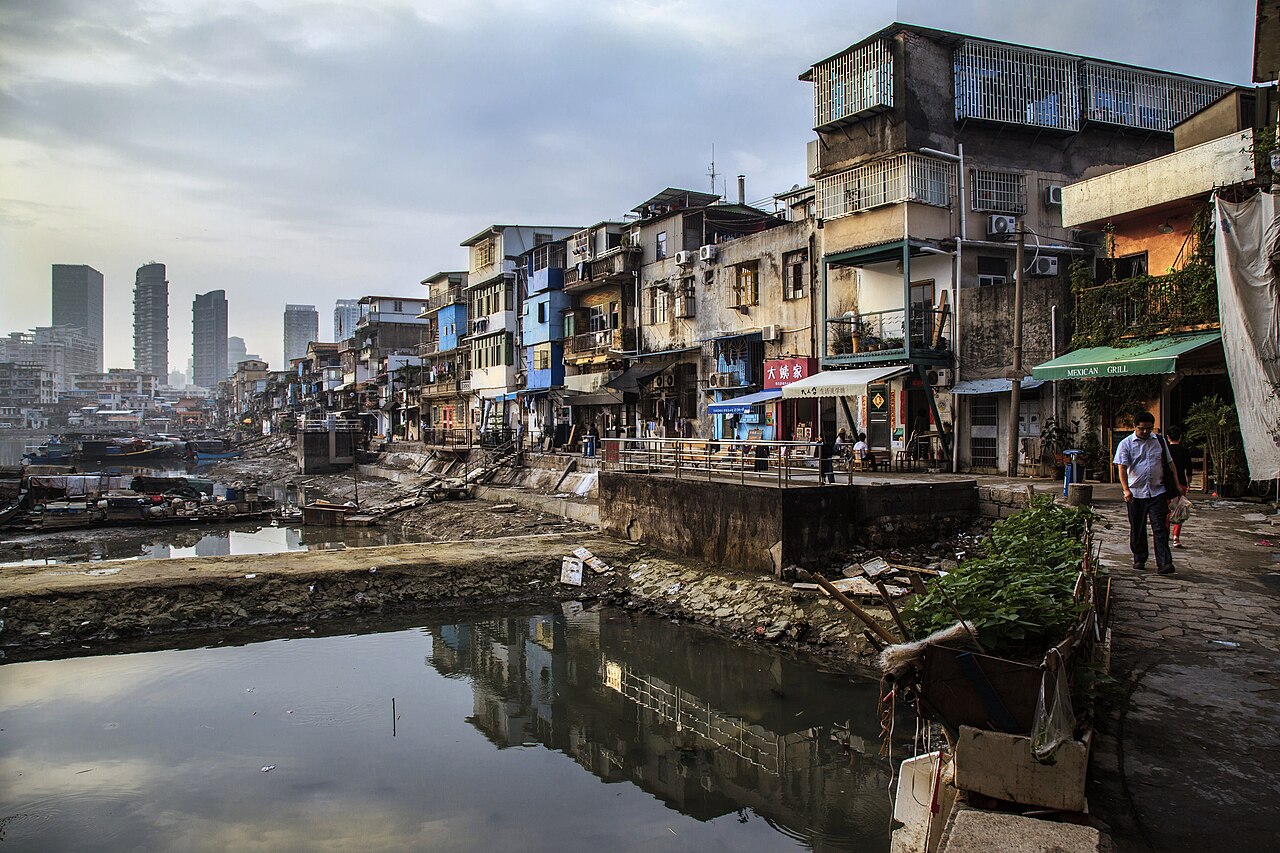
Old buildings around the harbour at Shapowei, Xiamen, with the new city behind

Shapowei art quarter

The old Xiagang fishing harbour, a curved basin cut into the seafront with the city built up around it, now given over to small coffee places, bars and studios. It is somewhere to sit for an hour rather than something to see, and late afternoon is when it wakes up. Ten minutes on foot from the university.

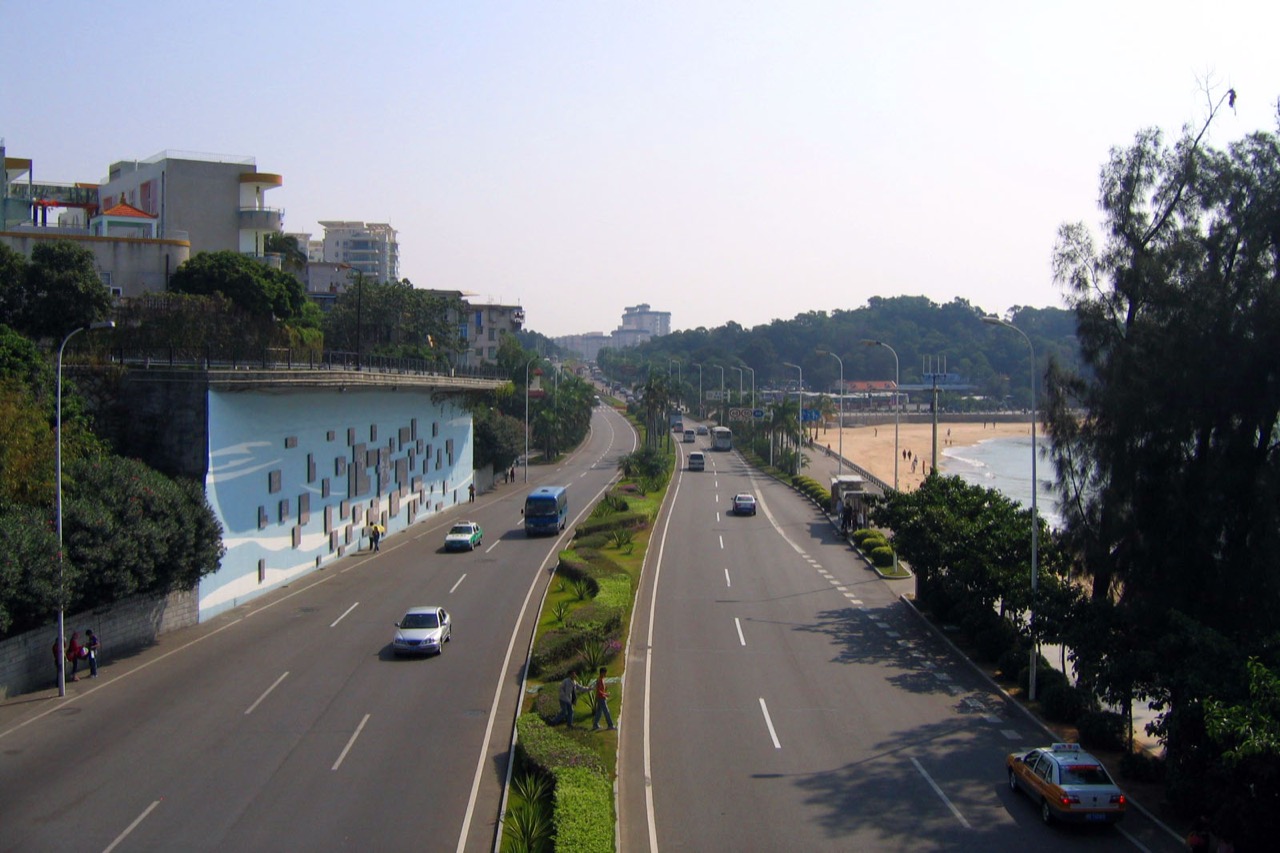
The palm-lined coastal Island Ring Road running along the Xiamen shore

Island Ring Road

Forty-three kilometres of road right round the island, but the stretch that matters is the flat few kilometres running south from Baicheng beach below the university, past Hulishan Fortress and its old Krupp coastal gun (¥25), out to the village of Zengcuo'an. Unlock a share bike and ride it late in the day, when the heat has gone.

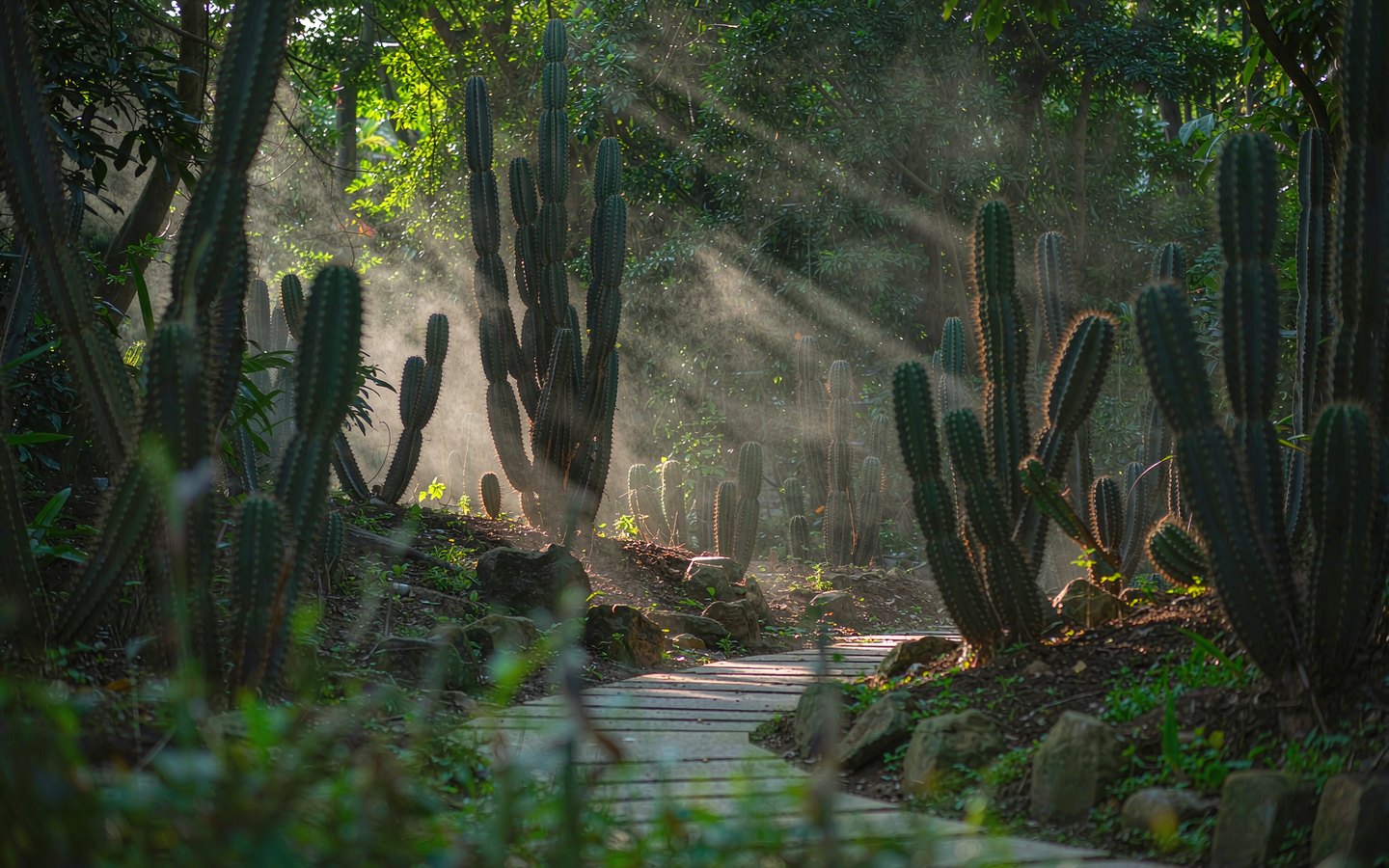
Sunbeams through mist over a rainforest path beside giant cacti

Xiamen Botanical Garden (Wanshi Mountain)

A national 5A garden on a downtown hill for just ¥30, wedged between Nanputuo Temple and Xiamen University (metro line 1, Zhongshan Park). The draw is the pairing: a 30,000-m² succulent zone with three-metre columnar cacti next to a rainforest zone that mists twice daily in shafts of light — 9:00–11:00 and 14:00–16:00 in winter, half an hour later May to October. Miss the misting and it's an ordinary botanic garden. It's hilly, so use the ¥5 shuttle.

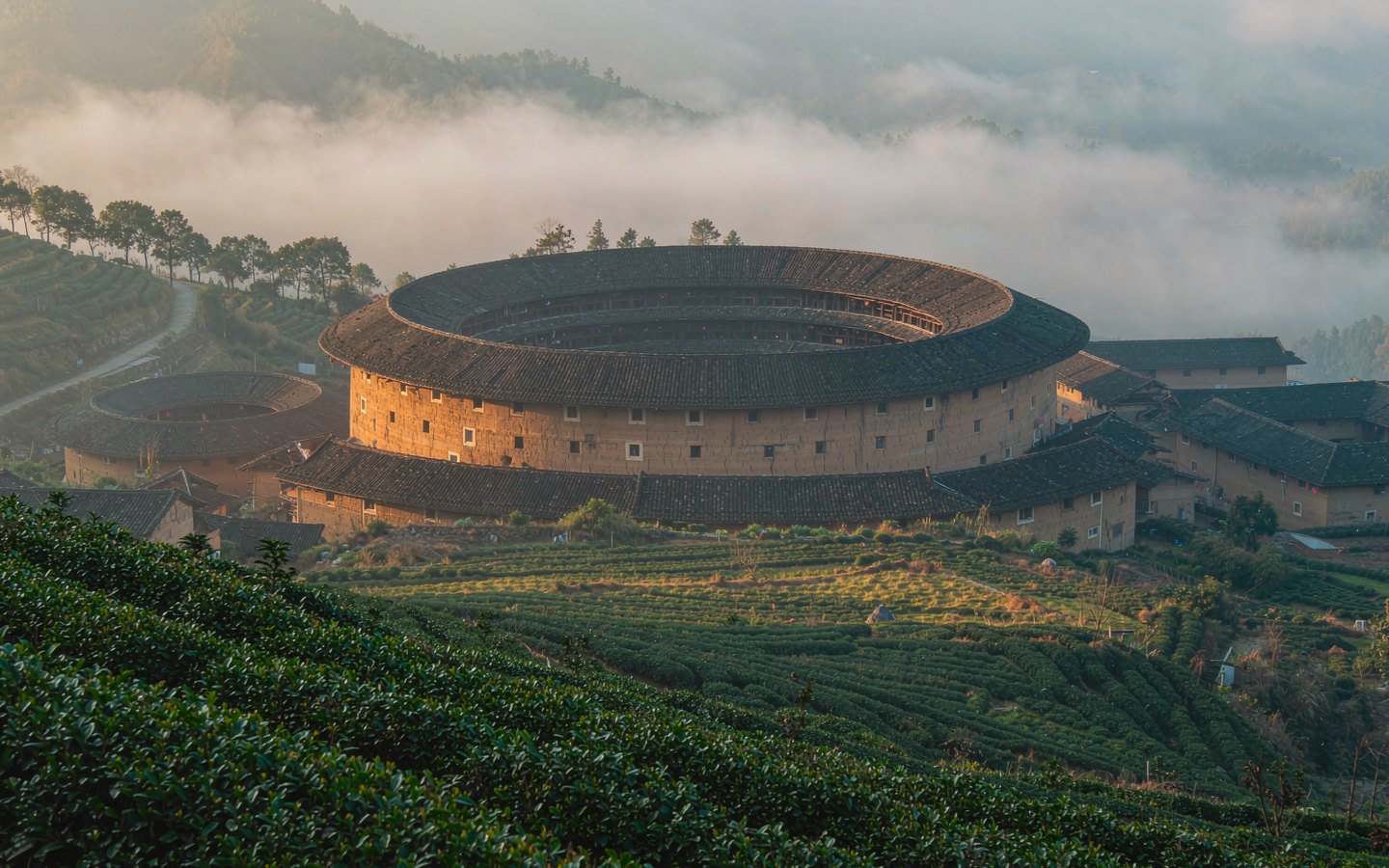
Round earthen tulou buildings clustered among green tea hills

Fujian Tulou (Nanjing & Yongding earthen round houses)

UNESCO-listed rammed-earth fortresses housing up to 800 people each — Fujian's only world-class cultural sight besides Gulangyu, and Xiamen is where most foreign travellers start. See the 'four dishes and a soup' cluster at Tianluokeng from its platform and the four-ringed Chengqi Lou, the Big Fish & Begonia location; some tulou are still lived in. Distance is the catch: two hours by car each way, 2.5–4 by public transport — plan it with four-plus days or sleep in a tulou.

2 more spots worth seeing
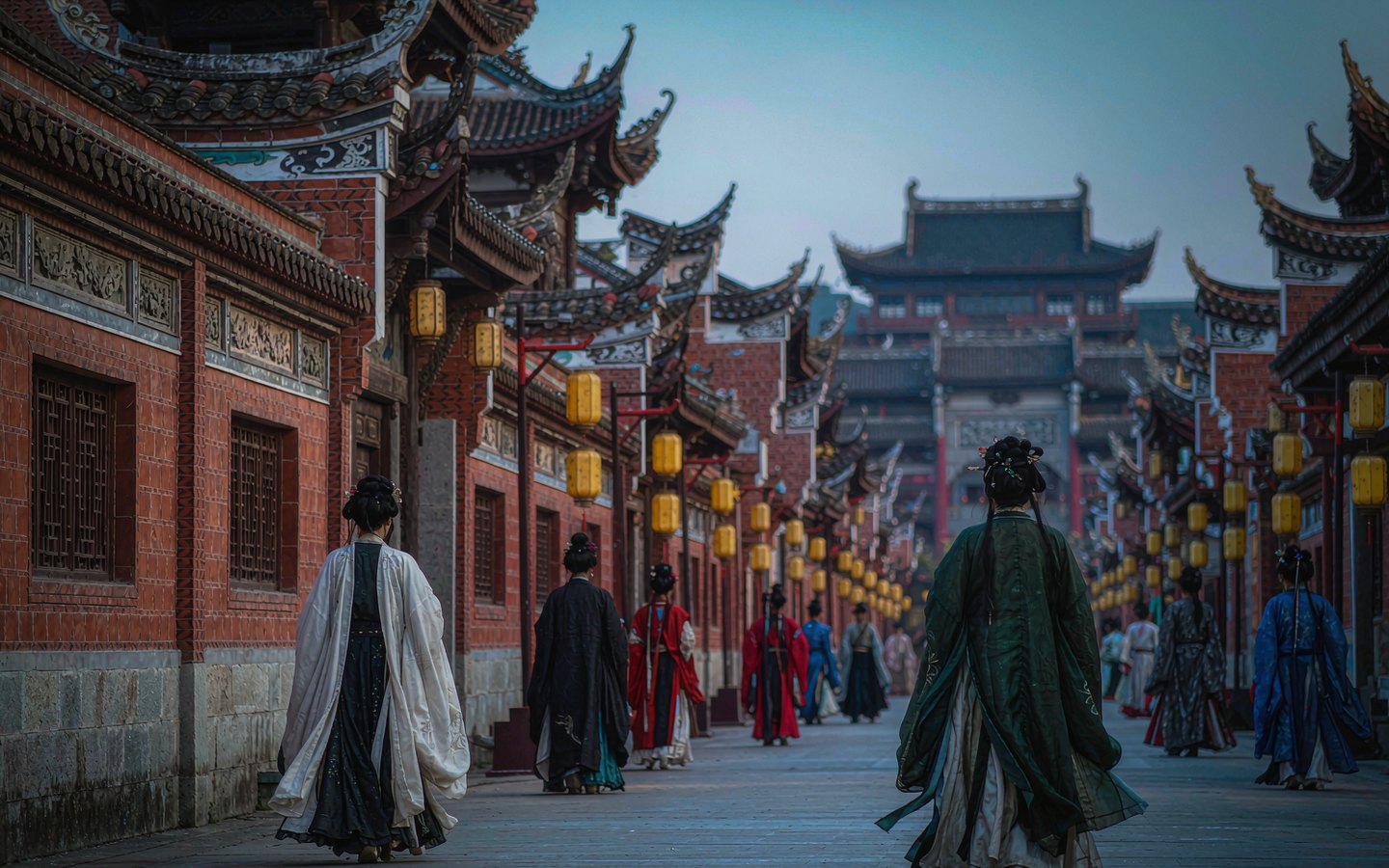
Visitors in flowing hanfu crossing a lantern-lit heritage street

Yujian Minnan · Time Fantasy (immersive Minnan culture park)

China's first immersive Minnan-culture park, opened May 2025 right behind the Dongdu cruise terminal — the pier many visitors pass en route to Gulangyu. Rent one of 6,000 period costumes and walk in as a 'figure in the painting', try heritage lantern-making and Song-style incense ceremonies, with nearly 30 daily shows. Phases two and three aren't built yet, so plan for roughly 80,000 m², not the advertised 201,000. Shows and interpretation are Chinese-language, and high season needs advance booking.

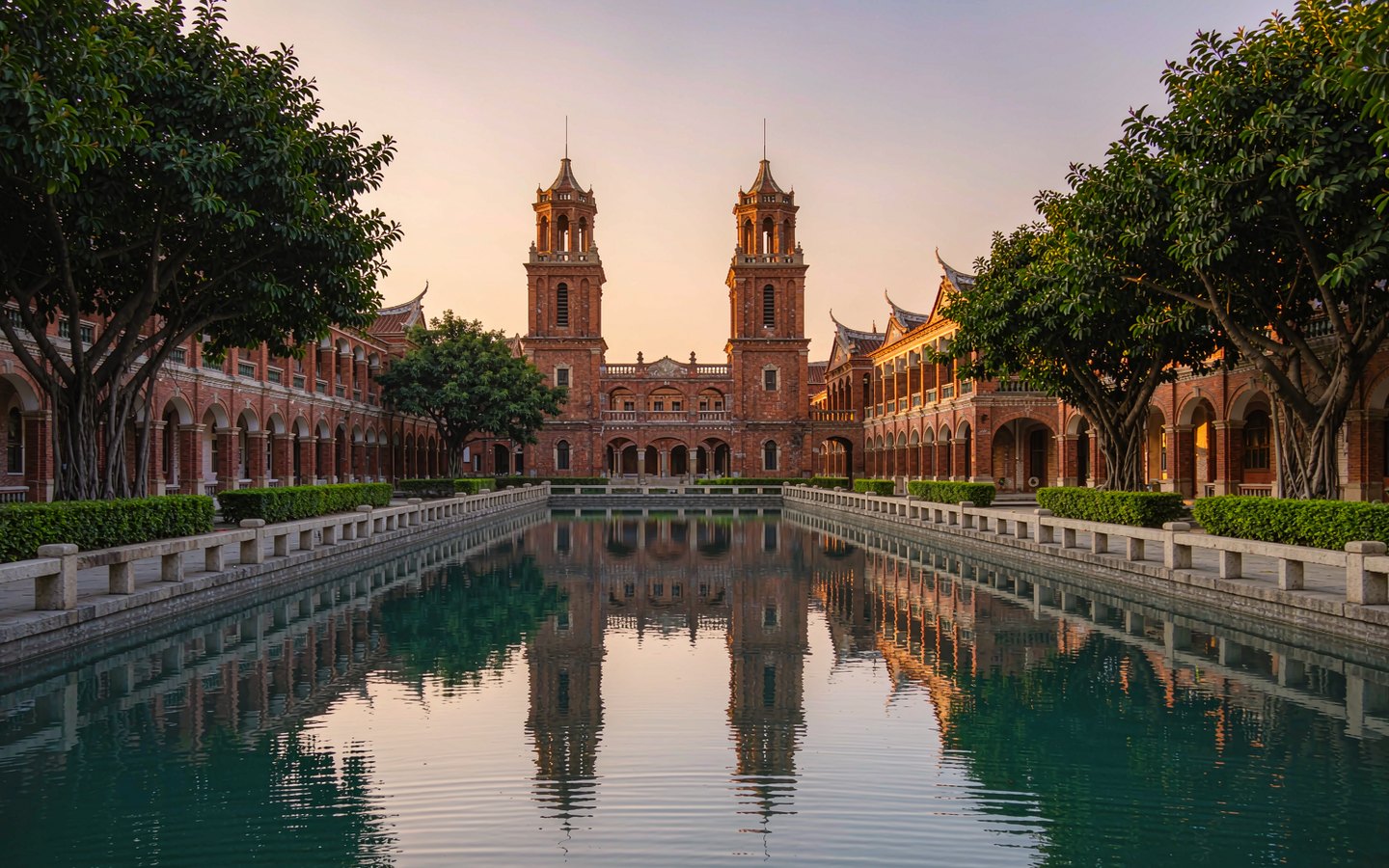
Red-brick tower with swallow-tail roof ridges above a tidal pool

Jimei School Village (Tan Kah Kee architecture)

The school town Tan Kah Kee built from the 1910s in the 'suit and straw hat' style he invented — Western colonnades under southern-Fujian swallow-tail ridges and red brick. Ride metro line 1 across the sea, then string together Dragon Boat Pool, the 1959 Nanxun Tower, Aoyuan's 600 stone carvings and Tan's residence — all free or cheap. Most buildings are working schools, so it's facades only; Aoyuan runs 8:00–17:30 and museums close Mondays. Don't cram it into a Gulangyu day.

Local cuisine

Where to stay

Not every hotel in China can register a foreign guest, and the small guesthouses on Gulangyu and in Zengcuo'an are the likeliest to say no at the desk. Confirm before you pay, and have your passport out at check-in.

Getting around

Getting here

  • Gaoqi Airport (XMN)

    Ten kilometres from downtown, so the transfer is short: a metered taxi or DiDi to the Zhongshan Road end runs about ¥30–60 and 20–30 minutes, and airport buses cover the same ground for a few yuan.

  • A new airport, late 2026

    Xiang'an is set to open at the end of December 2026 and inherits the code XMN; Gaoqi closes to civilian flights when it does. Xiang'an sits about 25 kilometres out on Dadeng Island, so check which airport your ticket actually names before you book the first night.

  • Train stations

    Xiamen Station is on the island. Xiamen North, where most high-speed trains stop, is on the mainland side at the far end of Metro Line 1 — allow the better part of an hour to reach it.

Book on 12306 with your passport number — the passport is the ticket. At the gates use the staffed lane; the automatic readers only take Chinese ID cards.

Local transport

  • 🚇

    Metro

    Three lines today, from ¥2 and rising with distance, signed and announced in English. A fourth is being tested on the route out to the new airport. Line 1 crosses the water on a causeway between Gaoqi and Jimei, which is the stretch people photograph.

  • ⛴

    Ferry

    The Gulangyu boats: the Xiagu pier at Dongdu during the day, the Lundu pier by Zhongshan Road in the evening, about ¥35 return either way. Your passport is checked when you board.

  • 🚕

    DiDi

    English interface, takes foreign cards, and the island is small enough that most trips run ten or fifteen minutes. It is the simplest way to the university end and the seafront road.

No transit card needed: the transport mini-app inside Alipay makes a QR for the metro, the BRT and the buses, and unlocks the share bikes people ride along the Island Ring Road.

What's on

Recommended routes

All routes →

FAQs

What is the best time to visit Xiamen?

October to December and March to May. Summer is hot with typhoons; winter is mild but grey.

How many days should I spend in Xiamen?

Two days: one for Gulangyu, one for the university, Nanputuo Temple, Shapowei and the Island Ring Road.
How do I get from Xiamen airport to the city centre?

Metro Line 1 from Gaoqi plus the shuttle or BRT takes 30–40 minutes; a DiDi is ¥40–70.

What is the best way to get around Xiamen?

The metro — three lines from ¥2 — buses, and the ferry for Gulangyu: book the boat online ahead and go early. DiDi works in English on the mainland side.

Which area should I stay in Xiamen?

Zhongshan Road and Lundu for the old town and Bashi market, the university and Shapowei for the evening walks, Zengcuo’an for the seaside village, or a villa guesthouse on Gulangyu itself.

What food should I try in Xiamen?

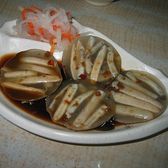
Oyster omelette, satay noodles, worm jelly for the brave, spring rolls, fresh seafood — and the pie-and-café culture the island runs on.

What are the must-see sights in Xiamen?

Gulangyu — car-free and ticketed — Zhongshan Road, Nanputuo Temple and Xiamen University side by side, the Shapowei art quarter and the Island Ring Road.