Shenzhen ● CITY TOUR BOARD

Shenzhen 深圳

China's startup metropolis — grown from Bao'an county town into a megacity since 1980. Glass towers, design districts, beaches and theme parks, with Hong Kong a metro ride across the border.

Introduction

Shenzhen has almost no old city to show you, and that is the point of it. When it was made China's first Special Economic Zone in 1980 this was Bao'an County — a few hundred thousand people across farming and fishing villages, and no skyline at all. The 2020 census counted 17.56 million, and the towers you photograph from Lianhuashan Park went up inside one working lifetime. Crossing to Hong Kong is simple here: the border is at the end of Metro Line 1, and a high-speed train from Futian reaches West Kowloon in about fifteen minutes. Most visitors give the city a day. Two is closer to right.

Travel highlights

Hong Kong is two checkpoints away

Line 1 ends at Luohu, open 06:30 to midnight; Lines 4 and 10 reach Futian Checkpoint, which shuts at 22:30. Both are real immigration crossings, so leaving the mainland and coming back are two separate entries.

Almost nothing here predates 1980

Shenzhen became a Special Economic Zone in May 1980, and nearly everything you will see was built after that. Come for the skyline, the design quarters and the food. The older layers survive in patches: Nantou Ancient City in Nanshan, settled in the fourth century and reopened as a restored quarter in 2020, and a Ming garrison town out on the Dapeng peninsula.

Rain runs April to September

Rain runs from April into late September, heaviest in the middle of that stretch. Typhoons come between July and September, and a bad one closes the beaches and stops the ferries for a day. October to early December is the dry, clear window, and March is the other one. By April the rain is back.

Two days is the honest length

One day covers the Overseas Chinese Town parks and OCT-LOFT; a second gets the Futian skyline and a beach on Line 8. It works best at the start or end of a trip: the airport is on Line 11, Hong Kong at the far end of Line 1.

Travel alerts

Top attractions

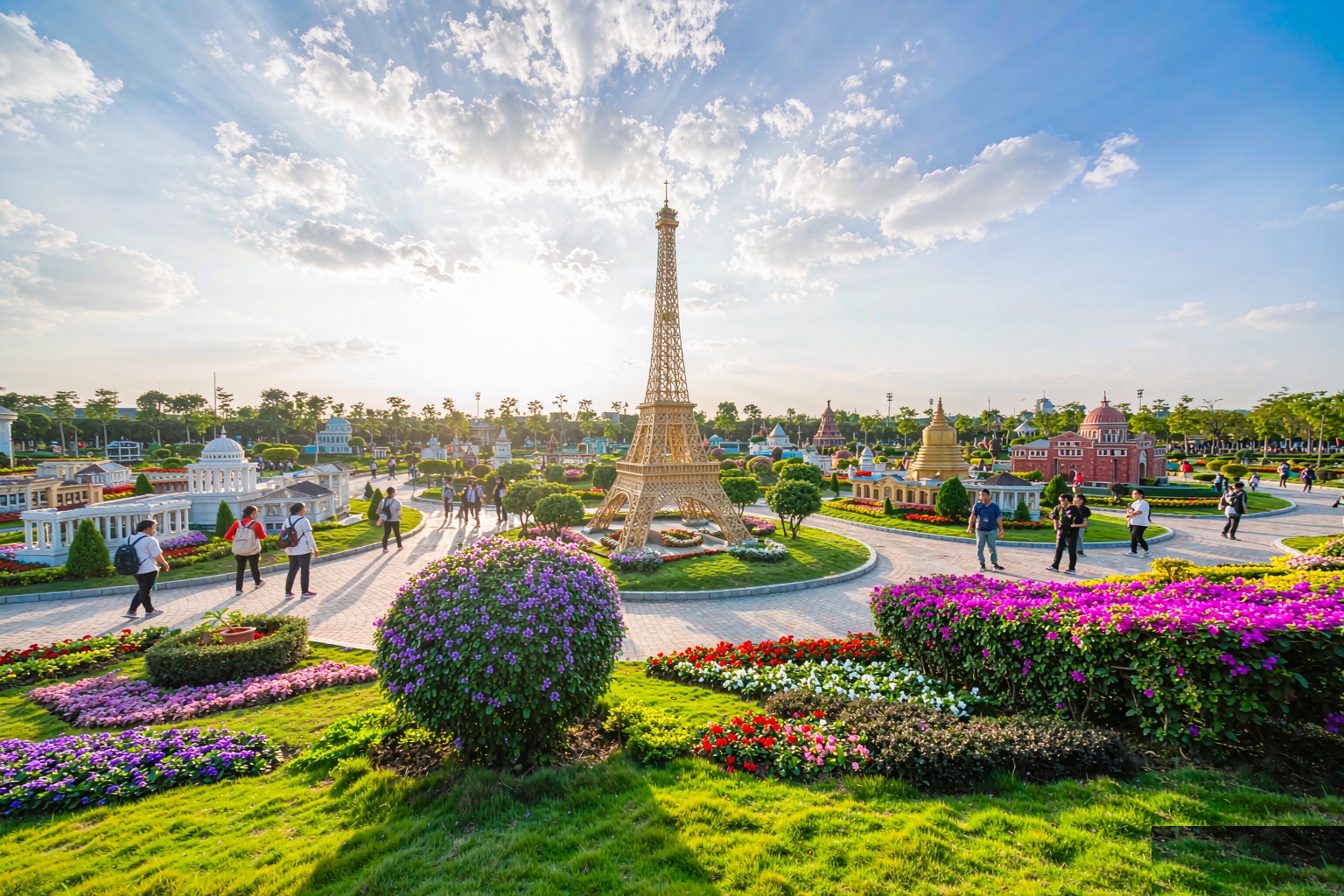
The scale replica Eiffel Tower rising above flowerbeds at the Window of the World theme park in Shenzhen

Window of the World

About 130 miniature world landmarks over 48 hectares, opened in 1993, with a 108-metre Eiffel Tower above it. It is a 1990s theme park and does not pretend otherwise — go for the strangeness rather than the architecture. Window of the World station on Lines 1 and 2 is at the gate, and Splendid China is one stop back on Line 1.

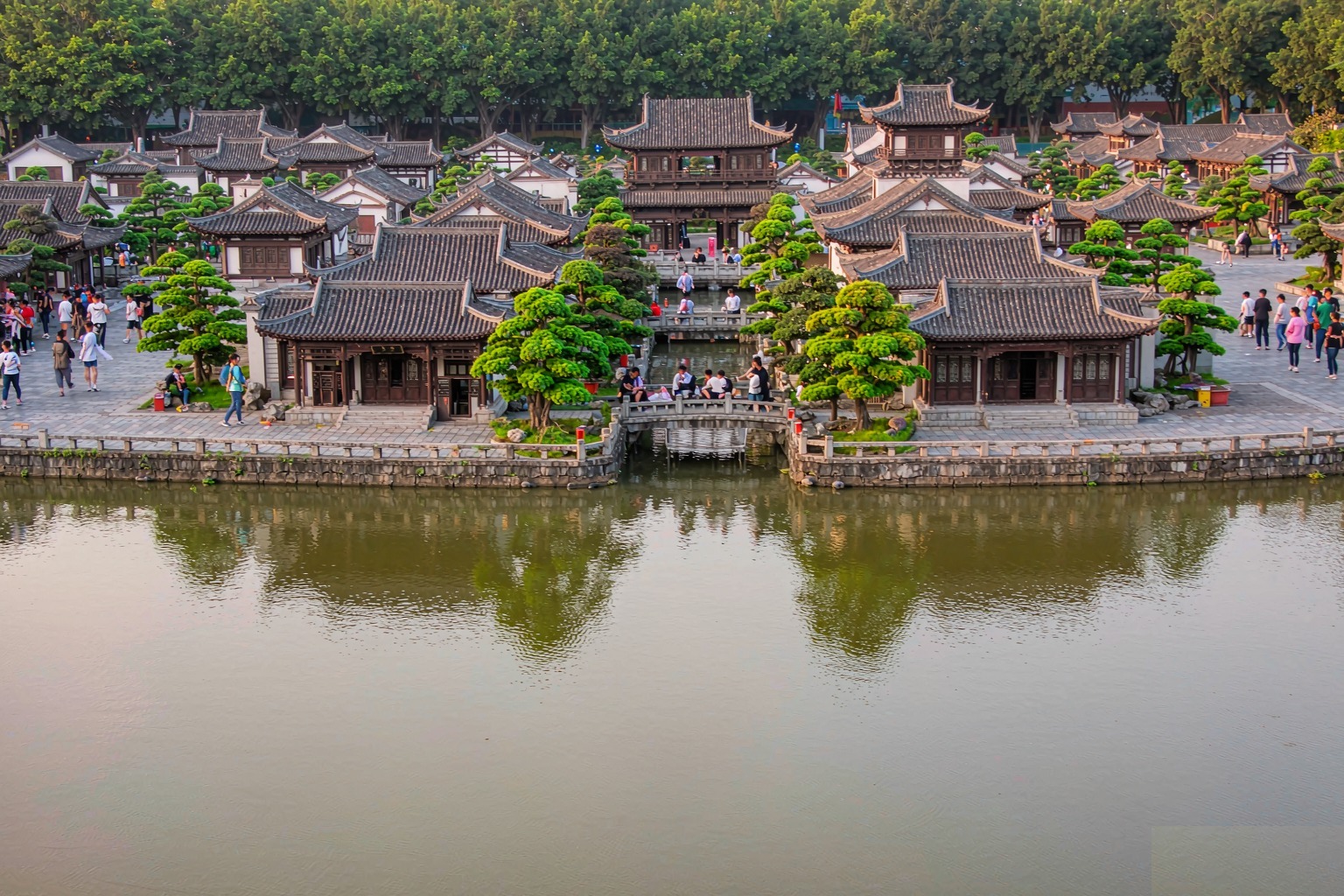
Traditional Chinese temple roofs and courtyard houses reflected in the lake at Splendid China Folk Village

Splendid China Folk Village

Two parks on one 30-hectare site: miniature versions of Chinese landmarks, and a full-size folk village with performances from the minority regions. The shows are the reason to come, so check the day's timetable at the gate before you start walking. Overseas Chinese Town station on Line 1, exit D.

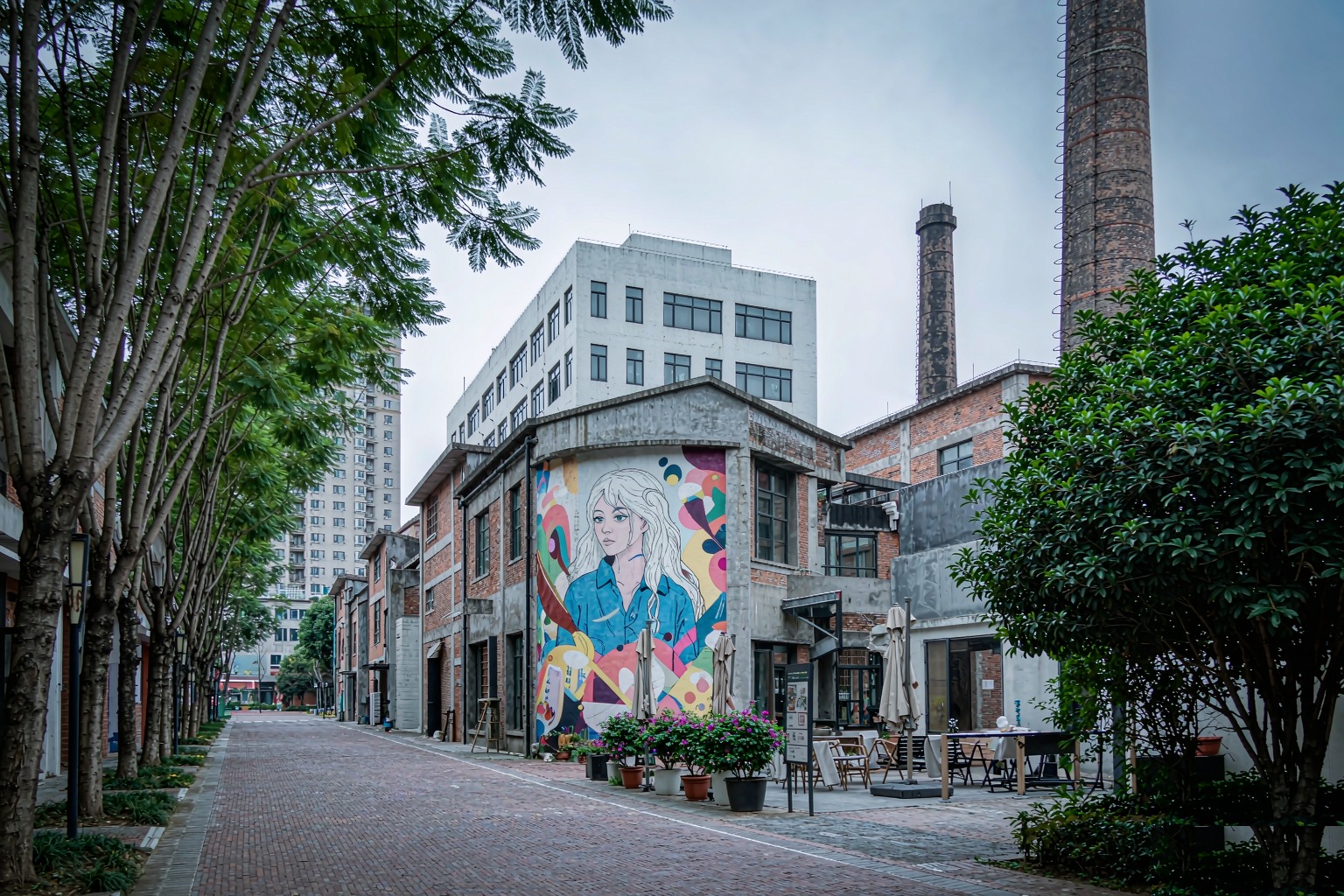
Red-brick former factory buildings with a colorful mural and chimneys along a tree-shaded lane at OCT-LOFT

OCT-LOFT

A 1980s factory quarter kept and reused instead of knocked down — OCAT's contemporary art galleries, bookshops, design studios, coffee and bars across 150,000 square metres. The streets are free; galleries set their own tickets. Qiaocheng East on Line 1 or Qiaocheng North on Line 2, ten minutes from the OCT parks.

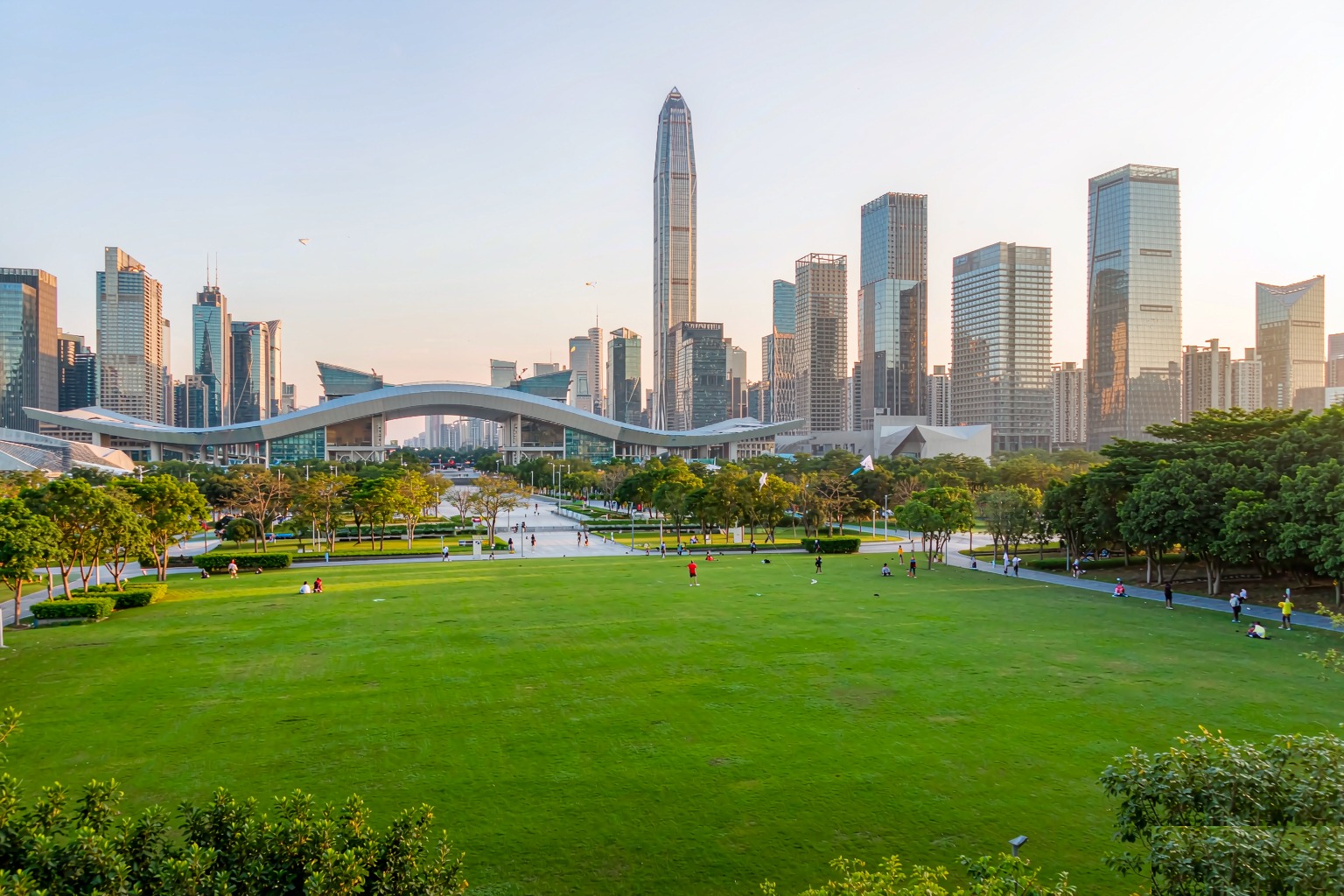
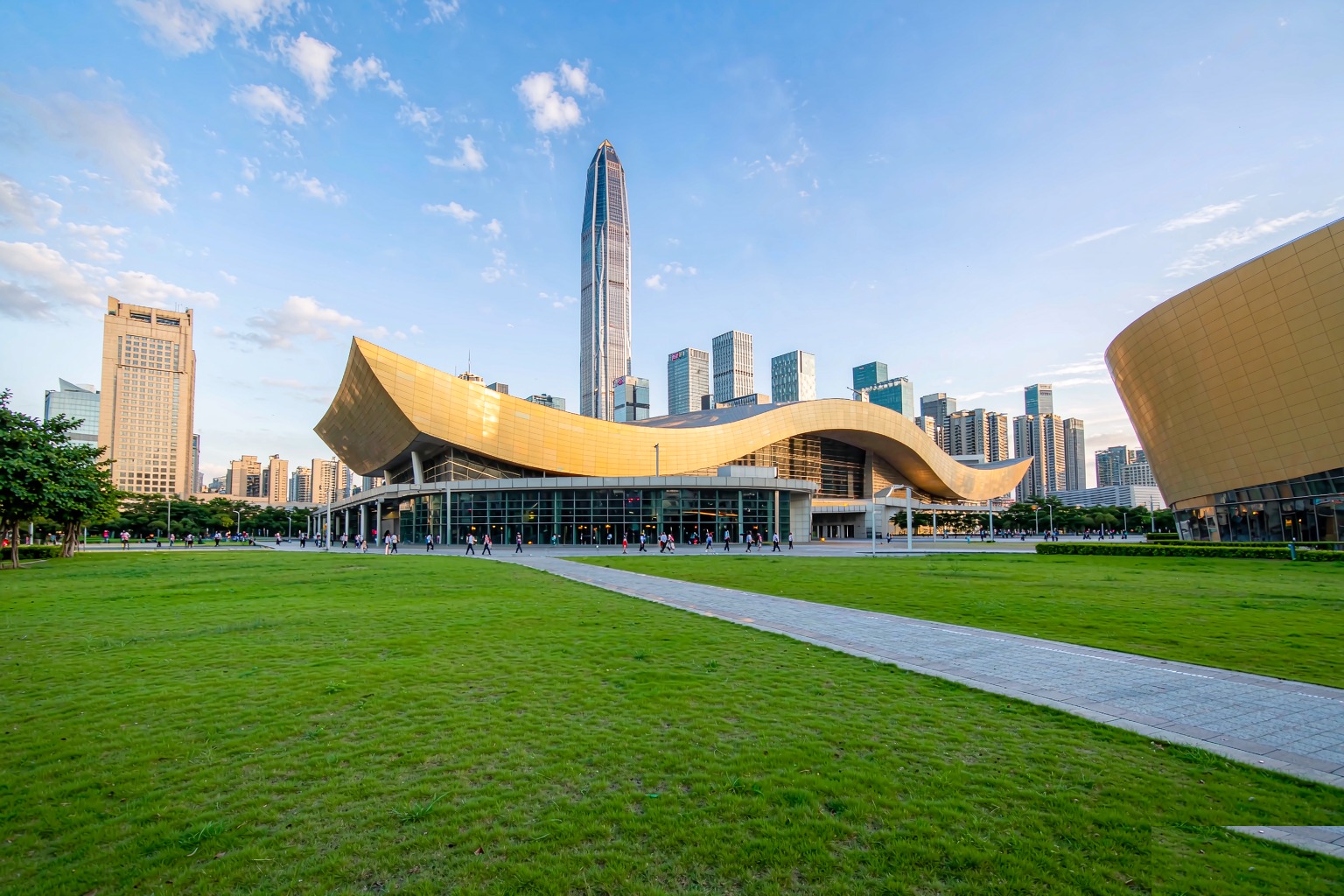
View from Lianhuashan Park across the lawn toward the Civic Center and the Ping An Finance Centre

Lianhuashan Park

A 150-hectare park with a hill in the middle, free to enter, and where the postcard skyline gets photographed: you look straight down the Futian axis at the Civic Center and the Ping An tower. The six-metre Deng Xiaoping statue stands at the top and the path up is paved and short. Children's Palace station on Lines 3 and 4 is the one to use.

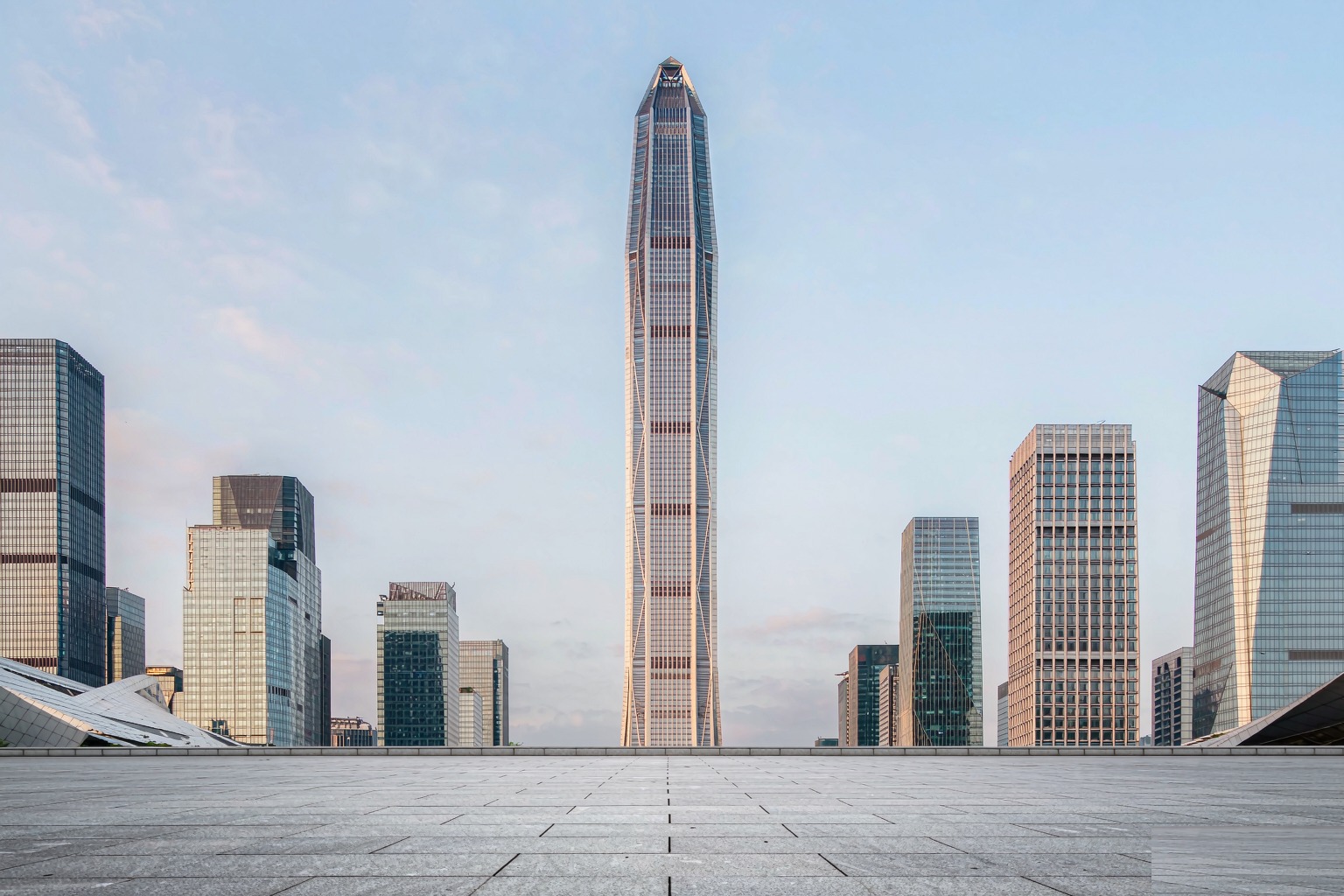
The Ping An Finance Centre tower tapering into a hazy sky above the Shenzhen CBD

Ping An Finance Centre

599 metres of tower, finished in 2017, with the Free Sky deck on floor 116 (¥200 at the door, ¥180 online). It opens at 10:00 and closes at 20:00 early in the week, 21:00 on Friday and Saturday, with last entry about forty-five minutes before, so the dusk slot is the one worth having. The entrance is at basement level B1, not the office lobby; Shopping Park station on Lines 1 and 3 connects to it underground.

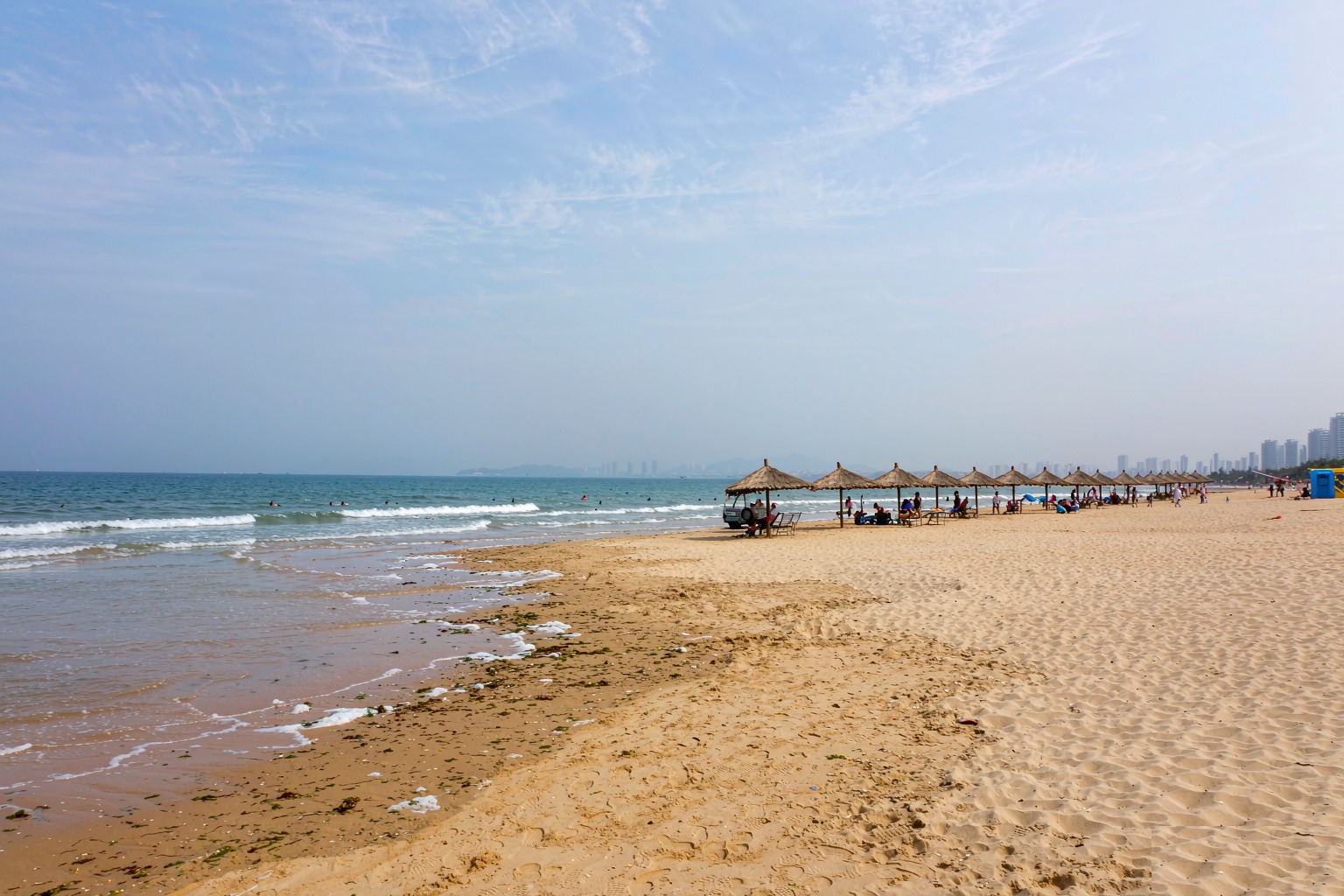
Golden sand and thatched umbrellas at Dameisha Beach on a summer day

Dameisha Beach

A long stretch of public sand on Mirs Bay, free to enter, and Metro Line 8 has a station named after it. Entry is by free advance booking through the summer season and on weekends and public holidays — a daily quota, released about a week ahead through the Yantian district WeChat account. On off-season weekdays no booking is needed. Xiaomeisha is next along the coast, and the Dapeng peninsula further east again.

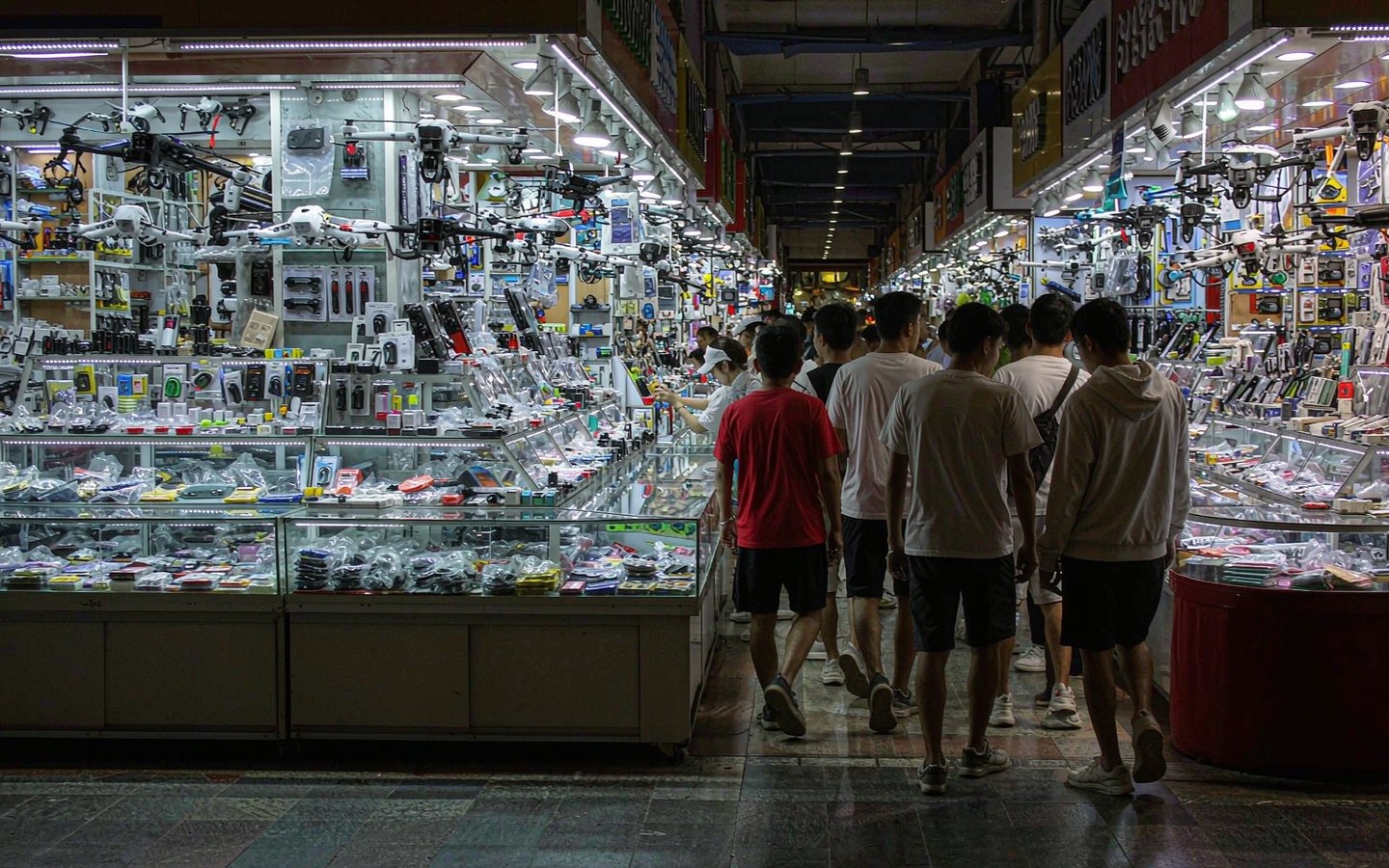
Corridors of electronics stalls glowing with screens and gadgets

Huaqiangbei

The world's biggest electronics market — 35 specialist markets in 1.45 km², chip to finished drone within a kilometre — and foreign visitors have voted with their feet: 7,000-plus a day in 2025. Test drones, AI glasses and translators stall by stall; buy upstairs, ship downstairs; currency exchange, foreign-card POS and instant tax refunds are on site. It's a wholesale market, not an attraction: bargain, expect counterfeits, ignore street touts. Check voltage, warranty and customs limits before you buy.

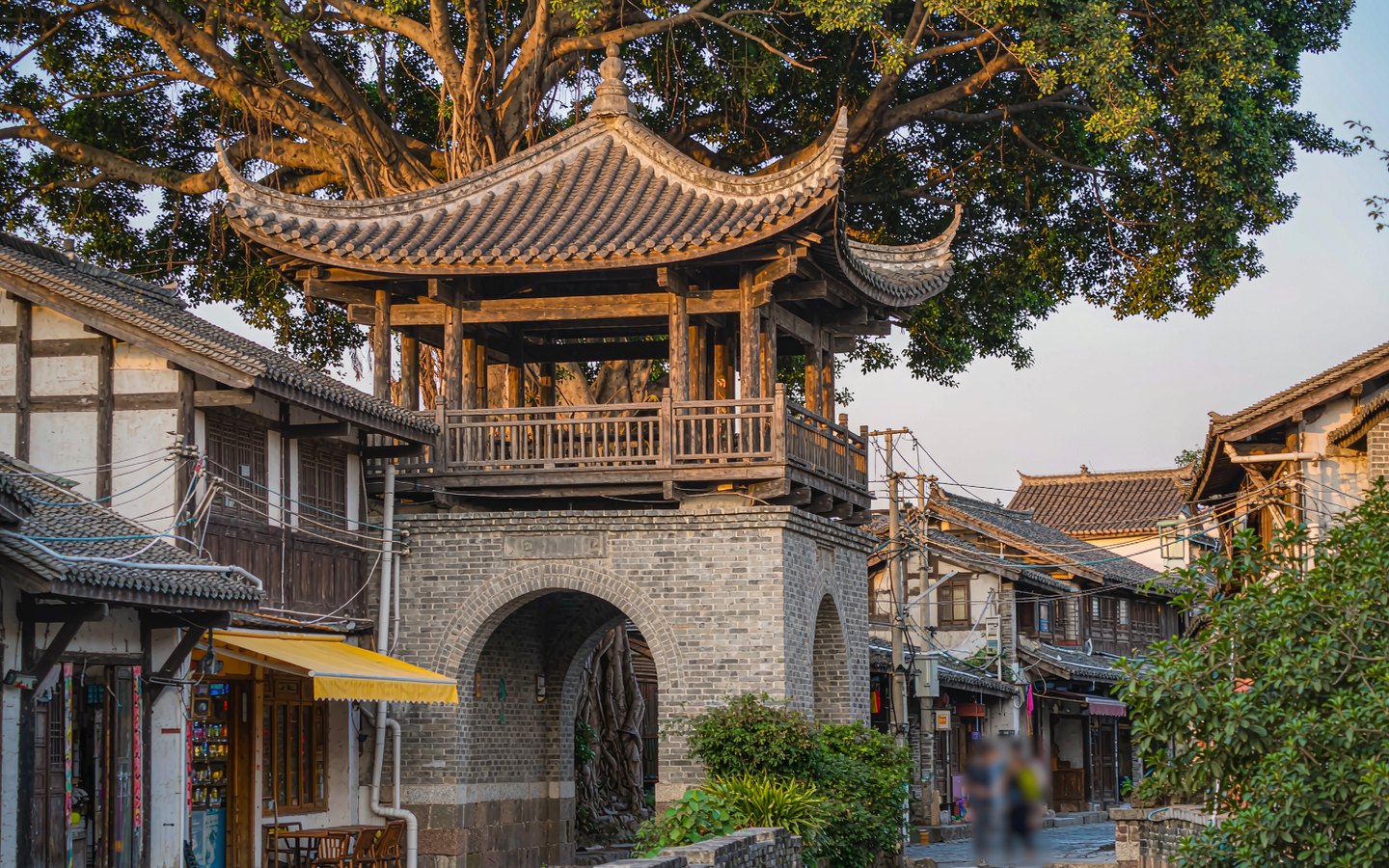
Restored Lingnan gate tower above narrow creative-district lanes

Nantou Ancient City

Shenzhen's rebuttal to 'the city has no history': nearly 1,700 years as a county seat — before it was Shenzhen, this was Xin'an, the shared root of Shenzhen and Hong Kong. It's also one of three stops on the city's official free half-day tour for inbound transit passengers. The lanes are free, metro line 12 stops there. Expect a revitalised urban-village creative district rather than a preserved Ming town; phase-two works were half done as of 2025 — expect hoardings.

3 more spots worth seeing
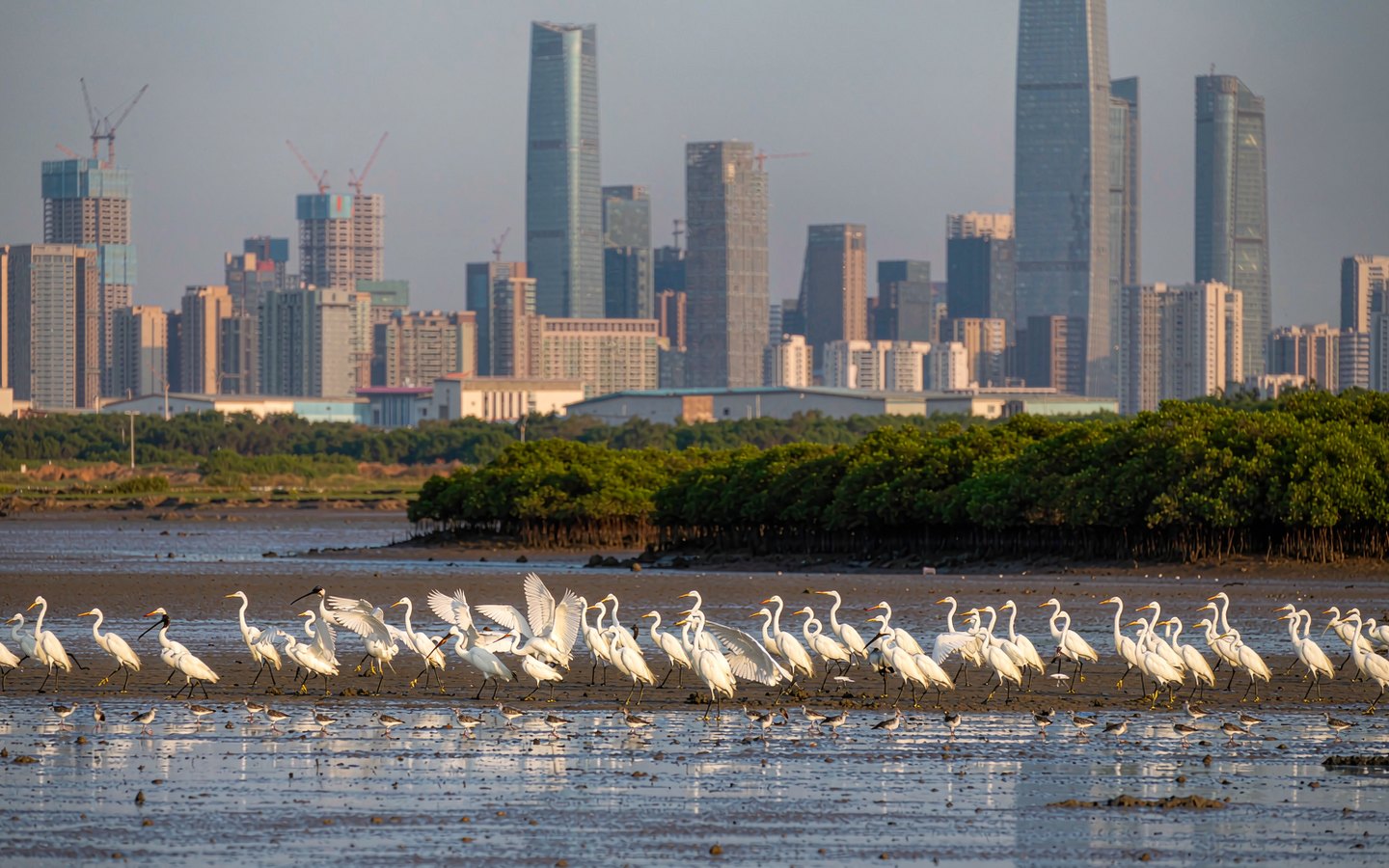
Wading birds on mudflats with a glass skyline across the bay

Shenzhen Bay Park & Futian Mangrove Reserve

Thirteen kilometres of free waterfront greenway below one of earth's densest skylines — and the only national nature reserve inside a Chinese city's core, 300 metres across the water from Hong Kong's Mai Po. Winter brings the spectacle: black-faced spoonbills, about 4.4% of whose world population winters in this bay. Metro line 9, exit D2. The reserve's core zone is reservation-only, so most visitors watch from the park side; the season runs October to April — summer has almost no birds.

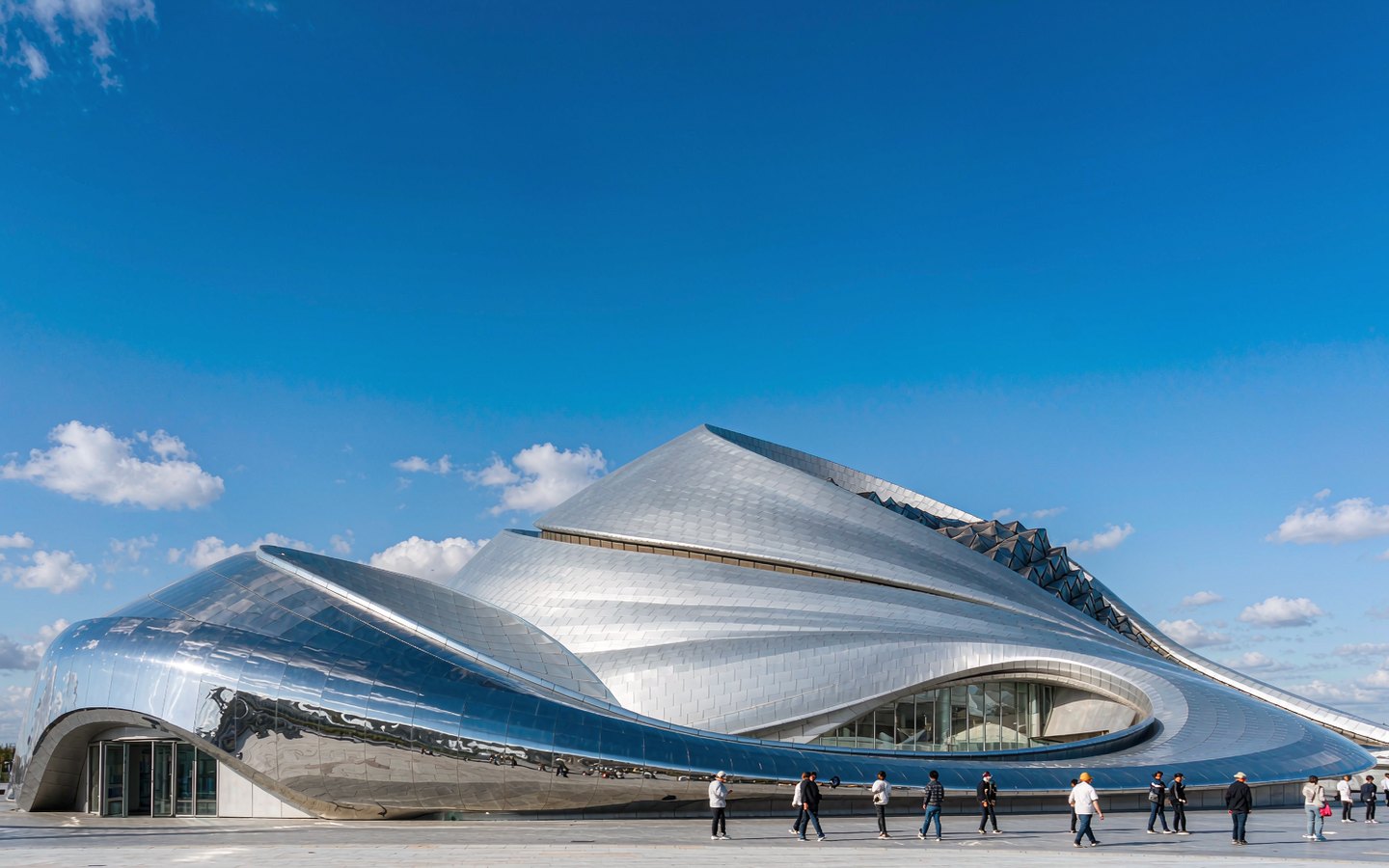
Sweeping steel curves of a futuristic museum under a blue sky

Shenzhen Science and Technology Museum (new building)

The newest of Shenzhen's landmark cultural buildings, opened May 2025: 950 exhibits on the themes this city runs on — AI models, the low-altitude drone economy, EVs, brain science, humanoid robots you can interact with — plus a dome theatre and 4D flight cinema. ¥50 for the main halls, ¥30 more for the dome; open 10:00–17:00 Tuesday to Friday, 9:30–18:00 weekends and school holidays, closed Mondays. It's in Guangming district, an hour from Futian — metro line 6 to Guangming station.

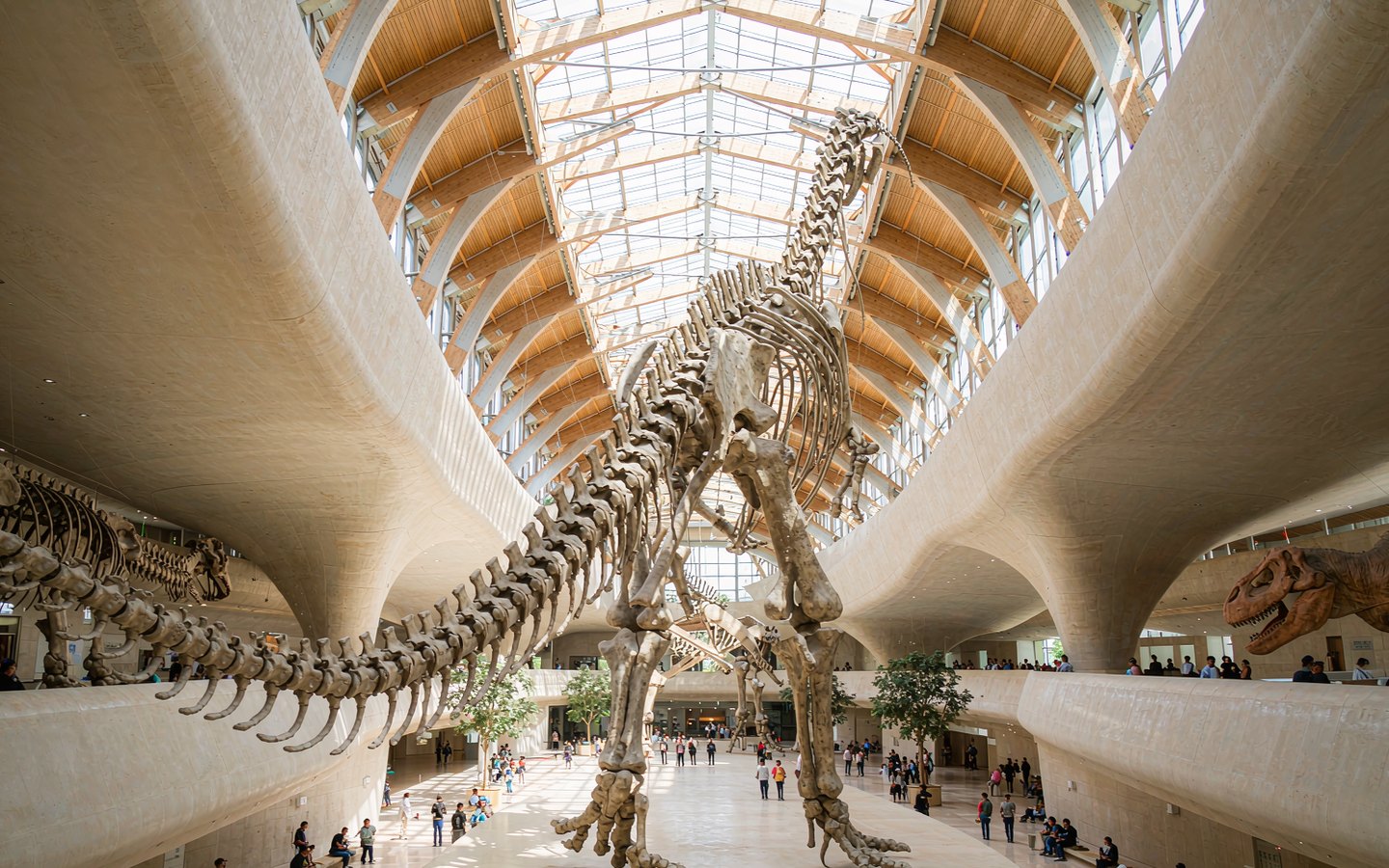
Huge dinosaur skeleton in a bright new museum hall

Shenzhen Natural History Museum

South China's largest natural history museum, and brand new — opened 28 July 2026: 7,461 real specimens across eight halls running from the universe's 13.8 billion years down to today's ecosystems, in a delta-inspired building with outdoor wetland trails. Around ¥80, closed Mondays; metro line 16 to Shaxue, then a ten-minute walk — but it's in Pingshan, 1.5 hours from downtown. Opened only weeks ago at check time, so verify booking rules before building a day around it.

Local cuisine

Where to stay

Some hotels still turn foreign guests away at the desk, and they rarely say so at the booking stage — since 2024 the rules no longer let a hotel refuse you for holding a foreign passport, but the practice has not stopped. Serviced apartments are the bigger problem in Shenzhen: many cannot register a foreign guest at all. Ask before you pay, and keep your booking confirmation.

Getting around

Getting here

  • Bao'an Airport (SZX)

    Metro Line 11 runs from beneath the terminal to Futian in a little over half an hour. Standard fare is ¥2–10; the business carriage costs three times that and has luggage racks and proper seats.

  • Futian and Shenzhen North

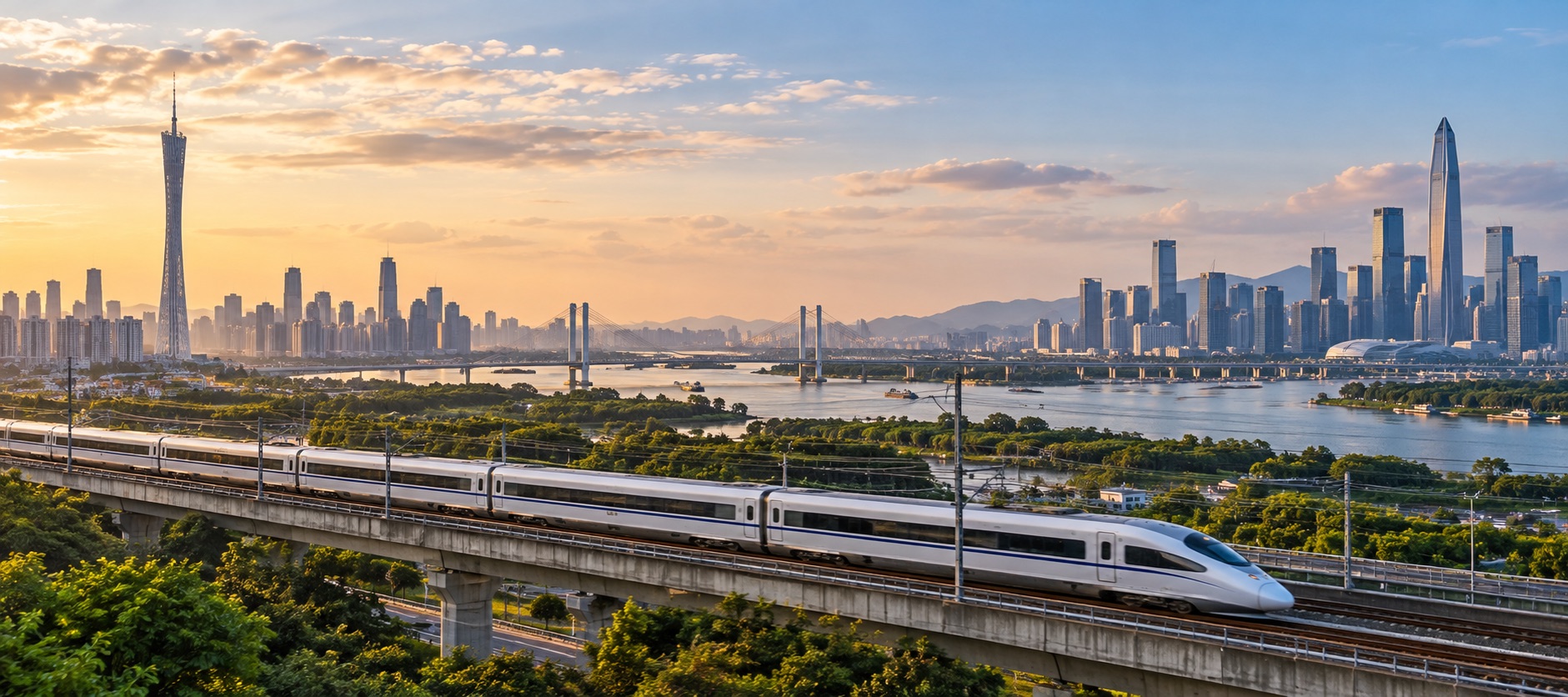
    Futian is underground in the middle of the CBD and runs the high-speed line to Hong Kong West Kowloon in 14 to 16 minutes. Shenzhen North takes the long-distance trains and sits on Lines 4, 5 and 6.

  • The land crossings to Hong Kong

    Line 1 ends at Luohu, open 06:30 to midnight. Lines 4 and 10 reach Futian Checkpoint, open 06:30 to 22:30, where a 211-metre covered footbridge leads to Lok Ma Chau on the MTR East Rail line.

Book trains on 12306 with your passport number — the passport is the ticket, and the name on the booking has to match every name printed in the passport. At the gate you lay the passport open on the reader; if it will not read, the staffed window checks you through. Both Hong Kong crossings are full immigration in each direction, so make sure your mainland entry lets you come back.

Local transport

  • 🚇

    Metro

    More than fifteen lines, and new ones opening most years, running roughly 06:30 to 23:00, from ¥2 and rising with distance, every station signed and announced in English. It reaches the airport, both border crossings and a beach.

  • 🚕

    DiDi and taxis

    English interface, takes foreign cards, and you never have to say an address out loud. Futian and Nanshan traffic at rush hour is bad enough that the metro usually wins anyway.

  • ⛴

    Shekou ferry

    From the Shekou Cruise Center on Line 2 to Hong Kong Island, Macau and Zhuhai, and to Hong Kong airport. The airport sailing is a transfer service only: you stay airside and skip immigration, but you must hold an onward flight, and it will not get you into Hong Kong.

No transit card needed: open the transport mini-app inside Alipay and scan the QR at the gate. The last metro is around 23:00, earlier than the restaurants empty.

What's on

Recommended routes

All routes →

FAQs

What is the best time of year to visit Shenzhen?

October to December and March to April — warm and dry, and the two windows this page is built around. Rain runs from April into late September, heaviest in the middle of that stretch, and typhoons come between July and September; a bad one closes the beaches. Summer is hot, wet and beach season, which is also when Dameisha’s free booking quota applies — fine if the sea is the plan, punishing if the city is.

How many days does Shenzhen need?

Two is what this page’s own itinerary is built on: Lianhuashan for the skyline, OCT-LOFT and the theme parks, the Ping An deck and Huaqiangbei. Add a day east for Dapeng — it is over an hour out with no metro, so it takes a whole day rather than a morning. Then decide what to pair it with: Hong Kong is 14 to 16 minutes by rail from Futian, Guangzhou is half an hour, and there is a five-day Shenzhen-and-Guangzhou version of the trip if you want both.

Is the metro the best way to get around Shenzhen?

Yes, and it is not close. More than fifteen lines, new ones opening most years, running roughly 06:30 to 23:00, from ¥2 by distance, with every station signed and announced in English. Pay by QR — Alipay works at the gates — or buy a single trip from the machines. One network reaches the airport, both Hong Kong crossings and a beach, which is more than most cities can say. DiDi has an English interface and takes foreign cards, but at rush hour in Futian and Nanshan the train usually wins anyway.

How do I get from Shenzhen to Hong Kong?

Three ways, for three different plans. Line 1 ends at Luohu, open 06:30 to midnight; Lines 4 and 10 reach Futian Checkpoint, which shuts at 22:30 and has a 211-metre covered footbridge to Lok Ma Chau on the MTR East Rail line. The fastest is the high-speed rail from Futian station: 14 to 16 minutes to West Kowloon, clearing both borders inside the station. The Shekou ferry from Line 2 also sails to Hong Kong Island, Macau and Zhuhai — but note the airport sailing is a transfer service only: you stay airside, skip immigration, and it will not get you into Hong Kong. Bring your passport: most nationalities get visa-free entry, and these are real crossings, so leaving and coming back count as two separate entries.

Are the beaches worth a day, and which one?

Dameisha is the easy one — a long stretch of free public sand on Mirs Bay with its own Line 8 station, and the city’s standard swim. In the summer season and on weekends and public holidays entry is by free advance booking, a daily quota released about a week ahead through the Yantian district WeChat account; off-season weekdays need nothing. Xiaomeisha is the next bay along and the Dapeng peninsula further east again, where the water gets properly clear. Give Dapeng the whole day: it is over an hour out with no metro, and the seafood there — chosen from the tank, weighed in front of you — is the reason to go.

Where do I see the tech side of Shenzhen?

Start at Huaqiangbei, the world’s biggest electronics market: 35 specialist markets in 1.45 km², chip to finished drone inside a kilometre, and more than 7,000 foreign visitors a day in 2025. Treat it as a wholesale market rather than a sight — bargain, expect counterfeits, ignore the touts, and check voltage, warranty and your own customs limits before you buy. Currency exchange, foreign-card POS and instant tax refunds are all on site. For the skyline half of the same story, the Ping An deck on floor 116 opens at 10:00 (¥200 at the door, ¥180 online), and the new Science and Technology Museum out in Guangming runs AI, drone, EV and humanoid-robot exhibits for ¥50, closed Mondays.

What should I eat in Shenzhen?

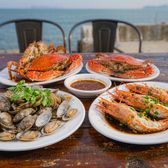
The food follows the people who moved here, so order across the provinces. Morning tea first: pots of tea, steamer baskets ticked off a paper slip, and a table you are expected to hold for two hours — dim sum is breakfast and lunch at once. Chaoshan beef hotpot is the local signature: clear broth, hand-cut beef sorted by which part of the animal it came from, each cut dipped for its own count of seconds and finished in sha cha sauce. Add Cantonese seafood at Shekou’s Sea World — chosen live from the tank and weighed in front of you, so agree the price per catty first — Hakka salt-baked chicken and stuffed tofu out in Longgang, and bubble tea, which the city takes seriously enough to have produced both Heytea and Naisnow. Order it half sugar.

Which part of Shenzhen should I stay in?

Futian CBD is the default — Lines 1 and 3, the Ping An deck and Lianhuashan a short ride away, and Futian station for the Hong Kong train — at ¥450–1,500 a night, priced for expense accounts and quiet at weekends. Luohu · Dongmen is the cheapest of the four (¥250–800) and the oldest quarter, with the Luohu crossing at the end of Line 1. Nanshan · OCT (¥350–1,100) is green and low-rise beside OCT-LOFT and the theme parks, all on Line 1, but it is the furthest of the four from the border. Shekou · Sea World (¥400–1,200) is the long-standing expat quarter, with the ferry terminal for Hong Kong airport, Macau and Zhuhai. One warning that matters more here than in most cities: some hotels still turn foreign guests away at the desk, and serviced apartments are the bigger problem — many cannot register a foreign guest at all. Ask before you pay, and keep the confirmation.

What does a day in Shenzhen cost?

Where you sleep sets the floor: ¥450–1,500 in Futian CBD, ¥250–800 in Luohu · Dongmen, ¥350–1,100 in Nanshan · OCT and ¥400–1,200 in Shekou · Sea World. The rest of the day is cheap. The metro starts at ¥2 and a DiDi from the airport is ¥90–130. Most of what people come for is free — Lianhuashan Park, Shenzhen Bay Park, the lanes of Nantou Ancient City, the streets of OCT-LOFT, and Dameisha if you take the free slot. The tickets worth budgeting for are the Ping An deck (¥200 at the door, ¥180 online), the theme parks (¥220 for a full day at either Window of the World or Splendid China), the Science and Technology Museum at ¥50 and the Natural History Museum at around ¥80.

Will I manage in Shenzhen without Chinese?

Better than in most of China, because this is a city built by people who arrived from somewhere else — Mandarin is the shared language, and nobody expects you to have the local one. The metro is signed and announced in English, DiDi has an English interface, and the metro QR runs through Alipay, so the three things you do most work without a word. Past that, treat English as a bonus rather than a plan: have your hotel address saved in Chinese to show a driver, and keep a translation app for menus and market stalls.

How do I pay for things in Shenzhen?

The way everyone else does: bind a foreign Visa or Mastercard to Alipay or WeChat Pay before you fly, and scan. It covers everything from a metro gate to a street stall, and this is one of the cities where adoption runs highest. Cards still work at mid-range hotels and up, and at the places set up for visitors — Huaqiangbei runs foreign-card POS and instant tax refunds on site. Keep a little cash as backup and expect to use it rarely. The thing to read up on is the fee that comes with binding a foreign card; the site’s payments guide walks through the setup and has a picker for whether your card will work here.

What can I do as a day trip from Shenzhen?

Hong Kong, and it is barely a trip: 14 to 16 minutes by high-speed rail from Futian station to West Kowloon, or the Luohu and Futian checkpoints on the metro. There is a three-day Hong Kong itinerary on the site if you decide to stay over rather than come back. Guangzhou is half an hour away and the obvious second city — older, better fed, and the two make a good three- or five-day run. Macau and Zhuhai are both reachable by ferry from Shekou on Line 2. Whichever you pick, remember that these are real immigration stops: leaving the mainland and returning are two separate entries.

How do I get from Bao’an airport to the city centre?

Metro Line 11, which runs from beneath the terminal: about 40 minutes to Futian, standard fare ¥2–10. The business carriage costs three times that and buys luggage racks and a proper seat, which is worth it with bags. A DiDi is ¥90–130, and the English app saves you saying the address out loud. The airport also has e-gates, SIM and eSIM counters and 24-hour ATMs, so a data plan and cash can be sorted the moment you land.