Guilin ● CITY TOUR BOARD

Guilin 桂林

The karst-peak postcard: a Li River cruise down to Yangshuo, then days cycling rice paddies and bamboo-rafting the Yulong. Low budget, high payoff, and barely a word of Chinese needed.

Introduction

Guilin is the karst landscape from every Chinese painting and every twenty-yuan note, and the thing to know before booking is that most of it is not in Guilin. The peaks, the paddies and the river you came for sit downstream around Yangshuo, ninety minutes away, and almost none of it needs Chinese — you cycle, you get on a boat, you point at what you want to eat. Guilin city is where you land and where the trains leave from.

Travel highlights

Yangshuo is the base, not Guilin

Guilin city is the airport, the train stations and the boat pier. Yangshuo holds almost everything else: the Yulong valley and the Ten-Mile Gallery are cycling distance from the town, Xingping is forty minutes away by bus, and the cruise finishes there anyway. Only Elephant Trunk Hill, back in Guilin city, and the Longji terraces sit outside that.

The famous stretch takes an hour

The full cruise runs four to five hours and costs ¥215 on a three-star boat or ¥360 on a four-star. The bamboo rafts at Xingping cover the stretch printed on the twenty-yuan note in about an hour, for far less.

Yangshuo station is not in Yangshuo

The high-speed station named Yangshuo sits at Xingping, about 22 km from West Street, and the connecting bus takes around an hour. The coach from Guilin is often the simpler way in.

The terraces run on a calendar

Longji is flooded mirrors from mid-May to early June and gold from late September to mid-October; the rest of the year the fields are brown. June is also the wettest month, and heavy rain stops the rafts.

Travel alerts

Top attractions

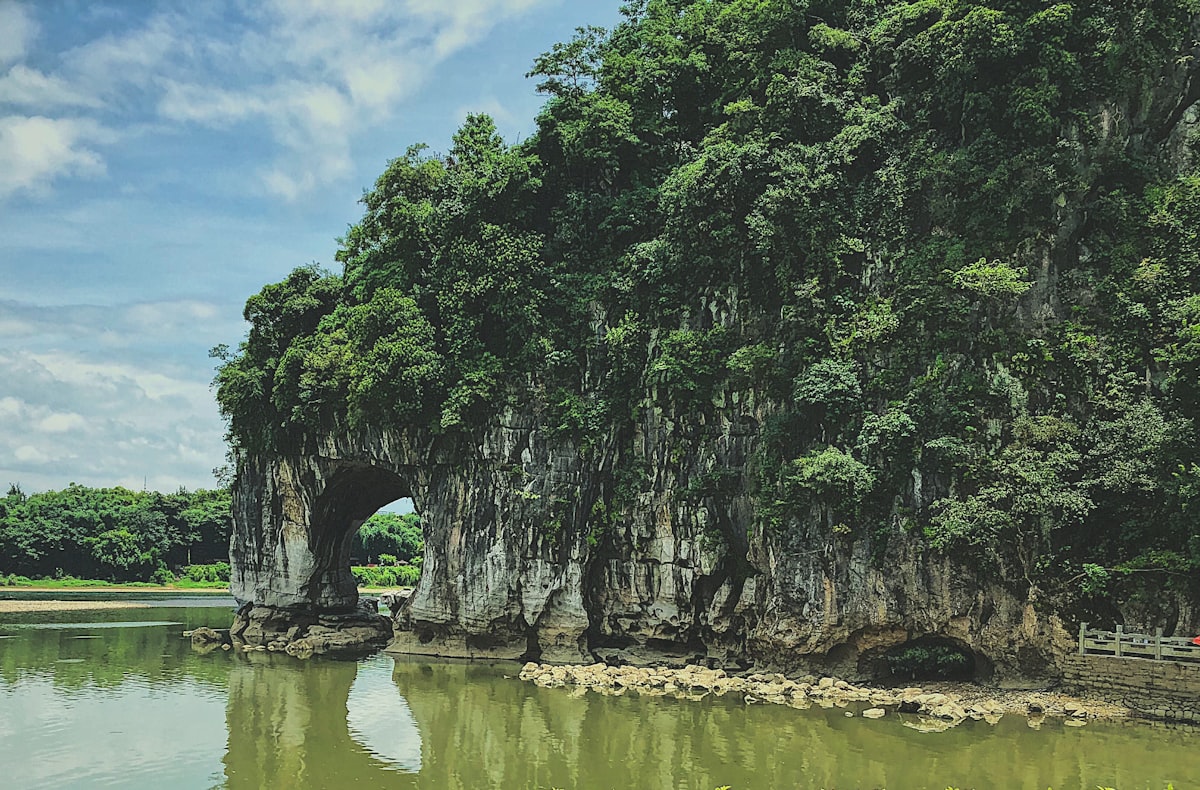
Elephant Trunk Hill, Guilin's landmark karst arch on the Li River

Elephant Trunk Hill

The arch Guilin puts on all its postcards, and a fifteen-minute stop rather than a morning. Entry is free, but it has to be booked online in advance in your own name, so have your passport with you and do not count on walking up to the gate. The riverbank opposite needs no booking at all and gives much the same view. Best in the last hour of light.

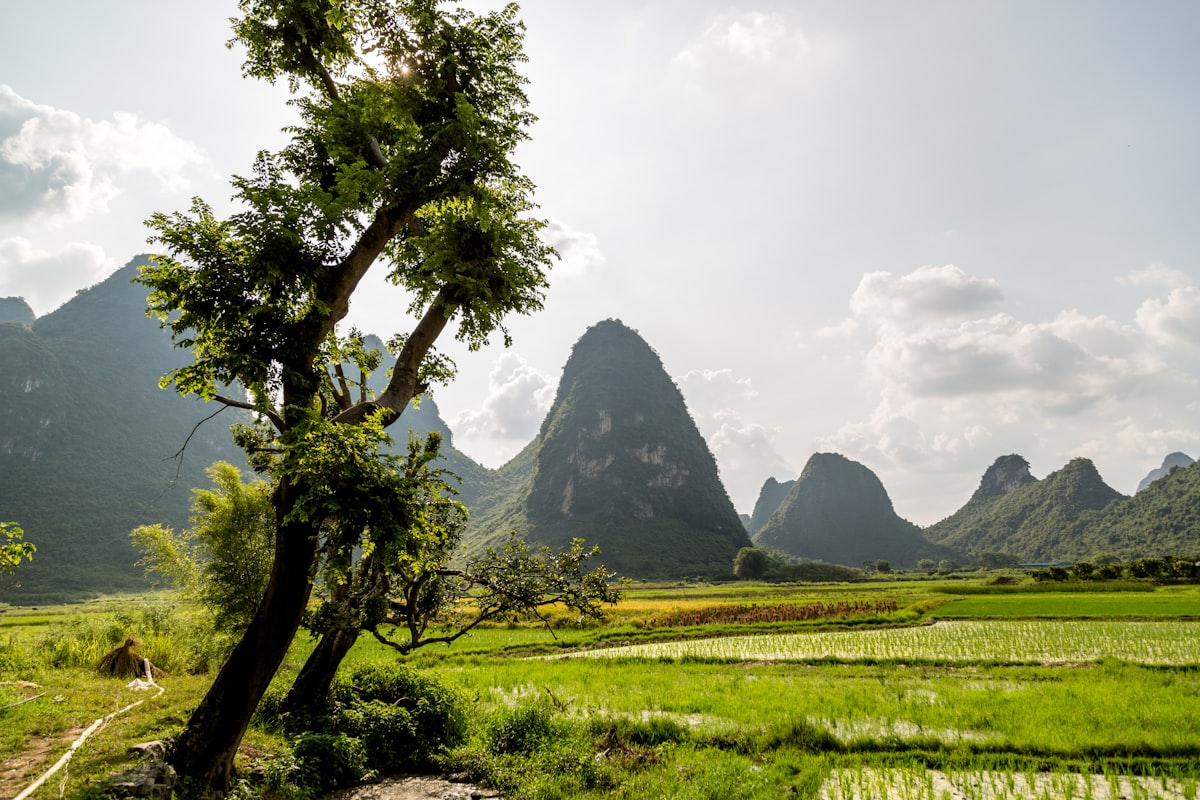
Rice paddies and karst hills in the Yangshuo countryside near Guilin

Li River cruise · Guilin → Yangshuo

Four to five hours down to Yangshuo, and the pier depends on which boat you booked: three-star boats (¥215) leave from Mopanshan, four-star boats (¥360) from Zhujiang, a couple of kilometres apart and both around half an hour south of the city. There are three morning sailings, spread between eight and half past ten, and nothing in the afternoon. Book against your passport at least a day ahead — it is hard to get on the day, and low water in winter can shorten the route.

Li River curving through karst peaks at Xingping near Guilin

Xingping

The stretch printed on the back of the twenty-yuan note, and the cheap way to see it: bamboo rafts run about an hour from the town wharf. It is roughly forty minutes by bus from Yangshuo for ¥10, every fifteen to twenty minutes, with the last bus back in the late afternoon. Xianggong Hill has the sunrise view down the river, but it stands on the opposite bank with no bridge to it — you hire a boat across from Xingping or drive round, about an hour from Yangshuo. The climb from the car park is twenty minutes and costs ¥60 at the gate.

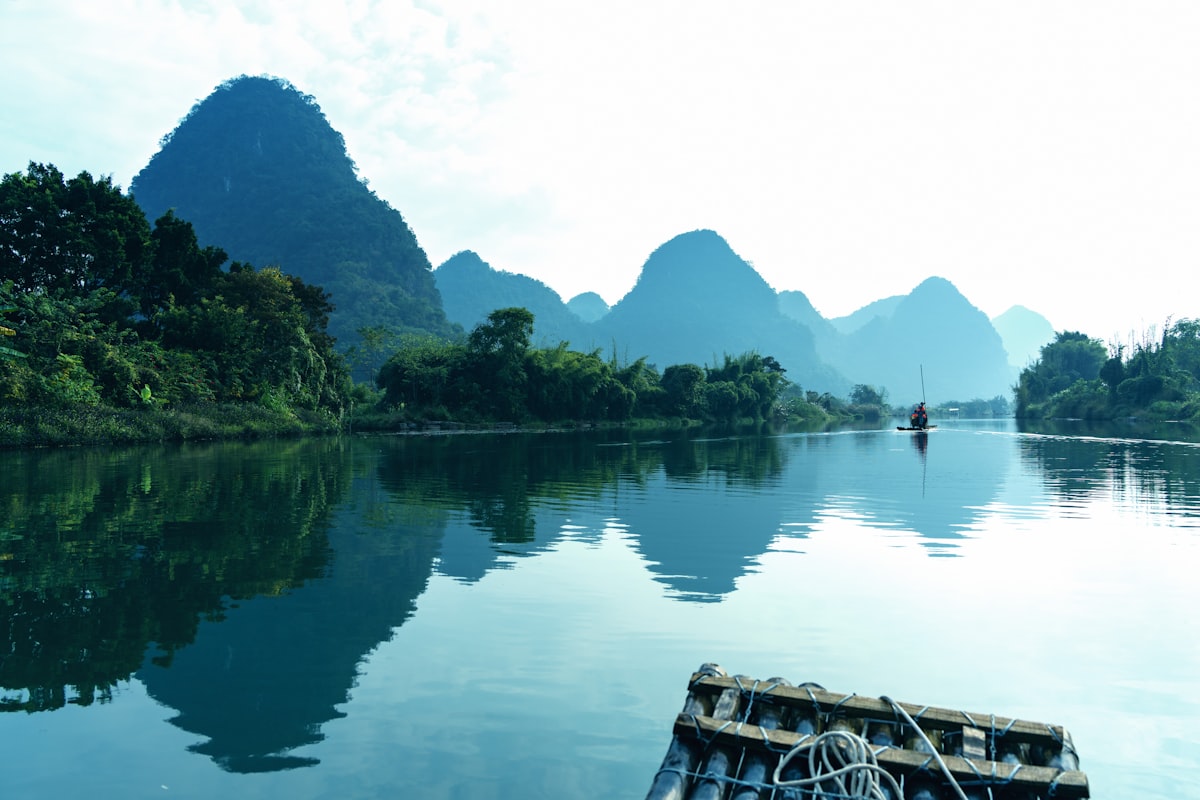
Karst peaks reflected in the calm Yulong River near Yangshuo, Guilin

Yulong River valley

The reason to give Yangshuo more than one night. The Yulong is punted with poles rather than motors, so it is quiet, and a two-person raft runs about ¥160–320 depending on the stretch. Rafts are booked in your own name and the next day's tickets go on sale the evening before, so places on the day are limited; a solo traveller pays for the whole two-person raft. Bikes and electric scooters rent for ¥30–50 a day, and the Ten-Mile Gallery road beside the river is flat.

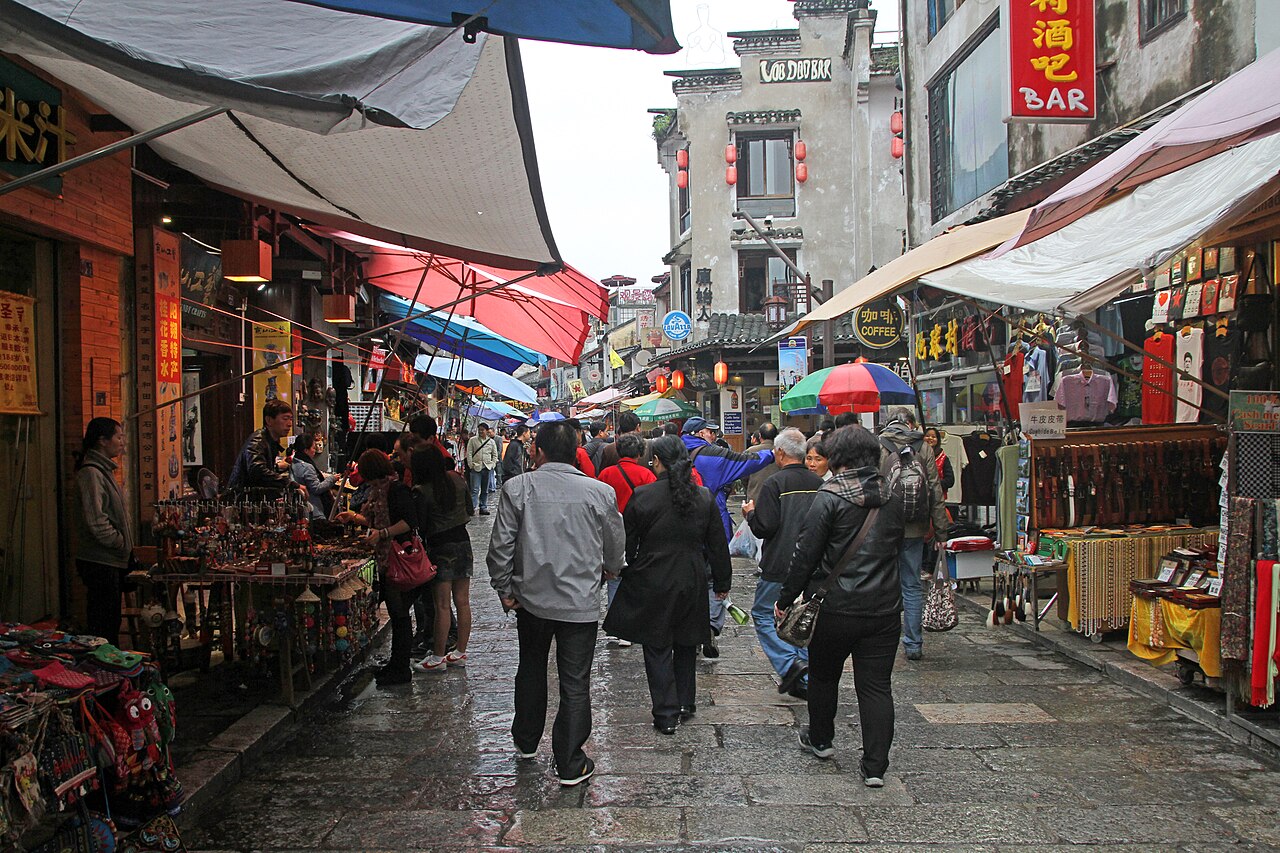
Stalls and shoppers filling West Street in Yangshuo

West Street · TV Hill

West Street is bars and souvenir shops now, and twenty minutes is enough of it. What it is good for is the path off Pantao Road behind it: a steep forty-minute climb up TV Hill to the full ring of peaks, best at sunset. Take a torch, because there are no lights on the way down.

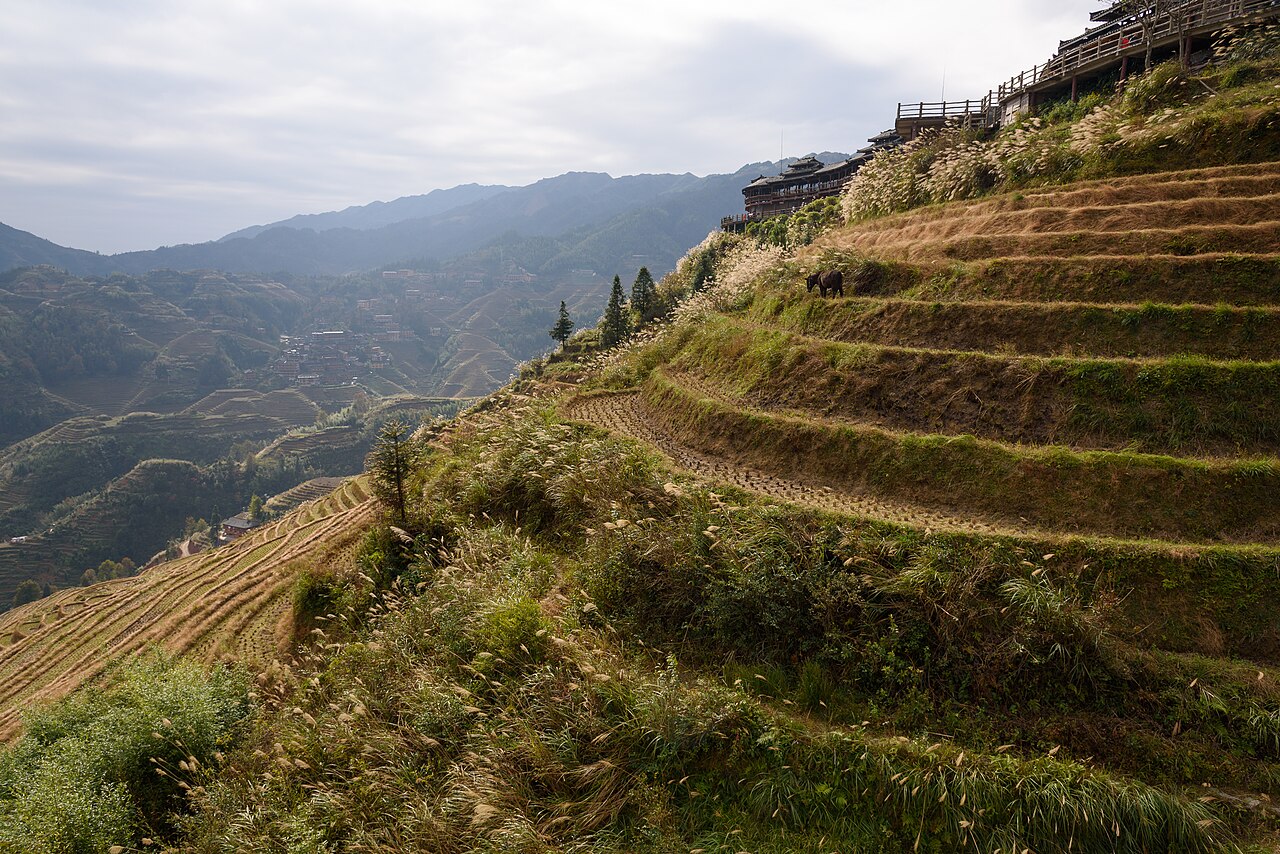
Terraced rice fields curving around the hillsides at Longji

Longji rice terraces

Two to two and a half hours by bus from Guilin's Qintan station, and one ¥80 ticket covers the whole area. Ping'an is the easier village to walk; Dazhai is steeper, with a cable car up to the Jinkeng viewpoints. Better as a night up there than a rushed day return.

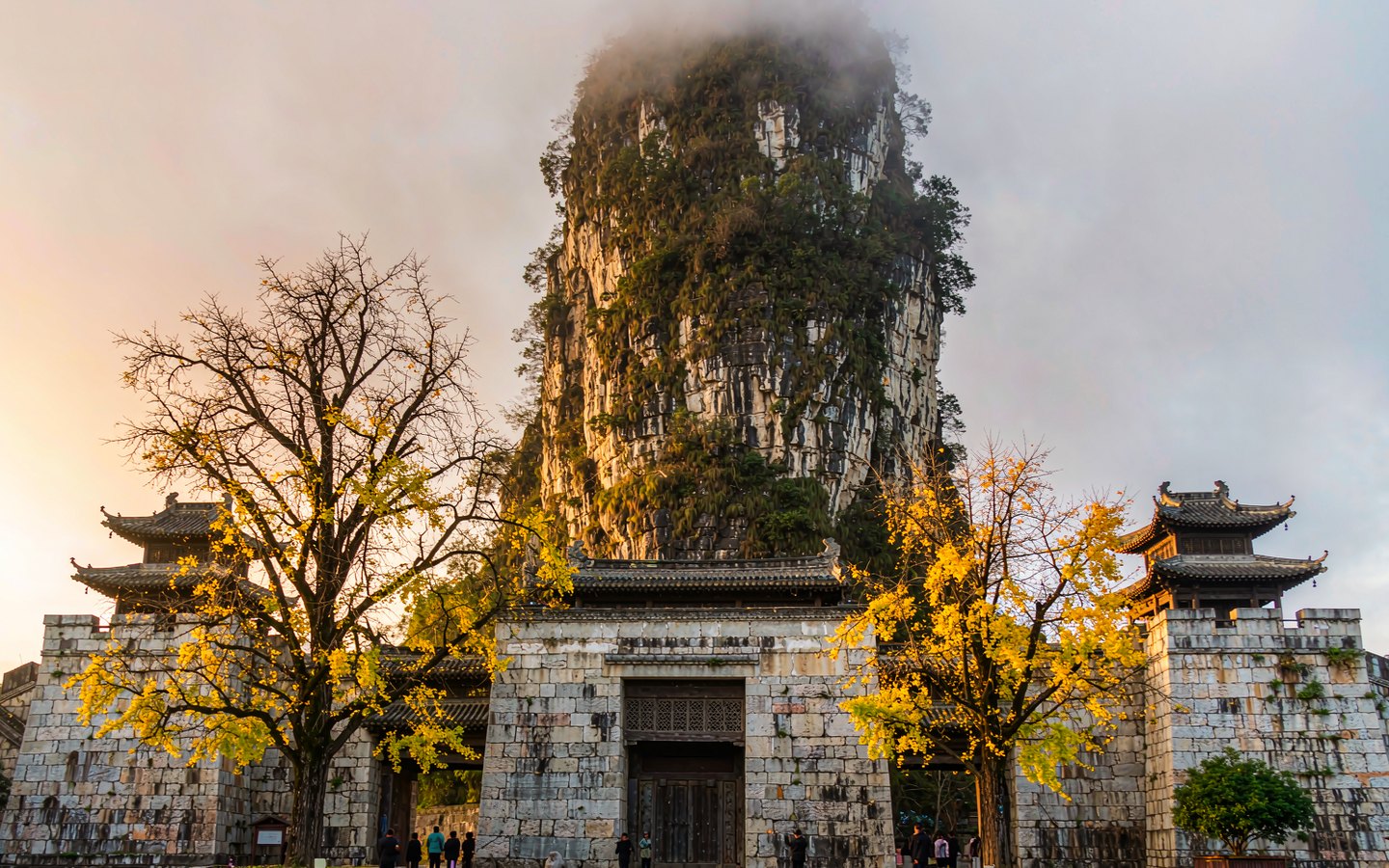
Lone limestone pinnacle rising behind Ming palace walls and old trees

Solitary Beauty Peak & Jingjiang Prince City

Guilin's only downtown 5A, and the place where 'Guilin's scenery is the best under heaven' was carved — the Southern Song original sits in the cliff at Dushu Rock. The ¥100 ticket includes a two-hour guided group, mostly in Chinese, through the Ming princely palace; guides skip the peak, so keep 30 minutes for the 306 steep steps. Warning: free rubbing and imperial-exam experiences funnel into sales pitches, including rubbings priced in the tens of thousands — admire, decline, move on.

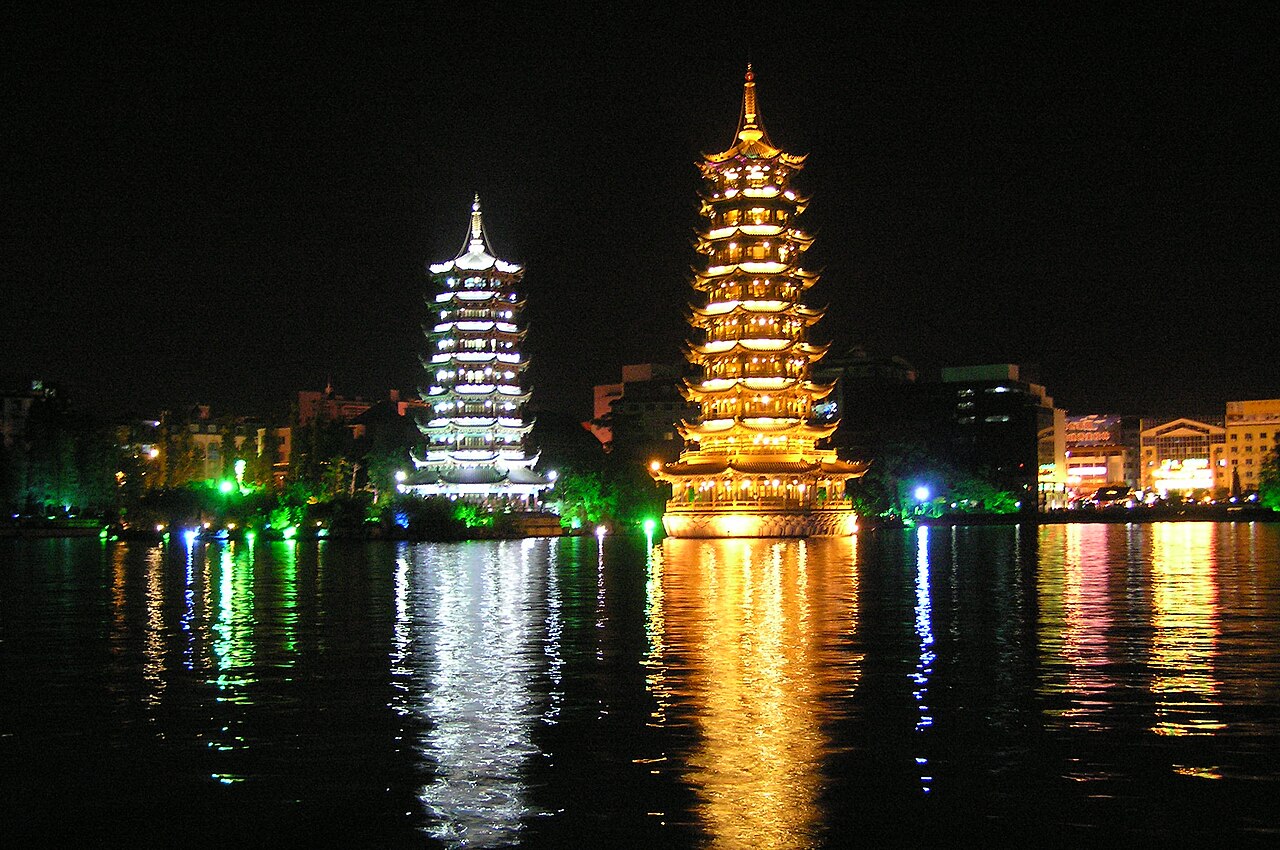
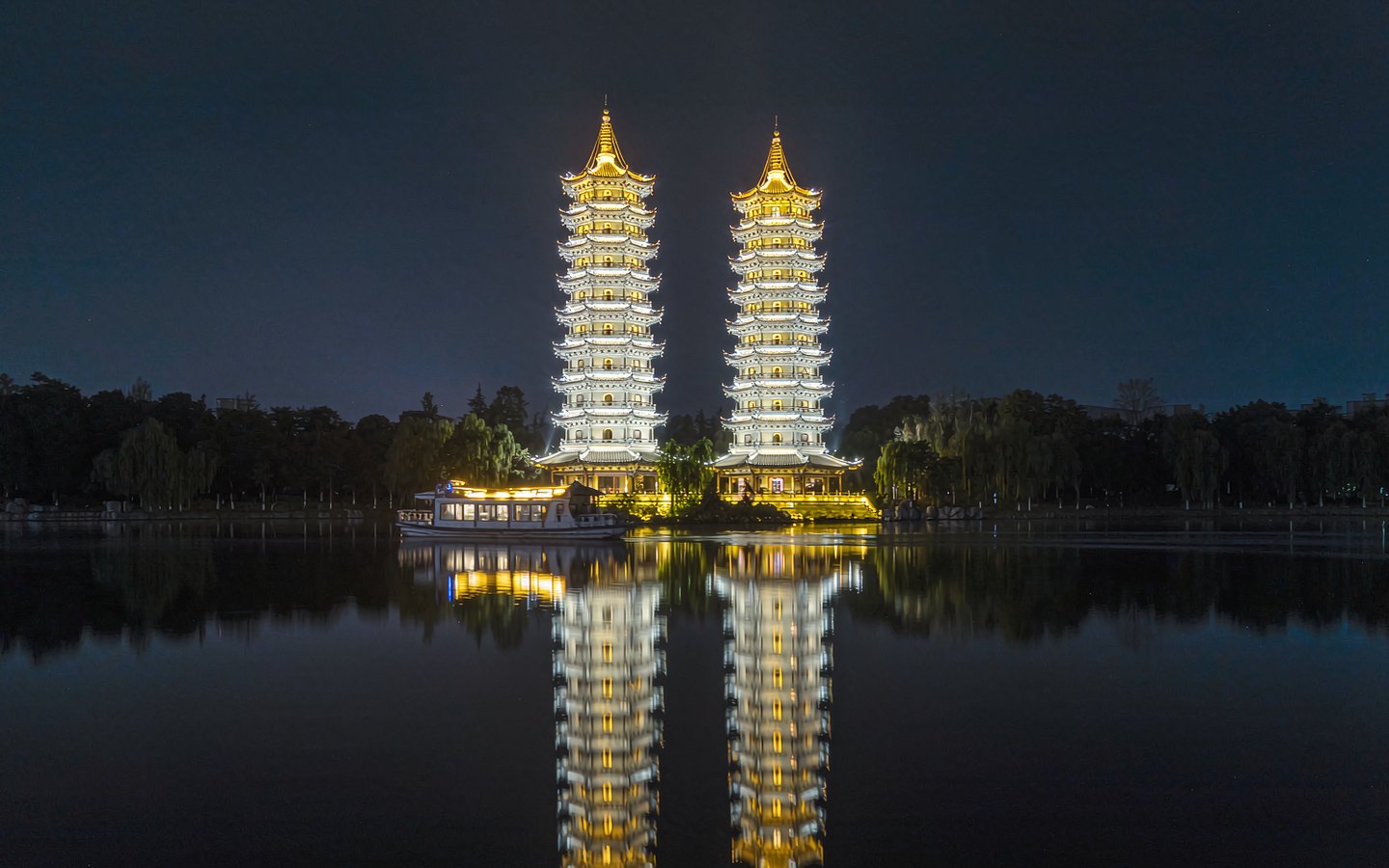
Gold and silver pagodas lit up on a dark lake at night

Two Rivers and Four Lakes night cruise

The after-dark half of downtown Guilin: a 90-minute loop through the city waterways past lit-up Elephant Trunk, Folded Brocade and Fubo hills, ending at the Sun and Moon pagodas glowing in Shan Lake. ¥210 is steep by Guilin standards and the ¥99 locals' ticket doesn't apply to foreign passports; the ¥90 day cruise is far better value but skips the lights. Boats leave at fixed times — around 19:00, 20:05, 20:40 — so check the day's departure pier.

2 more spots worth seeing
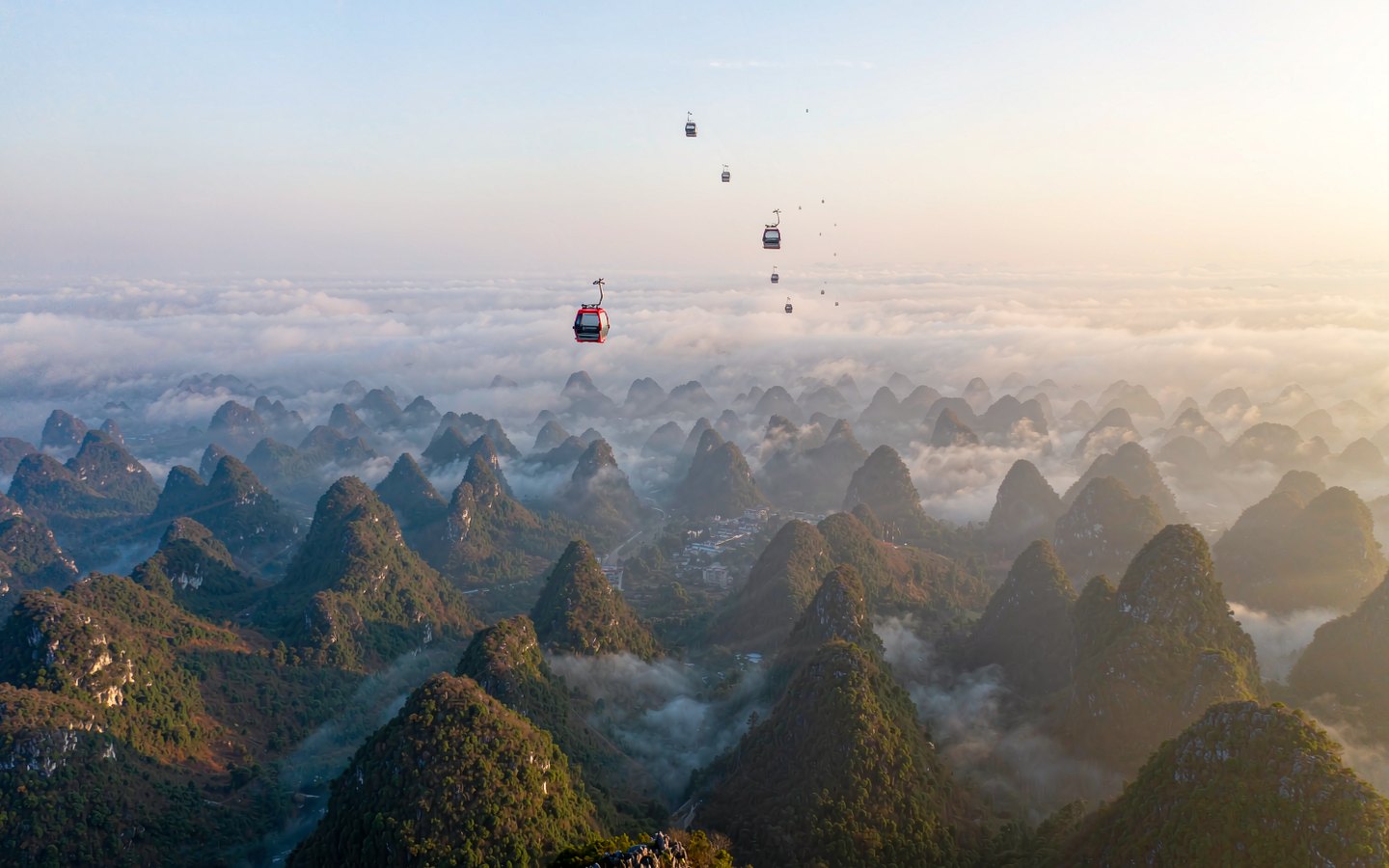
Cable cars crossing above a sea of karst peaks at dawn

Ruyi Peak cableway

Yangshuo's only bird's-eye view of the whole karst sea: a 2,012-metre French POMA cableway up 241 metres, a 138-metre cliff-hugging glass walkway, and a summit deck over endless peaks and paddies — a different trip from the valley-floor Ten-Mile Gallery. It's ¥208 including the glass bridge, ¥238–343 with transfers, and reviews split hard, mostly on weather: in fog or rain you see nothing, so go only on a clear morning, with sun protection. The low-commitment alternative to climbing Xianggong hill.

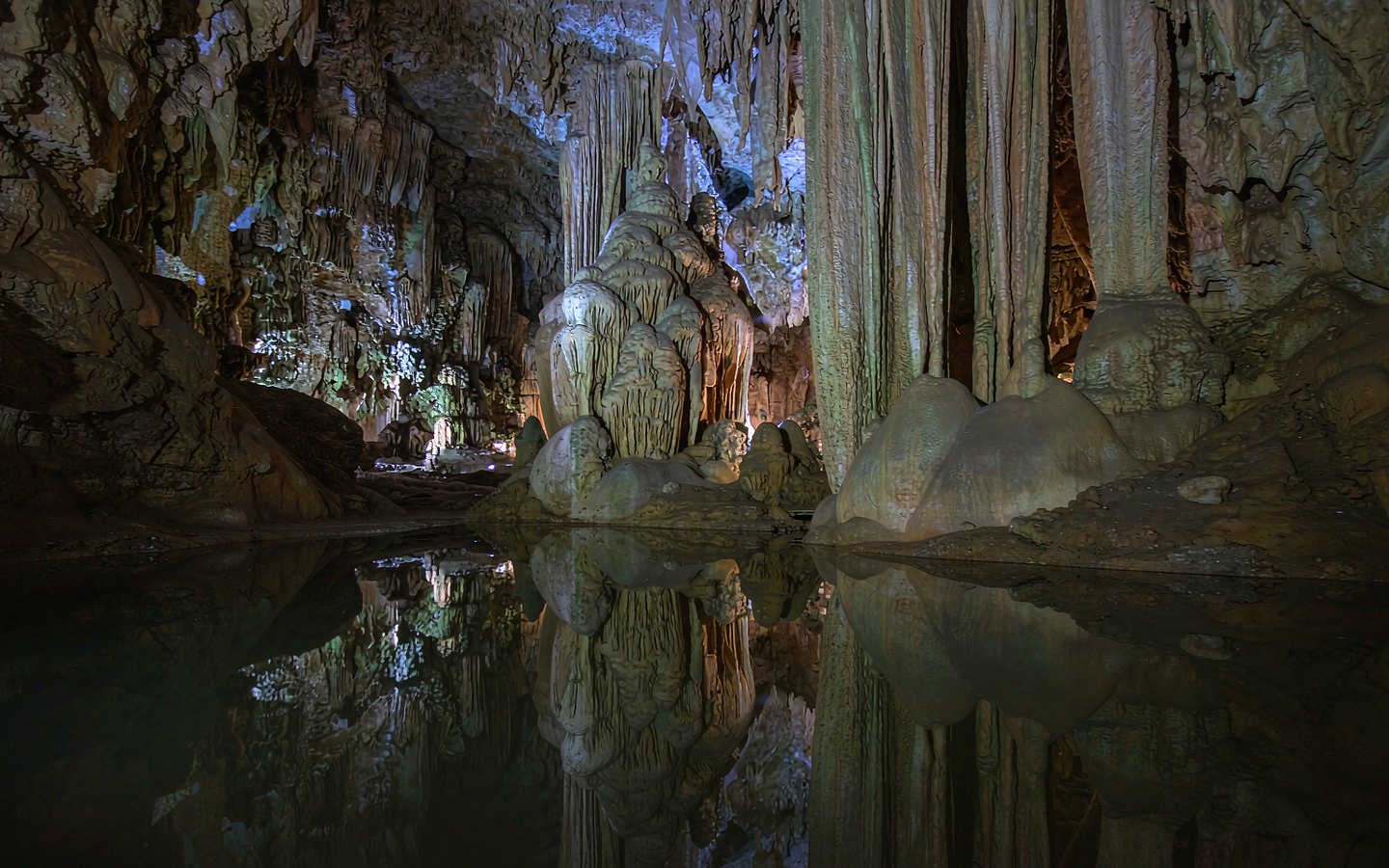
Colour-lit stalactites reflected in a still underground pool

Reed Flute Cave

The inside of Guilin's karst: a year-round constant-temperature cave five kilometres from downtown, stalactites lit in colour — and the filming location of the 1987 Journey to the West. It matters most as the rainy-day save: open whatever the weather, when river plans fall apart. At ¥82–90 it isn't cheap, and Chinese show caves are a genre of their own — if Silver Cave is already on your route, skip this one. Expect tour-group crowds and a herded pace.

Local cuisine

Where to stay

Book somewhere licensed to register a foreign guest. Not every Chinese hotel is, and it comes up most often with small countryside guesthouses — the kind Yangshuo is full of. Ask before you pay rather than at the desk.

Getting around

Getting here

  • Guilin Liangjiang (KWL)

    About 28 km from the city. The shuttle into Guilin is ¥20 and takes close to an hour; the direct shuttle to Yangshuo is around ¥50 and roughly 90 minutes, and skips the city entirely.

  • High-speed rail

    Guilin North and Guilin West take the fast trains from Guangzhou, Shenzhen, Nanning and beyond. Your passport is the ticket on 12306, and seats open 15 days ahead.

  • Guilin to Yangshuo

    Coaches leave Qintan and South stations every 25–30 minutes from early morning, and take 90 minutes to two hours. Cheap, frequent, and it drops you in Yangshuo itself.

The high-speed station named Yangshuo is at Xingping, about 22 km from West Street, with a connecting bus of roughly an hour. Check which station your ticket actually says.

Local transport

  • 🚲

    Bikes & e-scooters

    How Yangshuo is actually seen. Bicycles rent for about ¥30–50 a day and electric scooters for much the same, and the Yulong valley roads are flat.

  • 🚌

    Buses

    Guilin city buses are ¥1–2. Yangshuo to Xingping is around forty minutes for under ¥10 and runs every fifteen to twenty minutes, paid on board.

  • 🚕

    DiDi & taxis

    Guilin taxis start around ¥9 for the first two kilometres. DiDi works in both Guilin and Yangshuo and saves you saying an address out loud.

Buses, DiDi and a rented bike cover everything on this page, and all three take a QR code from inside Alipay — no transit card and no cash needed.

What's on

Recommended routes

All routes →

FAQs

What is the best time to visit Guilin?

April to October, with the Longji rice terraces flooded and at their best in May–June. Winter is grey and chilly on the river.

How many days should I spend in Guilin?

Three days: the Li River down to Yangshuo, a day cycling the Yulong River valley, and the Longji terraces or Xingping on the third.

How do I get from Guilin airport to Yangshuo?

A direct shuttle runs from the airport to Yangshuo in about 1.5 hours; the city shuttle is ¥20. Base yourself in Yangshuo rather than Guilin city — almost everything you came for is within cycling distance of it.

What is the best way to get around Guilin and Yangshuo?

A bicycle or e-scooter is how Yangshuo is actually seen, rented by the day. City buses in Guilin are ¥1–2, and DiDi and taxis cover the rest.

Which area should I stay in Guilin?

Yangshuo town near West Street for restaurants and the bus station, the Yulong River valley for farmhouse stays among the paddies, Xingping for the quietest river stretch. Guilin city centre is worth one night for an early flight or boat.

What food should I try in Guilin?

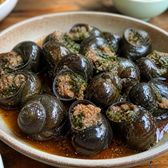
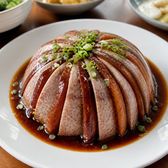
Guilin rice noodles for breakfast, Yangshuo beer fish, stuffed Li River snails, Lipu taro with braised pork and Gongcheng oil tea.

What are the must-see sights in Guilin?

The Li River cruise from Guilin to Yangshuo, Xingping, the Yulong River valley, Elephant Trunk Hill in the city, and the Longji rice terraces.