Dali ● CITY TOUR BOARD

Dali 大理

Yunnan's mellow heart — a walled Bai old town strung between the blue sweep of Erhai Lake and the green wall of the Cangshan range. Cycle the shore, wander the markets, and slow right down.

Introduction

Dali is where people who have been moving fast in China stop for a few days and then extend. The old town sits on a plain between a ridge that tops four thousand metres and a lake you can ride most of the way round, and almost nothing here needs booking weeks ahead — this is the easy part of a Yunnan trip. Two things catch people out: the railway station is not in the old town but nineteen kilometres away in Xiaguan, and at close to two thousand metres the sun burns on a cool day.

Travel highlights

The station is not the town

Dali Station sits in Xiaguan, about nineteen kilometres south of the old town and a normal working city. A DiDi across is ¥40–60 and around half an hour, the bus a few yuan and much longer. Book your bed in the old town.

Monday is market day here

Shaping village, about thirty kilometres north up the lake, holds its Bai market every Monday morning, and it is a working market rather than a display. It winds down by early afternoon, so go early or skip it.

The sun burns through cool air

Dali sits at close to two thousand metres and the air stays cool, which is exactly why visitors get burned on the lake. Hat, sunscreen and a bottle of water for any day on the shore or up Cangshan.

Shangri-La is outside the zone

If you are here on the 240-hour visa-free transit rule, Dali prefecture is inside the permitted Yunnan area. Diqing — Shangri-La — is not, and there are direct trains to it from Dali station. Check before you board.

Travel alerts

Top attractions

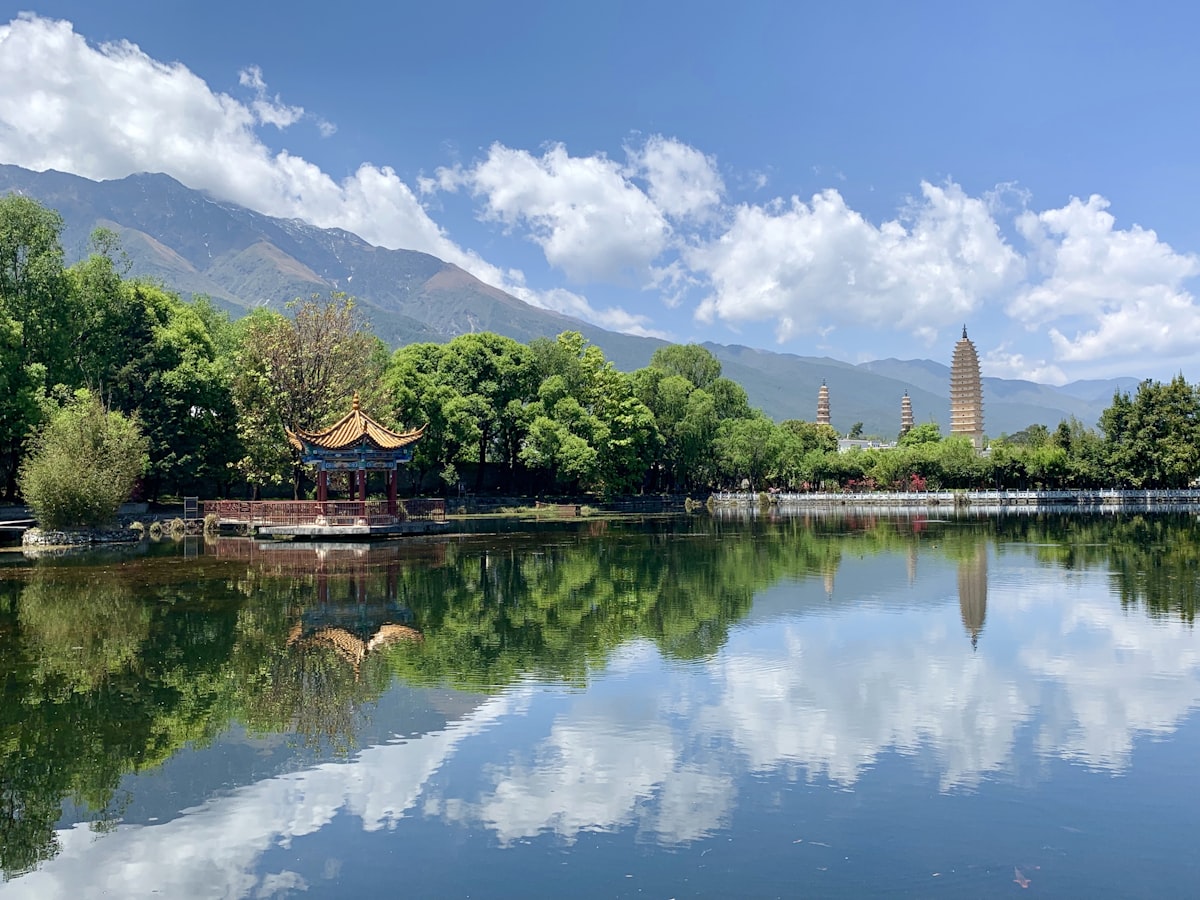
The Three Pagodas of Chongsheng Temple reflected in a pond below the Cangshan range, Dali

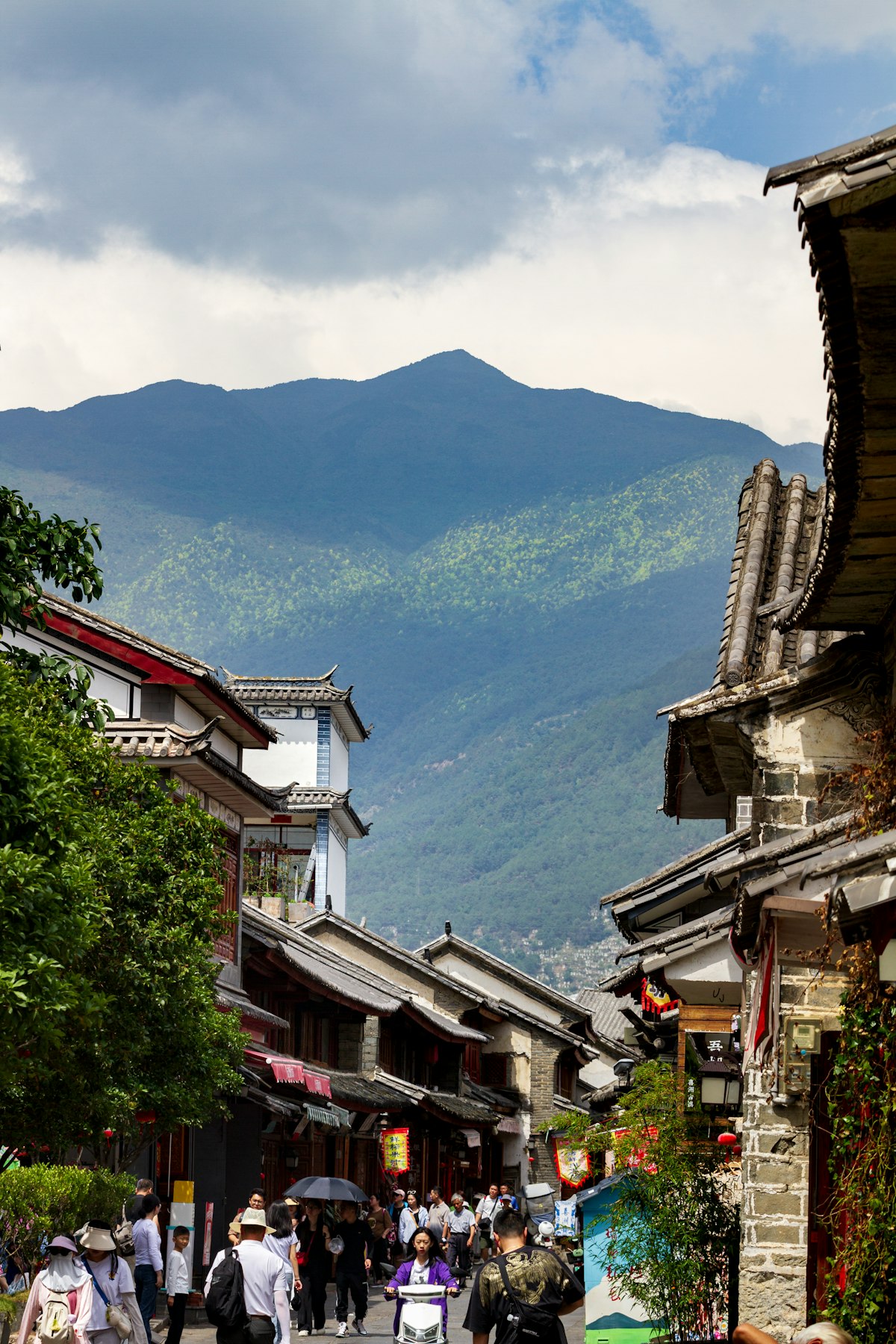
Dali Old Town

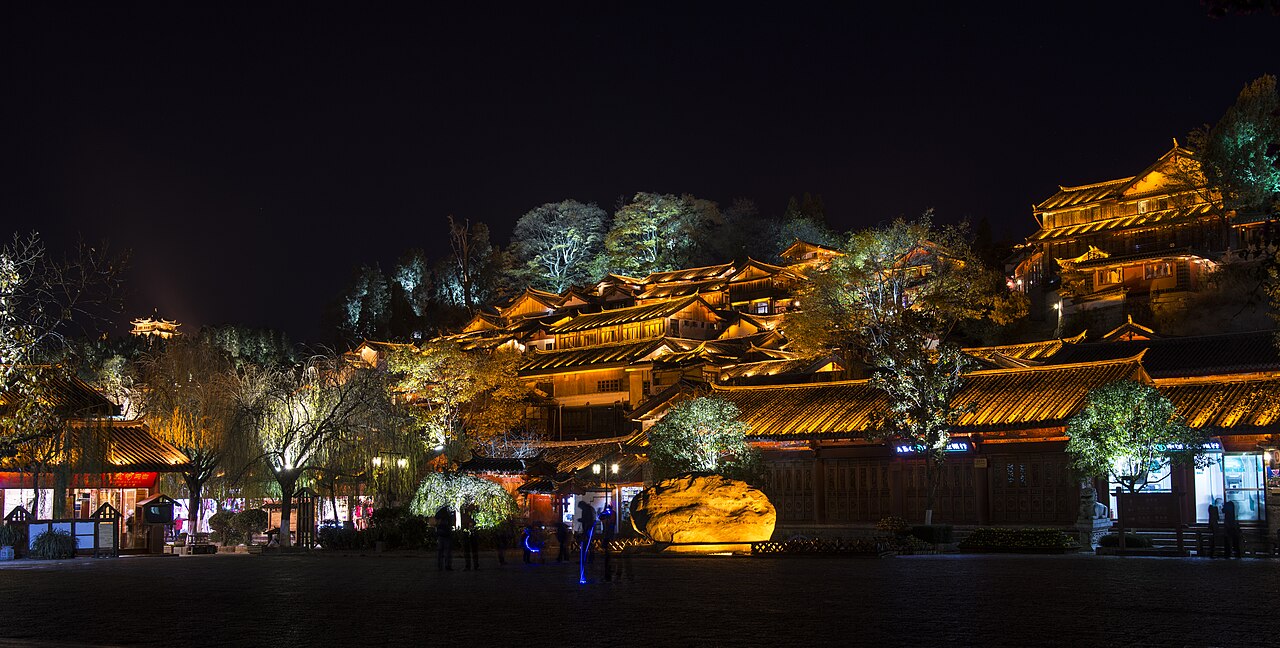
Free to walk into, walled, and still lived in. Fuxing Road runs cobbled from the South Gate to the North Gate, about 1.5 km, with the Wuhua Building halfway along. The main streets are a shopping run — the side lanes and the early morning are the town. Renmin Road is the evening one: bars, buskers, stalls.

The three pagodas of Chongsheng Temple standing above the trees at Dali

Three Pagodas

The royal temple of the Nanzhao and Dali kingdoms, twenty minutes' walk north of the old town, and the photograph everyone takes is from the reflecting pools below it. Entry is around ¥75 and it opens every day. The grounds climb for a couple of kilometres behind the pagodas; there is a shuttle cart if you would rather not.

Street in Dali Old Town with whitewashed Bai houses and Cangshan rising behind

Cangshan mountains

The ridge behind the town, with peaks over four thousand metres and three cableways up it. Zhonghe and Gantong both land on the Jade Belt path, a level walking route at about 2,600 m: up one, along the path, down the other, and that is a full day. Ximatan is the expensive one and climbs much higher, to about 3,900 m, well above the path — a separate trip rather than a way back down. A Cangshan entry fee is charged on top of the cableway fare, and walkers pay it too.

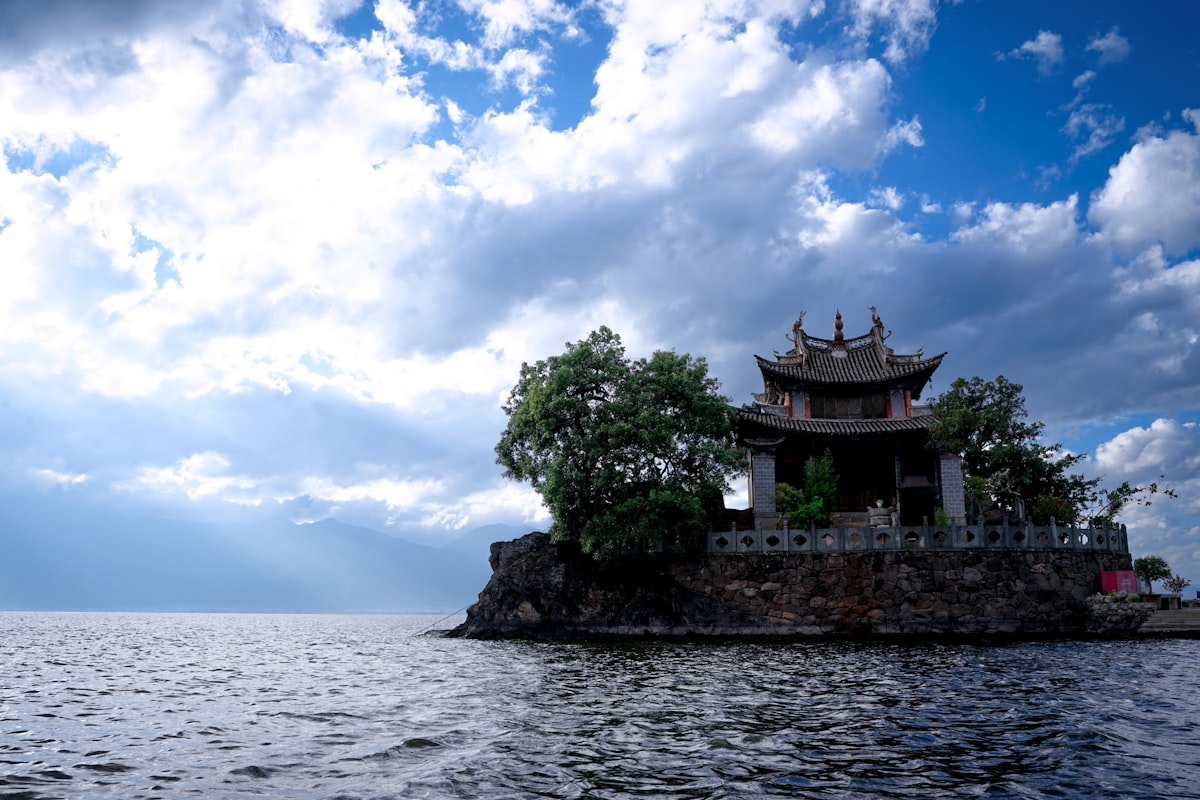
Xiaoputuo Temple on a tiny rock island in Erhai Lake, Dali

Erhai Lake

A car-free path runs about 46 km along the west shore, and a bicycle is the way to do it. Hire at the corridor's own stations rather than in the old town: electric bikes brought in from outside are turned away at the entrance, and the corridor rents shared bicycles and electric-assist bikes of its own. Come at sunrise or late afternoon — midday is glare with no shade. Do not swim. Erhai is Dali's drinking water source and swimming in the lake is prohibited.

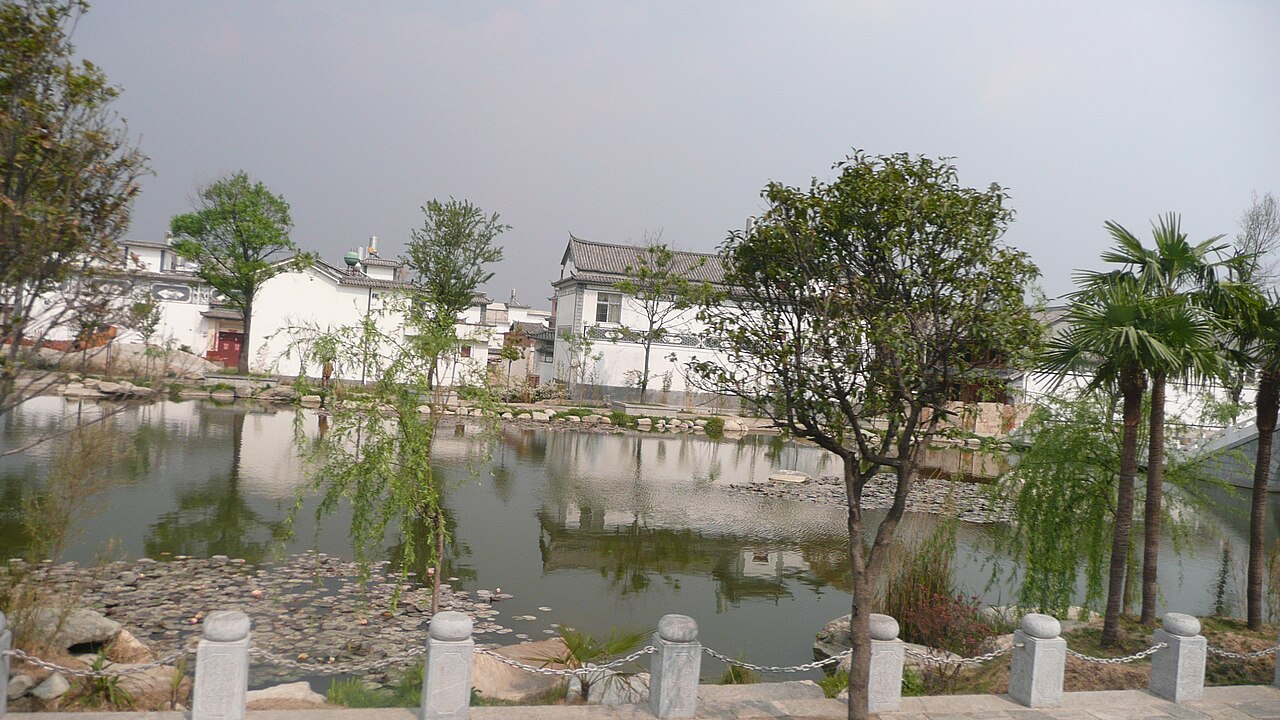
Whitewashed Bai houses and willows reflected in a pond at Xizhou

Xizhou old town

Eighteen kilometres north on the west shore, and the village people come to for Bai courtyard houses. The Yan Family Compound is the one you pay to enter, and where the three-course tea is served. Sifang Square has the baba griddles, and the rice fields behind the town are green in summer and gold before the harvest.

Erhai Lake with wooded hills and a village on the shore near Shuanglang

Shuanglang

The east-shore village, and the side where Cangshan is across the water rather than behind you — which is why the sunset photographs come from here. The loop bus from the old town takes the better part of an hour. It is busy and built up now: come for the water, the view and the short ferry to Nanzhao Island.

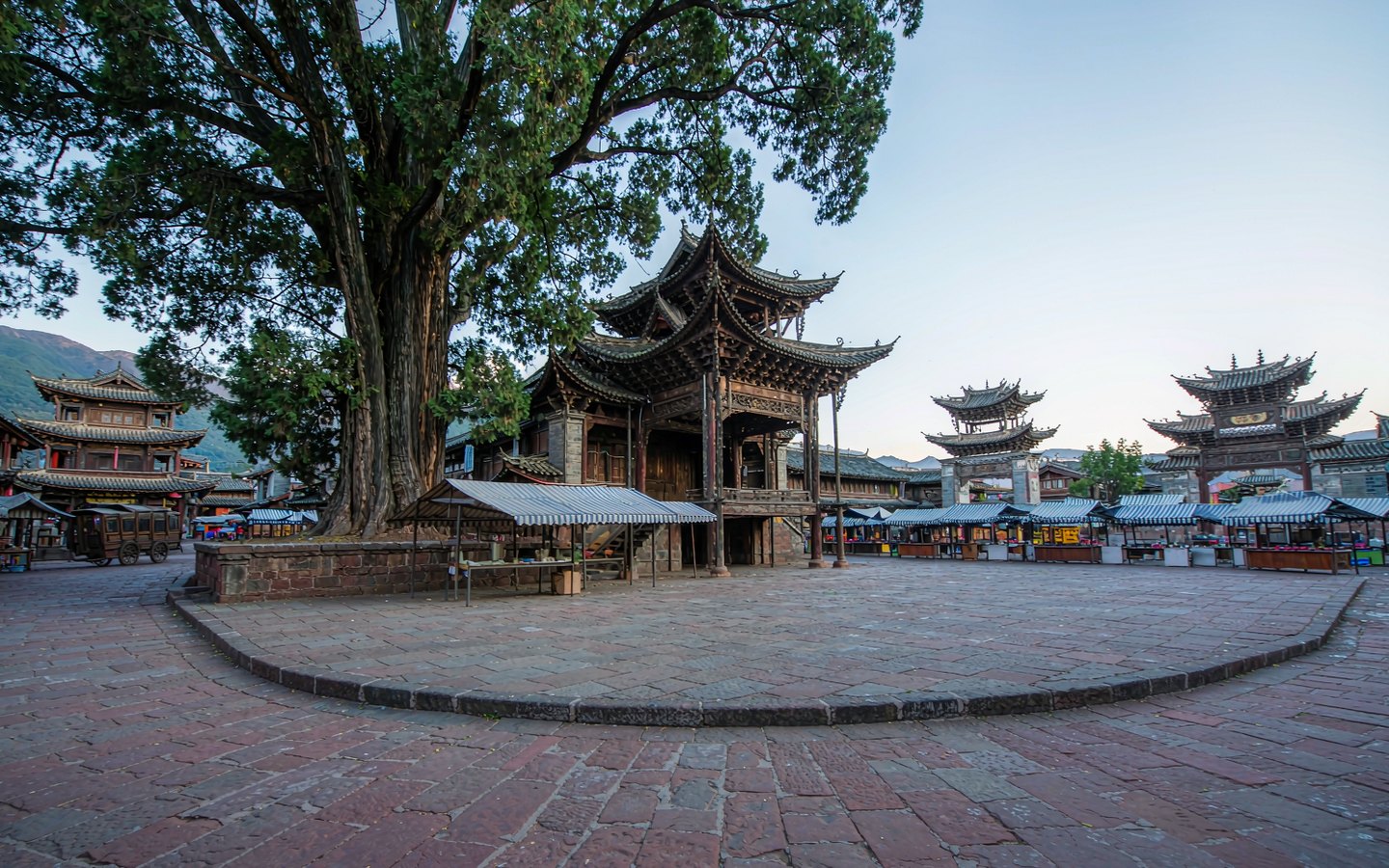
Red-sandstone market square with an old theatre stage and locust tree

Shaxi Old Town (Sideng Street market square)

The last surviving market town of the Tea Horse Road — the World Monuments Fund named it so in 2001, and two decades of Swiss-assisted restoration kept it that way. Sideng's red-sandstone square still holds its theatre stage, caravan inns, old locust tree and Xingjiao Temple's Ming murals. It's 100 km from Dali old town — 1.5–2 hours each way even on the expressway — so sleep over rather than day-trip; self-drive or charter beats the two-bus public route.

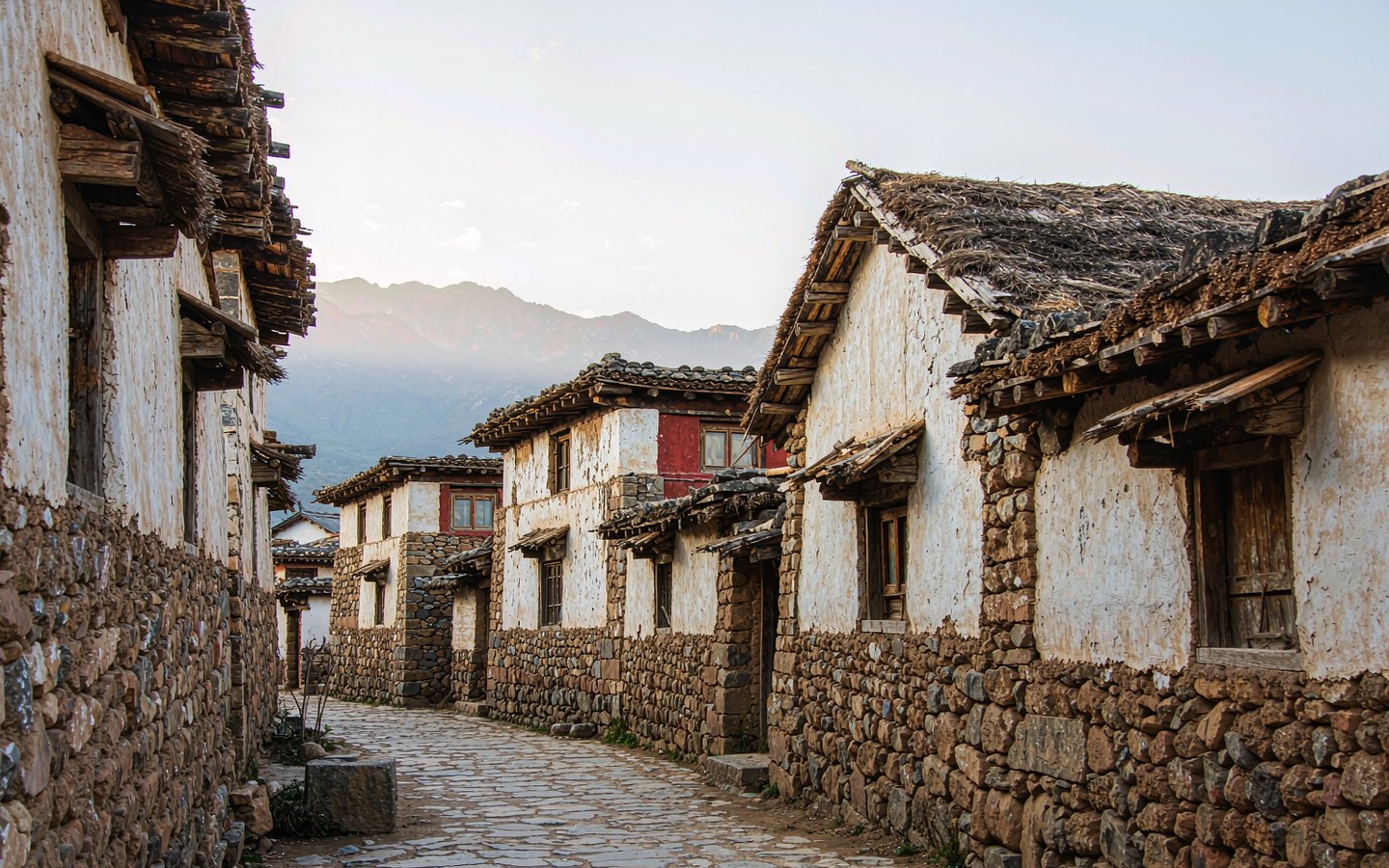
Flagstone horse-road lane between stone farmhouses under the mountains

Fengyangyi Village (Youfeng Courtyard & Tea Horse Road)

The village the 2023 drama Meet Yourself turned into Dali's busiest half-day stop, just 7 km from the old town. A 1,900-metre flagstoned stretch of the Tea Horse Road runs through it, past stone Bai farmhouses and caravan inns; the show's 'windy courtyard' survives as a café, with tie-dye and indigo workshops to try. Note: it's small and café-commercialised now, the viewpoint platform requires a purchase, and the stepped lanes hate suitcases — bundle it with Xizhou or Zhoucheng.

1 more spots worth seeing
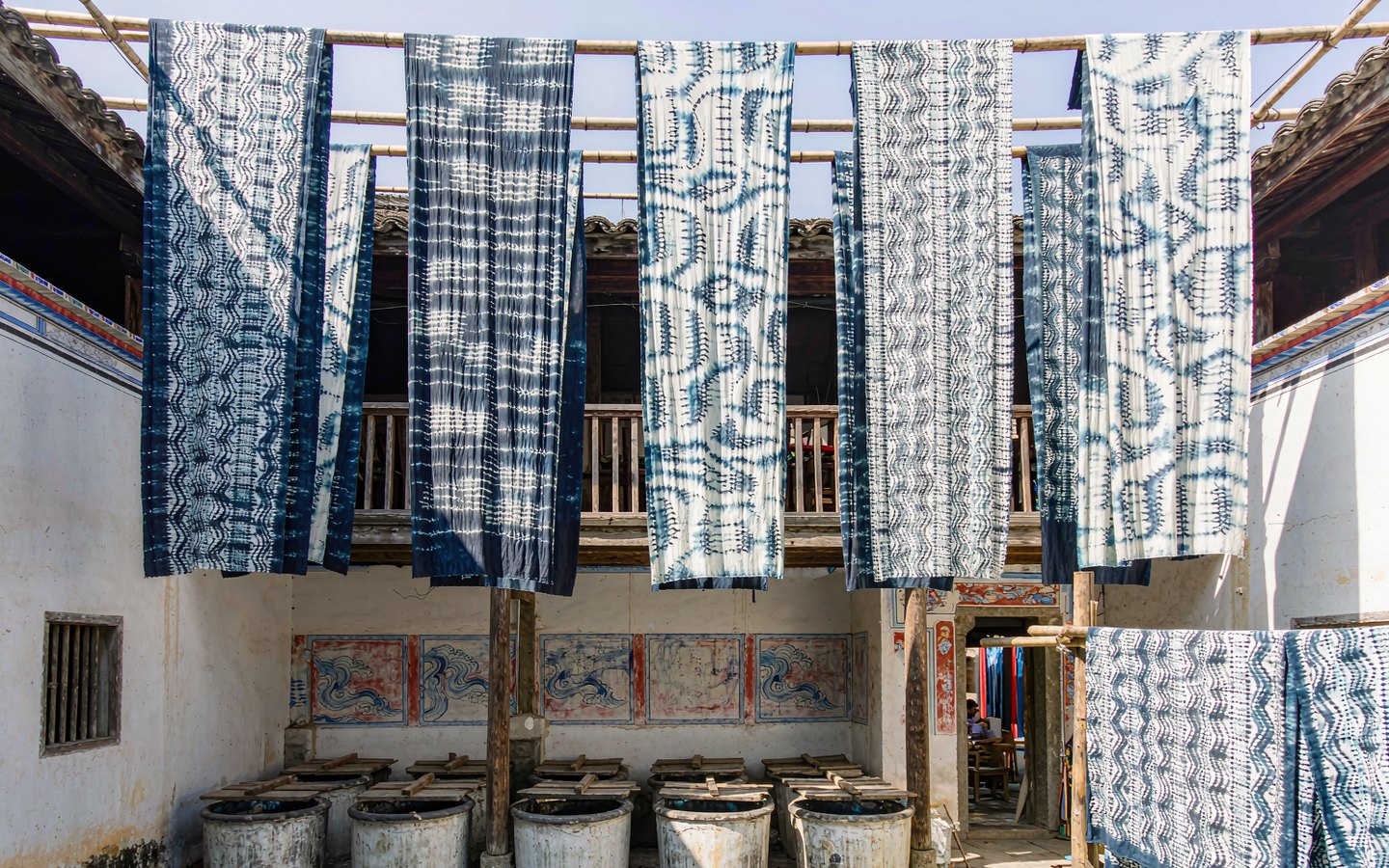
Indigo-dyed cloth with white patterns drying in a Bai courtyard

Zhoucheng Village (Bai tie-dye workshops)

Yunnan's largest Bai village and the home of Bai tie-dye, a national intangible heritage since 2006, with China's first tie-dye museum (free) anchoring its family workshops. Cloth leaves the indigo vat green and turns blue in the air, the pattern appearing only when you unpick the threads. A handkerchief takes an hour, a T-shirt 1.5, a tablecloth three — don't schedule it on a travel day. Use the marked-price workshops, and come mid-morning when the cloth is drying.

Local cuisine

Where to stay

The small courtyard guesthouses are the charm here and they are often the ones not licensed to register a foreign passport. Confirm before you pay rather than at the door — in a village like Xizhou or Shuanglang the next option can be a long way off.

Getting around

Getting here

  • Dali Railway Station

    The station is in Xiaguan, about nineteen kilometres from the old town, not in it. Bus 8 or 4 costs a few yuan but takes the best part of an hour; a DiDi is ¥40–60 and thirty to forty minutes.

  • Trains to Kunming and Lijiang

    Kunming South is roughly two and a quarter to two and three-quarter hours and about ¥120 in second class. Lijiang is an hour and a half to two and a half hours for around ¥50. Shangri-La runs three to four and a half hours.

  • Dali Fengyi Airport (DLU)

    A small domestic airport south of Xiaguan, flown mostly from Kunming, Chengdu and the big eastern cities. An airport bus runs to the old town's south gate for about ¥25; a taxi is ¥60–70 and forty to fifty minutes.

Book on 12306 with your passport number — the passport is the ticket and there is no paper to collect. Put it photo-page down in the automatic gate; many now read foreign passports, and if yours will not scan, the staffed lane beside it is the normal fix. Dali station also has direct trains to Shangri-La, which sits outside the visa-free transit area.

Local transport

  • 🚲

    E-bikes and bikes

    Bicycles rent all over the old town for roughly ¥20–40 a day. Electric bikes rent there too, but they are not allowed onto the west-shore lake corridor — for that you hire at the corridor's own stations, and it costs more. Ask where a bike may be ridden before you pay for the day.

  • 🚌

    Erhai loop bus

    A west route and an east route round the lake, but only a handful of departures a day — first from the old town about 09:00, last back from Shuanglang about 18:30. Seats are booked in advance in a mini-program, not paid for on board, and the timetable follows the booking. A one-direction day ticket lists at about ¥88 and a three-day card at about ¥268; both sell for a good deal less online.

  • 🚕

    DiDi and taxis

    DiDi works here and is the simplest way between the old town, the station and the lakeside villages. A street taxi's meter starts at ¥6 for the first three kilometres, but on the tourist runs — station, airport, old town — drivers often quote a flat price instead of using the meter. DiDi avoids that conversation.

The old town is small enough to walk. Everything else — the shore path, Xizhou, Shuanglang — is a bike, a bus or a DiDi, and the loop bus stops in the early evening, so plan the way back.

What's on

Recommended routes

All routes →

FAQs

What is the best time to visit Dali?

March to May and September to October. The sun is fierce at this altitude even when the air is cool, so cover up year-round.

How many days should I spend in Dali?

Two to three days: the old town and Three Pagodas, a day circling Erhai, and Cangshan if the weather is clear.

How do I get to Dali old town from the airport or station?

The airport (DLU) bus runs to the old town’s south gate for about ¥25; a taxi is ¥60–70. Most people arrive by train — the station is in Xiaguan, 19 km away, with a DiDi at ¥40–60 or buses 8 and 4 for a few yuan.

What is the best way to get around Dali?

Rent an e-bike or bicycle in the old town and ride the Erhai shore — the quieter east side holds the postcard villages. The Erhai loop buses circle the lake, and DiDi covers the hops between towns.

Which area should I stay in Dali?

Dali Old Town is the easy base. Caicun and the lakeshore put you facing the water, Xizhou has Bai courtyard rooms in a working village, and Shuanglang on the east shore is built for sunset views.

What food should I try in Dali?

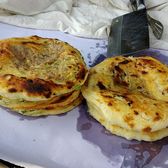
Dali sour fish hotpot, Xizhou baba flatbread, rushan cheese, wild mushrooms in season, Bai three-course tea and the local cured ham.

What are the must-see sights in Dali?

The old town, the Three Pagodas, the Cangshan mountains and Erhai Lake itself, with Xizhou and Shuanglang the two village stops on the loop — best mid-week.